


Ethics/Professional Responsibility,
Constitutional Law
Dec. 22, 2025
Revive the Ethics in Government Act
To uphold the rule of law amid recurring allegations of presidential corruption, Congress should revive the independent counsel authority of the Ethics in Government Act to ensure that no one, not even the president, is above the law.


Erwin Chemerinsky
Dean and Jesse H. Choper Distinguished Professor of Law
UC Berkeley School of Law
Erwin's most recent book is "Worse Than Nothing: The Dangerous Fallacy of Originalism." He is also the author of "Closing the Courthouse," (Yale University Press 2017).
Congressional Reform for a New Era
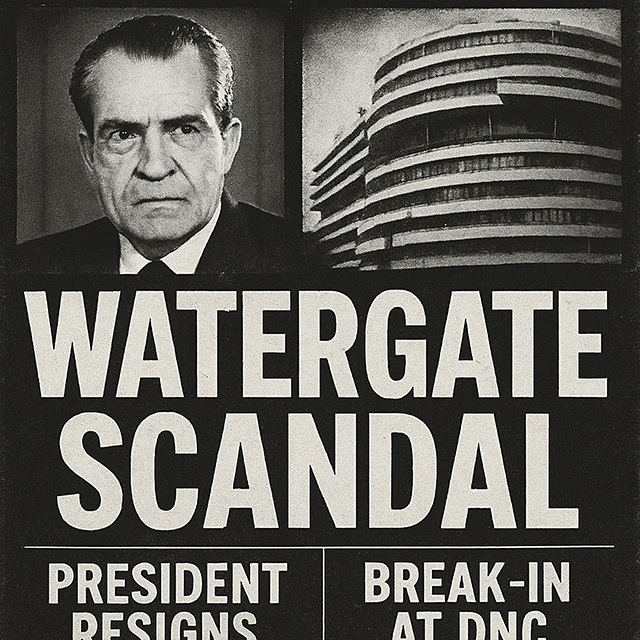
In the aftermath of Watergate, Congress enacted sweeping
reforms to restore public trust and strengthen accountability, including
campaign finance rules, the creation of the Federal Election Commission, the
Ethics in Government Act, and the War Powers Resolution--measures that reshaped
the balance of power and continue to shape American governance five decades
later.
Against that backdrop, the Daily Journal invited
constitutional law professors, legal historians, and good-government
advocates--experts in constitutional structure and reform from across the
ideological spectrum--to answer a timely question: If Congress were to enact a
new round of reforms today, meant to endure for the next 50 years, what one
reform would you propose, and why? This is the first installment in a six-part
series.
The abuses of power during the Nixon administration led
Congress to adopt several statutes to check the president and prevent
corruption. One of the most important of these was the Ethics in Government
Act, which created the office of the independent counsel to investigate and
prosecute alleged wrongdoing by the president and high-level government
officials. Although some provisions of that law remain, the authority for the
independent counsel expired on June 30, 1999. Congress should reenact the
authority to uphold the most basic precept of the rule of law: No one, not even
the president, is above the law.
There are many reports of alleged corruption by President Donald
Trump and those around him: His family launching cryptocurrency ventures at the
same time that he signed an executive order favoring the crypto industry; accepting a roughly
$400 million luxury Boeing 747 jet as a gift from Qatar, which will reportedly
go to his presidential library; international
real estate projects with foreign entities, including in Saudi Arabia and the
UAE, while conducting Middle East policy. There have been allegations of
favoring donors by ending regulation or providing pardons.
But who will investigate this as to
Trump or his family or high-level government officials who may have broken the
law? Does anyone realistically believe that Pam Bondi would do so? Indeed, the
Ethics in Government Act was adopted after seeing John Mitchell, a close ally
of Richard Nixon, go from being Attorney General to head the Campaign to
Reelect the President and realizing that there was a need for an independent
counsel to investigate the president and those in high level offices.
The Ethics in Government Act of 1978 provided for the
appointment of an "independent counsel" when there were credible allegations of
illegal conduct by the president or a high-level executive official. Upon request from the United States
Attorney General, a panel of three federal judges, who had been appointed by
the Chief Justice, would select an independent counsel. Once appointed an independent counsel could be removed only for "good cause" and only by these
judges.
Many independent
counsel were appointed under this law, such as for the
Iran-Contra scandal during the Reagan administration and the Whitewater
investigation during the Clinton presidency. In 1988, in Morrison v. Olson, the Supreme Court upheld as constitutional these provisions of
the Ethics in Government Act.
Alexia Morrison was appointed
as independent counsel to investigate three former high level executive branch
employees who refused to provide documents to congressional committees
concerning the administration of the Superfund Law, a major environmental protection
statute. The subjects of Morrison's investigation argued that the Ethics in
Government Act was unconstitutional in both the manner of appointing the
independent counsel and in the limits on removing the person from office.
The Supreme Court, in a 7-1
ruling, rejected these constitutional objections and upheld the act. Chief
Justice William Rehnquist wrote for the court. As for the appointment power, he
explained that Article II of the Constitution provides that "Congress
may by Law vest the Appointment of such inferior Officers, as they think
proper, in the President alone, in the Courts of Law, or in the Heads of
Departments." The court found that the independent counsel was an "inferior
officer" in that she could be removed by the Attorney General for cause and
because she possessed less powers than the Attorney General.
The challengers to the Act
invoked the unitary executive theory in arguing that limiting removal to where
there is good cause impermissibly interfered with the president's exercise of
his constitutional powers and that the law violated separation of powers by
reducing the president's ability to control prosecutions. The Supreme Court
expressly rejected these arguments. Chief Justice Rehnquist wrote,
"we have never held that the Constitution requires that the
three branches of Government operate with absolute independence." He
stressed that "this case does not involve an attempt by Congress to increase
its own powers at the expense of the Executive Branch."
But in 1999,
Congress let the authority for the independent counsel in the Ethics in
Government Act expire. After Kenneth Starr's investigation of Whitewater
shifted to looking at President Clinton's sexual relationship with Monica
Lewinsky, Democrats turned against the law. Republicans generally did not like
it because of its origins in response to the Nixon presidency and its use
during the Reagan years.
But it was a mistake for Congress to end this authority. There
is inevitably more public confidence when an investigation is conducted by
someone who is completely independent of the incumbent administration. Also,
without an independent counsel, allegations of criminal conduct often never
will be investigated.
There are several possible objections to renewing
authority for the independent counsel. One argument against it is that it is
unnecessary: The Attorney General can appoint a special counsel, as was done
during the Biden administration with the appointment of Robert Mueller and Jack
Smith. But these examples show the essential difference when compared with an
independent counsel who is not part of the Justice Department. Smith was fired
when Donald Trump took over and the prosecution ended. Also, Mueller was
constrained by Department of Justice policy, as he was a part of it, and as a
result, he said that he would not consider in his report and offer no opinion
as to whether Donald Trump engaged in obstruction of justice. An issue of the
utmost importance was thus not addressed in the Mueller Report, and it opened
the door to Attorney General William Barr spinning the Report as exonerating
Trump.
A second objection is that because of Trump v. United States
(2024), the president has absolute immunity from criminal prosecution for his
officials acts. But there is no immunity outside of official acts and others in
the government have no such immunity. And even if the independent counsel
concludes that the president cannot be prosecuted, there is still a benefit to
an independent investigation. The Watergate grand jury in March 1974 felt it
could not indict President Richard Nixon, so named him an unindicted
co-conspirator. This was important even though there was no prosecution.
Finally, there is concern that
there are not sufficient checks on the independent counsel. This is a serious
issue. But the alternative of Justice Department control over such
investigations, with no check on its ability to ignore criminal wrongdoing, is much
worse.
In a country committed to the rule of law, no principle is
more essential than that no one, not even the president, is above the law. Allegations
of misconduct, especially possible criminal activity, must be investigated by
individuals who are truly independent of the administration. That is why
Congress should again create the authority for special prosecutors that existed
under the Ethics in Government Act.
Submit your own column for publication to Diana Bosetti
For reprint rights or to order a copy of your photo:
Email
Jeremy_Ellis@dailyjournal.com
for prices.
Direct dial: 213-229-5424
Send a letter to the editor:
Email: letters@dailyjournal.com