


Civil Rights
Apr. 22, 2026
When the bench has a memory: Prosecutors, the RJA and the limits of neutrality
A recent California appellate decision confronts a question that has quietly shaped early litigation under the California Racial Justice Act: When does a judge's prior work as a prosecutor become a disqualifying conflict?


K. Chike Odiwe
Civil Rights Attorney
The Law Offices of Kenneth C. Odiwe, PC
2880 Zanker Road, Ste 203
San Jose , CA 95134
Fax: (669) 315-4431
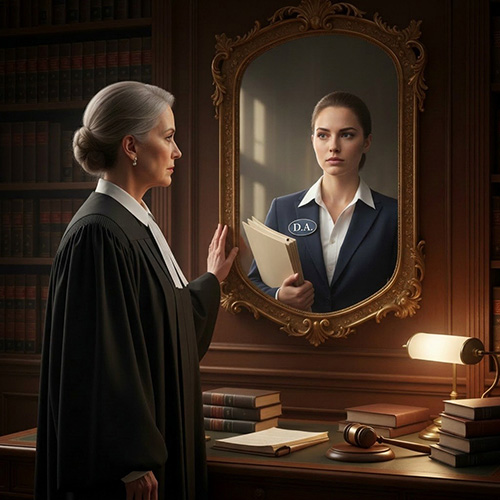
A recent California appellate decision confronts a question that has quietly shaped early litigation under the California Racial Justice Act: When does a judge's prior work as a prosecutor become a disqualifying conflict?
The court refuses to give a clean answer. It does something more consequential. It embraces a fact-specific inquiry and, in doing so, exposes the fault line between experience and impartiality in a system now tasked with examining its own history.
That tension will define the next phase of RJA litigation.
The case, People v. Superior Court (Austin) (Apr. 16, 2026, E086779), arises from a capital prosecution in Riverside County. The defendant filed an RJA claim alleging that the district attorney's office sought harsher charges, including the death penalty, more frequently against Black defendants than similarly situated white defendants. The assigned judge previously served as a homicide prosecutor in that same office during the period under scrutiny.
The Court of Appeal ordered her disqualification.
Not because it found actual bias. Not because former prosecutors cannot preside over RJA cases. But because, under the governing standard, a reasonable observer might question her impartiality given her role in the very charging decisions now under attack. (People v. Superior Court (Austin), supra, at p. 16.)
That distinction does all the work.
And it leaves practitioners with no bright line, only a framework.
The court begins by rejecting the easy rule. It explicitly declines to hold that former prosecutors are categorically barred from hearing RJA matters. It emphasizes instead that "each RJA case involving a former prosecutor should be determined based on the facts and circumstances involved." (Austin, supra, at p. 16.)
That sentence will frustrate anyone looking for predictability. It also signals where the doctrine is heading.
Disqualification will turn on proximity.
Not proximity in the abstract sense of having once worked in a prosecutor's office. Courts will focus on proximity to the conduct at issue. They will ask whether the judge participated in the institutional practices the RJA claim seeks to expose. They will ask whether the judge's prior role requires her to evaluate decisions she once helped make.
In Austin, the answer was yes.
The record showed that the judge did more than process cases. She participated in collaborative charging discussions. She attended staffing meetings where homicide charges and death penalty decisions were debated. She made recommendations that fed into the office's ultimate decisions. (Austin, supra, at pp. 15-16.)
The RJA claim targeted those very decisions. It sought to prove that the office's charging practices reflected systemic racial bias. The evidentiary hearing would require examining patterns across cases, including the decision-making process itself.
That overlap proved decisive.
The court concluded that even without evidence of actual bias, a reasonable person could doubt whether a judge who helped shape those decisions could impartially evaluate whether they were tainted by bias. (Austin, supra, at p. 16.)
Viewed through a civil rights lens, the decision reveals something deeper about the RJA.
The statute does not operate like traditional criminal procedure. It does not focus on a single defendant or a single act. It invites courts to assess institutional behavior. It asks whether patterns of charging, conviction and sentencing reflect racial disparities that cannot be explained by legitimate factors. (Pen. Code, § 745, subd. (a)(3); McDaniel v. Superior Court (2025) 111 Cal.App.5th 228, 242-243.)
That inquiry necessarily turns inward.
It requires judges to evaluate the conduct of prosecutors' offices as systems. In many jurisdictions, those judges come from the same offices. The system asks former insiders to assess whether the institution they once served operated in a racially neutral way.
Austin does not reject that structure. But it recognizes its limits.
At some point, experience stops being an asset and starts becoming a problem. Not because the judge cannot be fair, but because the public may reasonably question whether she can be.
That shift matters. The RJA depends on legitimacy. It asks courts to confront claims of systemic bias. If the process appears compromised, even at the margins, the statute loses force.
The appearance standard does not function as a technical rule here. It functions as a safeguard for public confidence. California law has long framed disqualification through that lens, asking whether "a person aware of the facts might reasonably entertain a doubt that the judge would be able to be impartial." (Code Civ. Proc., § 170.1, subd. (a)(6)(A)(iii); see also Jolie v. Superior Court (2021) 66 Cal.App.5th 1025, 1039-1040.)
Austin applies that familiar standard in a new context.
The opinion also sketches a spectrum of prosecutorial involvement, even if it never labels it as such.
On one end sits the line prosecutor who follows established policy and handles discrete cases. On the other end sits the prosecutor who participates in shaping policy, making recommendations and engaging in collaborative decision-making that reflects the office's institutional judgment.
The closer a judge's prior role falls to that second category, the greater the risk of disqualification.
Austin places the judge toward that end of the spectrum. The court emphasizes that she did not merely apply policy. She engaged in the decision-making process itself. She contributed to the very patterns the RJA claim seeks to test. (Austin, supra, at pp. 15-16.)
That distinction aligns with emerging ethical guidance. The California Supreme Court Committee on Judicial Ethics Opinions has explained that a judge need not recuse merely because she handled similar cases as a prosecutor, but disqualification may arise where prior involvement would lead a reasonable observer to doubt impartiality, particularly where the judge participated in charging decisions or policy development. (Cal. Supreme Ct. Com. on Jud. Ethics Ops., Formal Opn. No. 2025-028 (Aug. 7, 2025) pp. 13-14.)
Austin operationalizes that caution in the RJA context.
The practical consequences will be immediate.
Disqualification motions will become more common in RJA cases. They will become more sophisticated. Lawyers will no longer rely on the fact of prior employment alone. They will build records showing how a judge's prior role intersected with the institutional practices at issue.
That will require discipline. Courts will continue to enforce the rule that conclusory allegations do not suffice. A party seeking disqualification bears a heavy burden and must identify concrete facts supporting an appearance of bias. (Bassett Unified School Dist. v. Superior Court (2023) 89 Cal.App.5th 273, 286.)
The absence of a bright line ensures that litigation will proceed case by case.
That uncertainty creates friction. It also creates space.
Looking forward, Austin suggests three questions that will shape disqualification analysis in RJA proceedings.
First, how direct was the judge's involvement in the practices being challenged? General experience will not suffice. Courts will look for participation in decision-making processes, especially those that reflect institutional judgment.
Second, how central are those practices to the RJA claim? If the case turns on systemic patterns that overlap with the judge's prior work, the risk increases.
Third, how will the proceeding appear to an informed observer? This question remains the ultimate check. It forces courts to consider public perception, not just internal assurances of neutrality.
Those questions do not produce easy answers. They require judgment.
That is precisely the point.
The RJA represents an effort to move beyond individual culpability and confront systemic inequality. It pushes courts into terrain where traditional doctrines offer limited guidance. Disqualification, in this context, becomes more than a procedural safeguard. It becomes part of the substantive project.
Austin acknowledges that reality without fully resolving it.
It leaves the bar with work to do.
For civil rights lawyers, the decision offers a tool to ensure that RJA hearings proceed before judges whose neutrality will withstand public scrutiny. For prosecutors, it offers a framework to defend against overbroad challenges while recognizing that deeper institutional involvement may require recusal. For judges, it demands a more searching self-assessment.
The system will not produce a clean rule. It will produce a body of case law shaped by these tensions.
And that may be the right outcome.
Because the question at the heart of Austin does not admit of a categorical answer. It asks when professional history becomes institutional entanglement. It asks when experience creates perspective and when it creates alignment.
In RJA litigation, that line will matter.
And for now, it remains deliberately unsettled.
Submit your own column for publication to Diana Bosetti
For reprint rights or to order a copy of your photo:
Email
Jeremy_Ellis@dailyjournal.com
for prices.
Direct dial: 213-229-5424
Send a letter to the editor:
Email: letters@dailyjournal.com