


Civil Procedure
Sep. 21, 2026
California closes a gap that let life-altering court errors go uncorrected
The California Supreme Court ruled that courts must provide indigent litigants with an official verbatim record, including through electronic recording when a court reporter is unavailable, ensuring that the ability to appeal does not depend on a litigant's ability to pay.



Kate Marr
Executive Director
Community Legal Aid SoCal (CLA SoCal)
Email: kmarr@clsocal.org
CLA SoCal works to fight injustice by providing compassionate, high-quality, direct legal services and systemic advocacy that creates positive change in communities, with a staff of over 100 serving Orange and Los Angeles Counties.
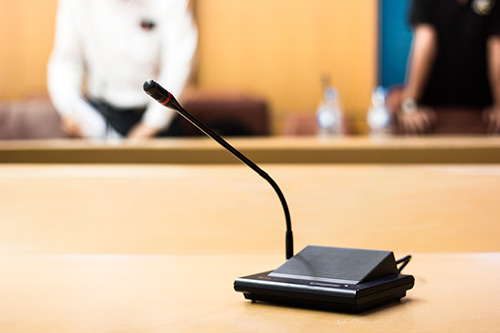
I've worked in legal aid for 25 years, and for most of that time, a court reporter sitting in the corner of a courtroom was just a given. That reality started to shift around 2019, as retirements began outpacing the number of new reporters coming out of a shrinking number of training programs, and it hit crisis level by 2022, when courts across the state stopped being able to replace the reporters they were losing. In April 2023, the state began formally tracking how many hearings were happening with no record of any kind. The number since then: more than three million.
That mattered more than it might sound like it should. Until last month, if you couldn't afford a private stenographer and the courthouse didn't have one of the state's dwindling number of official court reporters on hand, whatever the judge decided became final the moment the hearing ended--not because it was right, but because there was no way to prove it wasn't. No transcript. No record. Nothing for an appellate court to review, no matter how obvious the error underneath. In the first three months of this year alone, that was true in roughly seven out of every 10 family law, probate and unlimited civil hearings statewide, according to the Judicial Council's own tracking. Seven out of 10.
On Aug. 10, the California Supreme Court put a stop to that, unanimously.
In Family Violence Appellate Project v. Superior Courts of California, the court ruled that when no official reporter is available and a litigant can't afford to hire one privately, courts must still provide some way--including electronic recording--for that person to get an official verbatim record of their case. Chief Justice Patricia Guerrero, writing for a unanimous court, was blunt about it: judges "have no discretion" here. It is their constitutional duty, rooted in the decades-old rule that a person's access to justice cannot depend on the size of their bank account.
I should disclose something: attorneys at my organization, Community Legal Aid SoCal, represented the Family Violence Appellate Project in this case, alongside Bay Area Legal Aid and a pro bono team at Covington & Burling. So, this isn't commentary from a distance. This is what it looks like when the thing you've spent years fighting for finally becomes the law of the state.
I want to explain why this particular gap in the system cut so deep for the clients we serve. The Family Violence Appellate Project exists because survivors of domestic violence who lose in family court--who get the wrong custody order or have a protective order denied based on a legal error--have a right to appeal. But an appeal isn't a do-over. An appellate court doesn't re-hear the case; it reviews the record of what happened in the lower court. No record, no review. That means a trial judge's mistake, no matter how consequential, becomes permanent and unreviewable the instant the hearing ends purely because the courthouse didn't have a reporter available that day. The people this fell hardest on were never the parties who could afford a $2,000-a-day private stenographer. They were the parties who couldn't.
I don't want to pretend this ruling resolves the underlying crisis because it doesn't. California has been short on court reporters for years--a shortage that has worsened without a corresponding investment in the court reporter workforce. The Supreme Court here has embraced a practical solution. When a court reporter is unavailable and a litigant cannot afford to hire one, courts may use electronic recording to create an official record. That should not be controversial. Certified court reporters remain an essential part of the justice system. But the choice was never "electronic recording or a court reporter." It was "electronic recording or nothing at all" for the people who couldn't pay. The court got that right.
The harder work starts now, and it's mostly logistical rather than legal. This ruling tells courts what they must do; it doesn't mandate specific procedures for implementation. Some courts, like Los Angeles County's, appear to be already well positioned with the equipment and procedures needed to comply. Other courts will need to do more to ensure they are complying fully. Whether this ruling changes outcomes for the people we represent will depend on how quickly that gap closes, and on whether courts treat a verbatim record as something every litigant can count on rather than something that depends on which courthouse, which department or which day they happen to walk in.
In 25 years of this work, I've learned that a right on paper and a right in practice are two very different things. This week, the California Supreme Court closed one of the widest gaps between the two that I've seen in a civil courtroom. What happens over the next year, as courts work out how to make this promise real in every department and every county, will determine whether it stays that way.
Submit your own column for publication to Diana Bosetti
For reprint rights or to order a copy of your photo:
Email
Jeremy_Ellis@dailyjournal.com
for prices.
Direct dial: 213-229-5424
Send a letter to the editor:
Email: letters@dailyjournal.com