


Criminal
Dec. 1, 2025
Public defenders and prosecutors warn of crisis fueled by Prop 36
San Francisco's justice system faces mounting strain as public defenders and prosecutors struggle with soaring caseloads, staffing shortages and unfunded mandates. The problems are seen elsewhere in the state, with disagreement about the causes and solutions.


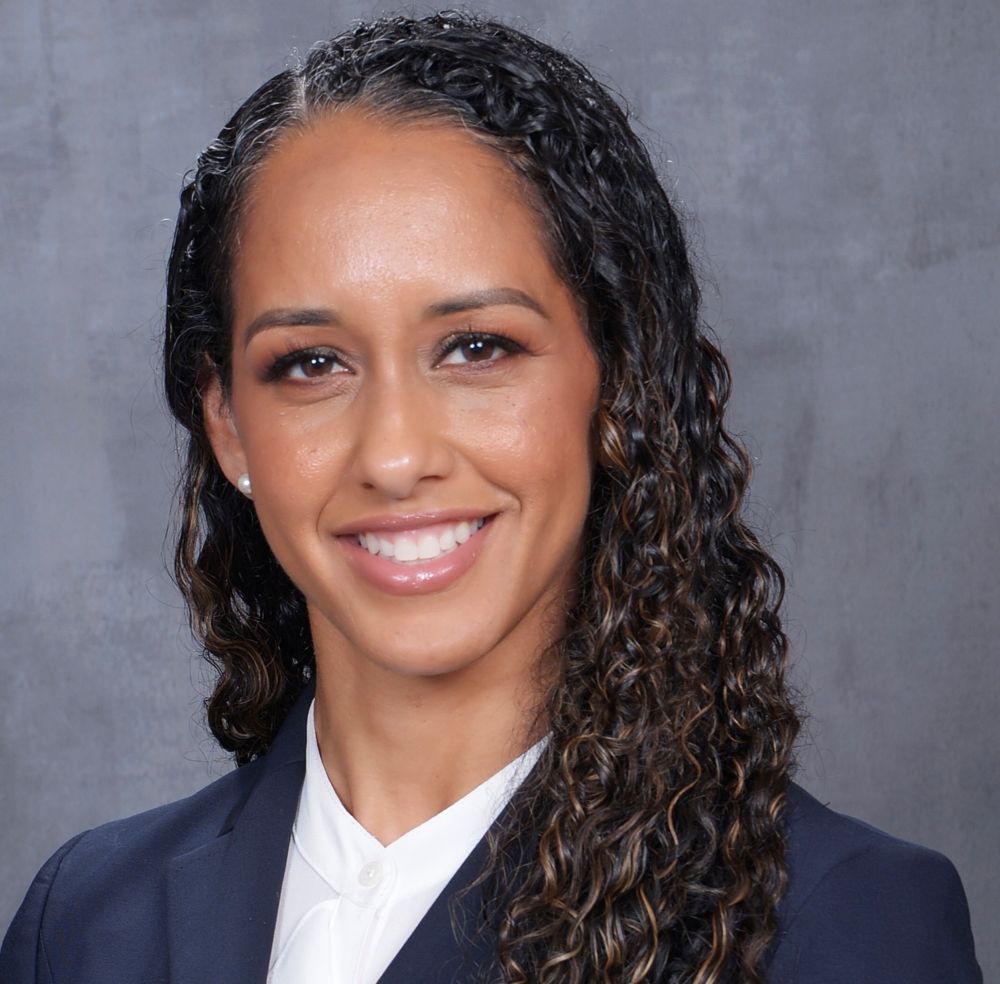
Trying to find parking outside San Francisco's downtown Hall of Justice has always been tough, but according to county Public Defender Manohar Raju it has gotten worse in recent months - a sign of increased criminal case filings and those who need to make appearances, he said.
But there is often parking to be found on Jeff Adachi Way, directly opposite the courthouse. Adachi was San Francisco's public defender from 2003 until his death in 2019.
In the last month, Raju has effectively declared a staffing crisis at his office, claiming there are too many cases for his team to handle. Defenders are declaring themselves "unavailable" to take on new clients one day per week. The last time that happened was during Adachi's tenure in 2009.
With the public defenders less available for new cases, pressure increased on the conflict panel, who have also declared unavailability for increased workloads. The Superior Court said in October it was left with the unenviable decision of releasing pre-trial criminal defendants who had overstayed their constitutional 45-day custody. However, the court has identified only one person released on these terms.
This case overload may be the extreme end of a known and historic statewide problem, but many working in California's criminal justice system claim it was entirely foreseeable and caused by a swirling trifecta of public policy: Prop. 36, AB625 and a newly published National Public Defense Workload Study.
The surprising part may be that it has impacted defenders and prosecutors alike.
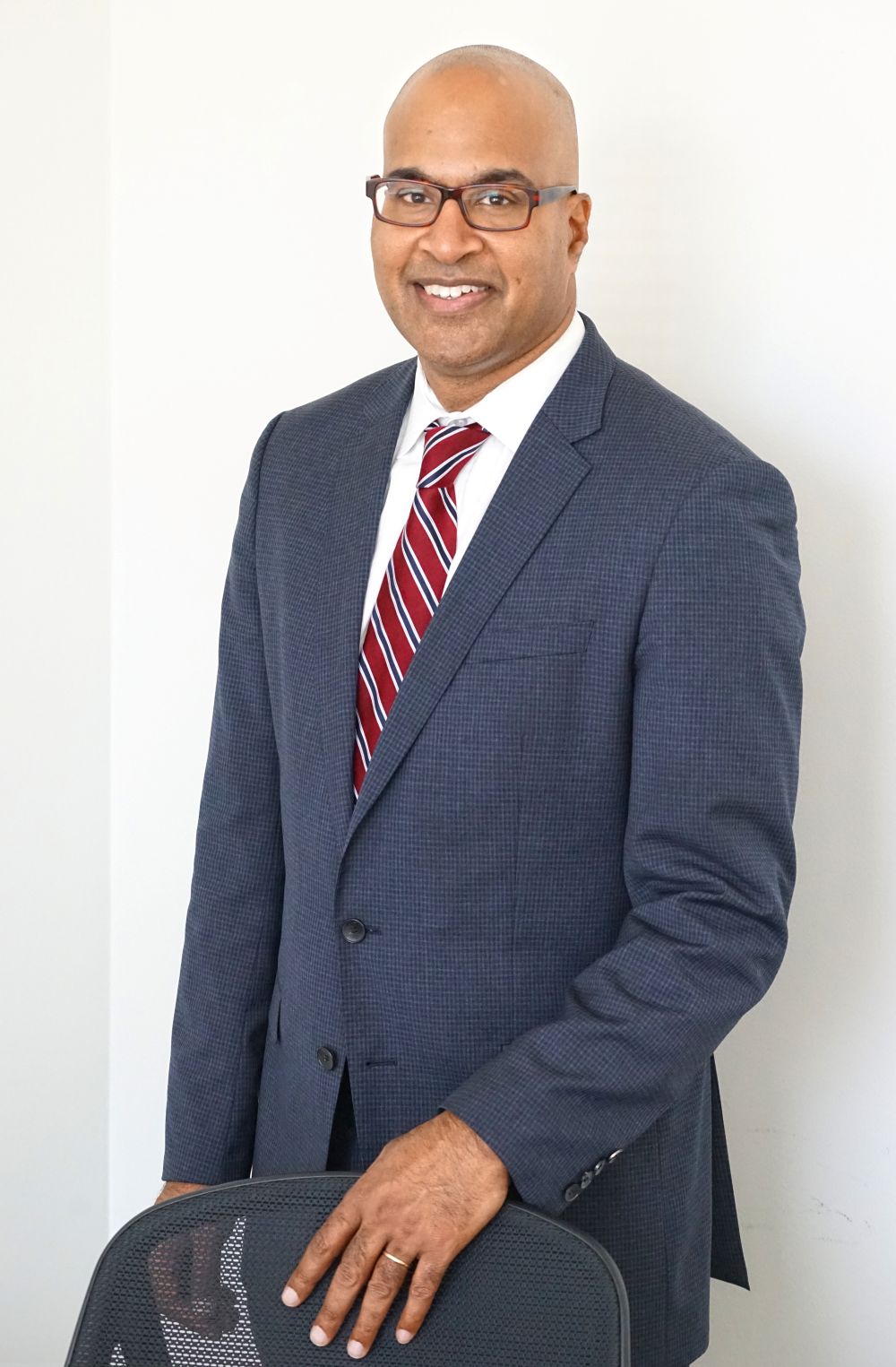
The Public Defenders' office is in a building just one block south of Jeff Adachi Way. Raju, who says he goes into the office every day, works there trying to find a resolution to his staffing crisis.
"Our office is nationally recognized as perhaps the best public defender office in the country," Raju said. "So, I have a slew of applications for any position that we have. But securing funding is the challenge."
Raju said he is working with new Mayor Daniel Lurie and the Board of Supervisors to fill as many positions as he can. He said he expects to hear back about additional funding for positions in the "next few weeks."
But among that slew of applicants, few can withstand the demands of the work, Raju said.
"I tell most staff when they're interviewing for the job, 'I think this job is probably too hard for you.' I think very few attorneys are built to be public defenders," Raju said. "It's really got to be a love of the work and a love of helping some of the most vulnerable people in our society."
In a joint interview with Raju, felony manager Elizabeth Camacho described a recent Wednesday so busy she didn't eat lunch until 4 p.m.
"We had three attorneys picking up cases; each of them picked up about seven felony cases," Camacho said. "But one of them had a preliminary hearing that was continued so I reached out to the team and I said, 'We're going to split the arraignments between the two. Two attorneys are going to have to do 21 arraignments.'"
Though that scenario is not uncommon, Camacho said, she felt "guilty" about sending two attorneys to cover 21 arraignments.
"I'm the child of a formerly incarcerated parent," said Camacho. "To me having lawyers that are not so overwhelmed with work and that will fight for them and do the work the way that it's supposed to be done, it's really important because I know what it's like when you have that missing from your life and what it leads to. It's heartbreaking."
Camacho said her staff often work more than 12 hours, with long commute times as they cannot afford to live in the city.
The challenging hours are where the findings from AB625 and the Defense Workload Study come in, and they point in somewhat the same direction.
Assembly Bill 625 was passed in 2021 to ensure the State Public Defender, in consultation with the California Public Defenders Association, submits a report on appropriate workloads for public defenders and indigent defense attorneys.
That report, titled the California Public Defense Workload Study, found that California's county-based public defense system is "in crisis."
Indigent defenders, who represent 80-90% of all accused people in California, carry caseloads far above national standards, lack sufficient support staff, and there are too few of them, especially in rural areas, the report said.
Compared to prosecutors, defender offices have 20-45% fewer attorneys and fewer investigators, social workers and paralegals, the report said.
Tracie Olson, Yolo County's public defender and president of the California Public Defenders Association, said the reports show that almost every defenders' office in the state is underfunded and overworked.
"We now have the data that defines ethical workloads, new laws that have inflated caseloads, and a veto that stripped away protections for those defending the Constitution," Olson said.
The National Public Defense Workload Study was a separate project overseen by the RAND Corporation, sponsored by philanthropic organization Arnold Ventures and conducted by the Justice Policy Program in collaboration with the National Center for State Courts and the American Bar Association. It similarly found that public defenders were overworked.
The study introduced a new metric for determining appropriate workloads for defense attorneys -- a metric that has factored into Raju's office's decision to declare unavailability.
This metric -- which assumes an average annual 2,080 hours available to a public defender for case-related work, but which Raju says is closer to 1,700 hours -- considers the nature of a case and how long a public defender might be expected to spend on it.
For example, a felony case in which a prosecutor is asking for a life sentence without the possibility of parole equates to 286 hours for the defender. A murder case is estimated at 248 hours, and a serious felony sex crime could take 167 hours.
The report said, "Excessive caseloads are pervasive in public defense across the country, and reports of defenders being appointed to far more criminal defense cases than they can shoulder competently are common."
These two reports have emboldened public defense offices across the land to object to increasing workloads, where their predecessors may not have.
Which brings us to Proposition 36.
The initiative passed by 71% of the state's voters in 2024 increases penalties for certain drug and theft crimes while attempting to route more offenders into mental health care. It reversed a 2014 law that had lessened punishment and led to what voters determined was a crime wave.
A report released this November by the ACLU notes that Prop. 36 sponsors did not include funding for the measure, provide new revenue to cover increased costs, or address what would happen should treatment be unavailable, which it called "a glaring oversight in a state where 22 of 57 counties report having no residential treatment facilities."
Judges, law enforcement, prosecutors and defenders joined legislators, including Thomas Umberg, Democratic chair of Senate Judiciary Committee, in calling for Gov. Gavin Newsom, who had opposed the new law, to fully fund it.
San Bernardino County Superior Court Presiding Judge Lisa M. Rogan warned lawmakers of a "train wreck" coming if courts did not get an influx on money to deal with higher criminal caseloads.
"The voters have spoken loud and clear ... It's our job now to make sure that Proposition 36 is given the support it needs to succeed," Umberg told a meeting of chief probation officers.
In April, he requested $250 million in the state budget for Prop. 36 while noting that Senate Republicans were asking for $400 million per year.
Newsom agreed in June to include $110 million for Proposition 36, with $30 million for the judicial branch.
The result, according to data from the courts and public defenders across California, is not an increase in treatment but more incarceration.
Data from the Judicial Council shows that only 771 people have been ordered into treatment under Prop. 36 out of a reported 8,895 suggested cases.
Raju and Camacho said Prop. 36 had increased their workload because cases are receiving enhancements and "cases that shouldn't be felonies become felonies," which increases the exposure of jail time and the life span of a case, including increased evidence analysis such as body-worn cameras.
Raju additionally blamed "a huge influx in filings from the district attorney" for the case "overload."
In an unassuming government building half a mile south of the public defenders' office, San Francisco District Attorney Brooke Jenkins has been wrestling with a staffing problem of her own.
Jenkins says her office is fully staffed, and she repeatedly dismisses the claims that Raju's office makes about unmanageable caseloads, stating her attorneys handle a higher average number of cases than the defenders.
But lately, Jenkins said, she has struggled to retain mid-level and senior-level attorneys, which forces her to promote younger attorneys to that level "prematurely."
The DA's office loses these attorneys through regular attrition, Jenkins said, but the salaries it offers rank fourth out of the five Bay Area counties and do not meet the cost of living in the county. And parking outside the office costs $300 per month.
As far as her attorneys' workload goes, Jenkins says three things have made their lives more difficult: Prop. 36, the Racial Justice Act and new types of evidence analysis.
The Racial Justice Act, which allows defendants to challenge their convictions if they can show racial bias, even if unconscious, plays a role. The law has landed Jenkins' office in "more litigation that has opened prosecutors up to different allegations," she said.
"There are cops being accused of violating this based on mere words that they utter that -- trust me as a Black woman, and I'm half Latina, that I pay attention to that -- I can't believe would constitute implicit or explicit bias. But nevertheless, they're subject to these accusations," Jenkins said.
Additionally, there is an "ever-mounting increase in the types of evidence" that needs to be processed by her office, such as from drones or license plate-reading cameras.
"There's so much evidence that we have to collect that we have to subpoena the right witness for and we have to be able to wrap our heads around and understand because subpoenaing a witness means nothing if you don't understand the technology and how to ask the right questions," the chief prosecutor added.
On all these policies enacted by the Legislature, Jenkins said, "it should have been obvious" they would create more work for district attorneys statewide.
"We have shouted that from the mountaintop. But unfunded mandates continue to be a problem for us," she said.
Jenkins sees an additional problem for DAs who represent "the people" in the criminal justice system. Everything changed after the murder of George Floyd, according to the 10-year veteran prosecutor.
"We're really at a reckoning point," Jenkins said. "Over the last five years, extremely radical and progressive prosecutors across the country demean the profession."
Jenkins was appointed to head the office in July 2022, a month after 60% of San Francisco County voters recalled her predecessor, Chesa Boudin, after two years in office. The former career public defender advocated alternatives to prosecution, lower sentences and no bail. The recall was fueled by criticism that his progressive policies were not effectively addressing rising crime, homelessness and violence, though supporters argued the campaign was funded by wealthy opponents and was based on misinformation.
Jenkins said she once shared a panel at a law school with a prosecutor, whom she did not name, who described the work district attorneys do as "oppressive."
"That's coming from somebody who is the elected district attorney of a jurisdiction," Jenkins said. "Why would any law student ever think to pursue a career as a prosecutor? We have a systemic problem of these attacks from the inside by these radical progressive prosecutors and really needing to dispel historical injustice -- that actually is a valid complaint."
The best way to redress this development, according to Jenkins, is to go into law schools and universities to ensure students "see the honor in being a prosecutor; the value in providing safety to communities."
California District Attorneys Association Chief Executive Greg Totten agrees, suggesting high schoolers should also be encouraged to become prosecutors. He said recruitment and retention are the biggest issues facing district attorneys' offices across the state.
But for all the problems Prop. 36 causes public defenders' offices, Totten said a lesser-known bill is just as troublesome for district attorneys: SB129.
This bill, passed in 2021, appropriated just shy of $50 million to assist public defenders across the state with post-conviction motions.
"We've seen some major policy changes in Sacramento that have really reduced the penalty of criminal cases," said Totten. "Now we are litigating post-conviction, post-sentence, post-judgment, years and in some cases decades after the crime occurred and after the conviction occurred.
"They bring these motions, which they're authorized to do under recently enacted California law, challenging the sentence as too harsh or challenging certain aspects of the conviction or the trial. In the vast majority of the cases, they're not well taken, and we resist those motions."
Across the city, nestled between UN Plaza and City Hall, the 1st District Court of Appeal, situated in the Earl Warren Building, assigns hundreds of panel attorneys to assist indigent criminal defendants who reach the appeal stage.
But the Judicial Council, which works closely with the five contracted appellate projects to provide oversight and guidance to the panel attorneys, says there will be a "severe shortage" of these attorneys if pay rates are not increased.
The current rates are not competitive, and attorneys leave for higher paying positions, according to a Judicial Council spokesperson.
Justice Stacy Boulware Eurie, chair of the Judicial Council's Legislation Committee, said in an email, "The ability to provide a competitive hourly rate would allow independent attorneys to pursue and commit long-term to panel work while maintaining financial sustainability in the program."
The Judicial Council's spokesperson said that the panel attorney middle tier rate of $130 per hour is not competitive with the federal panel rate of $175 per hour.
The spokesperson confirmed that the pending Fiscal Year 2026 - 27 budget request of a $40 per hour increase for panel attorneys and a 30% increase for appellate project contracts, worth $22.6 million, has been submitted to the Legislature for consideration in the coming year.
On this, Judge Ann Moorman, chair of the Judicial Council's Judicial Branch Budget Committee, commented via email, "Budget increase requests are being pursued to provide a competitive rate to enhance and increase the recruitment and retention of panel attorneys in the Supreme Court and Courts of Appeal."
All of these roads lead to Sacramento, where prosecutors and defenders finally agree on something: There's not enough money coming out of the Capitol. But disagreements remain over how much each side receives from the state.
Caneel Fraser, executive of the Indigent Defense Improvement Division within the Office of the State Public Defender, said, "Today across California, we see an annual funding disparity of $1 billion in the resources allocated to prosecution and county public defenders. One billion dollars is a gulf that cannot be overcome by a public defense office making internal adjustments."
Both public defenders' and district attorneys' offices are largely funded by each county's taxpayers. But a significant chunk of cash finds its way into both offices through state grants.
Totten called this apparent funding disparity a "misnomer" and noted that the district attorneys' office work on a case begins well before the public defender's office.
"Defenders typically only represent about 60 to 70% of the cases that involve a prosecutor's office," Totten said.
"If you look at the work of the deputy district attorney who's sitting on the filing desk reviewing cases every day," Totten explained, "that deputy district attorney exonerates more individuals of crime in a single week than most public defenders do in an entire career."
Back to San Francisco's Hall of Justice, and a resolution to the public defenders' office dilemma is not in clear sight.
Hearings into the office's unavailability continue under the stewardship of Superior Court Judge Harry Dorfman, who is looking into what powers he may have to order private lawyers to assist indigent criminal defendants.
But one telling part of the hearings, a window into how things used to be in Adachi's era, was the mention of regular meetings between the county's justice partners before the pandemic.
These meetings were meant to offer attorneys from both sides of the criminal justice bar the opportunity to collaborate with the court and find solutions.
Asked whether these meetings could begin again, Jenkins said if there was a new public defender, she might, claiming the current public defenders' office was acting in "bad faith."
Meanwhile, Raju said he was happy to meet with any stakeholders in the system and was "not interested in getting into back and forth with these ad hominem comments"
The two offices are constitutionally adversarial, but if they could find more common ground to provide the best constitutionally mandated service for defendants, victims and the public, they might clear some backlogs and some parking spaces outside the courthouse.
James Twomey
james_twomey@dailyjournal.com
For reprint rights or to order a copy of your photo:
Email
Jeremy_Ellis@dailyjournal.com
for prices.
Direct dial: 213-229-5424
Send a letter to the editor:
Email: letters@dailyjournal.com