


Torts/Personal Injury
Apr. 15, 2026
OpenAI federal wrongful death suit over chatbot role won't be halted
A federal judge declined to pause a wrongful death case against OpenAI, ruling that parallel state proceedings won't resolve all claims tied to a chatbot's alleged role in two deaths.


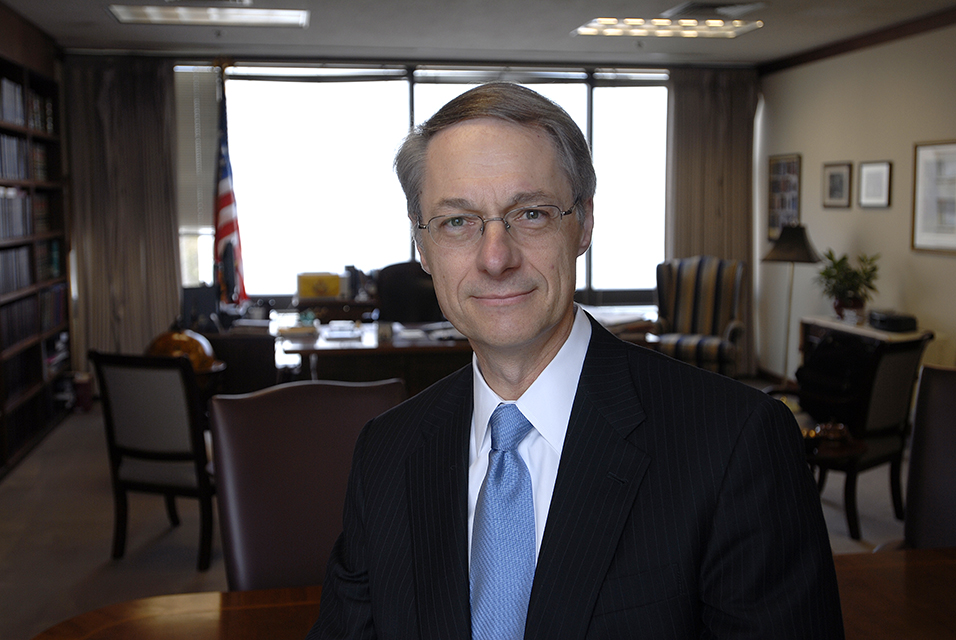
A federal judge refused to dismiss or stay a wrongful death lawsuit alleging ChatGPT played a role in a man killing his mother and then himself, clearing the way for the case to proceed alongside related state court litigation.
U.S. District Judge Richard Seeborg ruled that the overlap between the cases is not enough to justify abstention under the Colorado River doctrine. He found that differences in alleged harms -- including claims tied to third-party violence and suicide -- could produce distinct outcomes. The decision ensures a federal forum will weigh key questions about AI companies' potential liability for user conduct. Colorado River Water Conservation District v. United States, 424 U.S. 800 (1976).
The defense, represented by attorneys from Mayer Brown, sought dismissal or a stay of the federal case under the Colorado River doctrine, which allows federal courts to defer to substantially similar state proceedings in limited circumstances.
In Monday's order, Seeborg found "substantial doubt" that the state proceedings would resolve all issues in the federal case. Lyons v. OpenAI Foundation, et al., No. 25-cv-11037-RS (N.D. Cal. April 13, 2026). The doctrine permits such deference only in "exceptional" circumstances.
Both the federal and state actions assert strict liability, negligence, violations of California's Unfair Competition Law, wrongful death and survival causes of action. But the cases diverge in focus: The state case centers on whether ChatGPT contributed to Stein-Erik Soelberg killing his mother, Suzanne Adams, while the federal case focuses on whether it contributed to his suicide.
Attorneys at Hagens Berman Sobol Shapiro LLP filed the federal lawsuit in San Francisco for Soelberg's estate on Dec. 29, 2025, alleging wrongful death and negligence stemming from the design of ChatGPT and claiming OpenAI failed to warn of risks, including that it allegedly encourages delusions, paranoia and self-harm.
According to the complaints, Soelberg killed his mother and himself on Aug. 5, 2025, in Greenwich, Connecticut, after hundreds of hours interacting with OpenAI's GPT-4o model over several months. The chatbot allegedly reinforced his belief that family and friends were surveilling and trying to kill him, rather than challenging those delusions or triggering safeguards. The lawsuit also seeks additional safety measures in the chatbot's design.
Plaintiffs further allege the chatbot's "sycophancy" -- its tendency to agree with users -- along with memory features that accumulated prior interactions, deepened Soelberg's psychosis.
"A reasonable consumer would not expect that an AI chatbot would validate a user's paranoid delusions and put identified individuals -- including the user's own family members -- at risk of physical harm and violence," the lawsuit states. It also accuses OpenAI of engaging "in the practice of psychology without a license or the safeguards of human judgment."
"The consequences of OpenAI's design flaws are chilling," Steve Berman, Hagens Berman's founder and managing partner, said in a post on the firm's website. "ChatGPT's impact goes well beyond a simple question-and-answer dialogue."
Seeborg rejected OpenAI's argument that the federal case must yield to the state case, which is part of coordinated proceedings involving multiple chatbot-related lawsuits.
"Even though the cases share certain key facts and issues, there is doubt that resolution of the state court proceedings will resolve this matter, and so a Colorado River stay or dismissal is not warranted," Seeborg wrote.
The differences between the cases are significant, he explained, particularly because liability theories such as failure to warn depend on the specific risks known to defendants, which may differ between harm to others and self-harm.
The judge also criticized OpenAI's framing of the doctrine, writing that defendants "repeatedly misstate the law" by suggesting courts are required to defer to parallel state proceedings.
After analyzing the doctrine's factors, Seeborg found none supported abstention. He also rejected arguments that a stay would avoid piecemeal litigation, noting that duplicative proceedings are common and that federal courts routinely handle product liability and negligence claims.
"This case raises critical questions about the responsibilities of AI companies to protect vulnerable users," Berman said in his web post. "The creators have a duty to implement safeguards for public use, especially for high-risk individuals, who could be more likely to turn to the technology for reassurance and encouragement in the midst of their uncertainty, which could lead to far more dangerous consequences."
Besides Steve Berman, the plaintiff is represented by partner Shana E. Scarlett and associate Elizabeth "Ani" Lubben Zotti of Hagens Berman's Berkeley office; and from its Seattle branch, partner Martin D. McLean and associate Jacob Berman.
Mayer Brown attorneys for the defendants are Palo Alto partners Anthony J. Weibell, Edward D. Johnson, Elspeth V. Hansen and Kristin W. Silverman, San Francisco partner Ankhur Mandhania, partner Andrew J. Pincus of Washington, D.C., counsel Graham White in New York and associate Malori M. McGill Fery in Salt Lake City.
Laurinda Keys
laurinda_keys@dailyjournal.com
For reprint rights or to order a copy of your photo:
Email
Jeremy_Ellis@dailyjournal.com
for prices.
Direct dial: 213-229-5424
Send a letter to the editor:
Email: letters@dailyjournal.com