


Real Estate/Development
May 8, 2026
Real property claims: Buyers beware
You thought you bought your dream home--until an unpermitted garage bay triggers a $75,000 surprise. In California, who pays for that mistake depends on the facts--and the law.



Robert J. Sunderland
neutral, litigator
Signature Resolution / Sunderland McCutchan LLP
16767 Bernardo Center Dr
San Diego , CA 92198
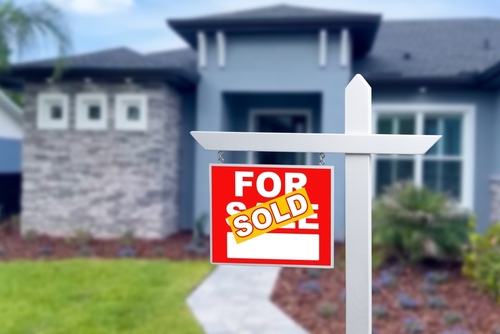
Imagine buying a house after extensively searching for just the right one. It has just about every feature and convenience you could ask for, but what tips the scales for you is the size of its garage. With grandiose plans to tinker with weekend projects in your larger garage, that extra bay resonates with you as you remove your inspection contingencies and proceed with the close of escrow.
Alas, after the sale, you first discover that the fourth bay in the garage is unpermitted. To your further dismay, you learn that it will cost at least $75,000 to bring it up to code, resulting in a legally compliant structure. Had you known of this issue before your purchase, you might have kept looking or possibly negotiated a discount on the sale price. Now all you want is to get the work done and be made whole for your unanticipated, pending expenditure.
Who pays the bill, and how much should they pay? The answer will depend on the specific facts of your case.
Measure of damages
It may be logical to assume that damages in the case of defective property will be equal to the harm suffered by the purchaser, but this is rarely the case. The actual measure of damages in a real property claim against a seller and/or real estate broker is likely to be far less.
According to California Civil Code Section 3343, a party "defrauded in the purchase, sale or exchange of property is entitled to recover the difference between the actual value of that with which the defrauded person parted and the actual value of that which he received, together with any additional damage arising from the particular transaction," including amounts "actually and reasonably expended in reliance upon the fraud" and compensation for "loss of use and enjoyment of the property to the extent that any such loss was proximately caused by the fraud." The foregoing portion of the Code resonates with most claimants. However, a defrauded party cannot "recover any amount measured by the difference between the value of property as represented and the actual value thereof."
In short, claimants typically recover the diminution in value or the cost of repair, whichever amount is less. These should both be objectively verifiable numbers--not an amount the purchaser subjectively believes he or she has suffered. Thus, a party who comes into mediation demanding a large sum without backup or support for their claimed number will be left high and dry. He or she will probably go back to square one, pay a lot more in attorney fees, and return to the process many months later with a completely different number as well as data supporting their number.
Diminution in value
Diminution in value is the difference between the fair market value of the property at the time the transaction closed and the value of the property without the alleged adverse condition. This analysis requires an appraisal by a duly qualified, third-party professional appraiser, but claimants often fail to provide any back-up support for actual diminution in value. Without official confirmation of the diminution in value, claimants will face an uphill battle recovering the amounts they demand.
Many think that diminution in value will be the same amount as the cost of repair. As logical as this sounds, it is often overly simplistic. Yes, there will be times when the diminution in value equates to or aligns with the cost of repair, but the measure is case-specific.
Imagine an elaborate jungle gym or an arbor structure that is woefully defective and requires replacement. Let's assume the cost to correct the defect is $50,000--the amount the claimant needs in order to be made whole or realize the benefit of the bargain. In the marketplace, however, these items tend to have far less bearing on the value determination for the property. The free market will assign a jungle gym or arbor a much lower value than the claimant places on them. Some potential purchasers could have cared less about that jungle gym or dated arbor structure. The existence or lack thereof may have no positive impact upon the property value.
In such an instance, the lesser of the two values in this hypothetical will be zero. Would you pay the same amount for the house you really want, with all the critical features you seek, versus the same house without a hypothetical jungle gym? The vast majority of the market would. The practical reality is that no house will be 100% what a purchaser dreams of; it is hard enough to find the size, layout and general upgrades we desire. Appraisers are likely to assign little or no value for such things as jungle gyms or arbors.
Cost of repair, square footage
Claimants too often try to support their cost-of-repair numbers with estimates or receipts showing the claimed cost of performed repairs. But just as one would expect to see with an auto accident estimate, there should be multiple estimates in order to promote credibility. A single quote will likely promote cynicism that it is merely the highest estimate.
And even if the repair cost is significant, it will only be the measure of damages if it aligns with diminution in value. As we have seen, this often isn't the case.
I've actually seen parties who are claiming nondisclosure of non-permitted portions of a structure arrive at a damages number by breaking out their calculators and dividing the sales price of the property by the square footage of the house as it was represented, versus the square footage as permitted. This short-sighted approach cannot produce an appropriate, defensible demand; it fails to recognize that land value also matters and was factored into the fair market value. Even if you can rebuild, you cannot create more land, and this will be taken into account by legitimate appraisers.
Benefit of the bargain
Is it ever possible for a purchaser to get full value for what they believe they purchased? Under certain scenarios, the broader damages may be claimed. For example, according to a California appellate court, if there was a fiduciary duty between the real estate agent and the purchaser, and the agent provided a positive affirmation of a condition or lack thereof on the property, the purchaser may be entitled to the "benefit of the bargain."
In Fragale v. Faulkner (2003) 110 Cal. App. 4th 229, 1 Cal. Rptr. 3d 616, the court found that fraud had been committed by a fiduciary when the purchaser's real estate agent assured him that there was nothing to worry about regarding concealed electrical wiring behind wood paneling. The measure of damages for such intentional misrepresentation, the court said, was not limited to the out-of-pocket losses suffered by the buyer. Because the agent was a fiduciary, damages for intentional fraud could be measured by the broader benefit-of-the-bargain rule.
Noting the two measures of damages for fraud-out-of-pocket and benefit-of-the-bargain, the court applied the latter, relying on Civil Code Section 1709, which provides that "[o]ne who willfully deceives another with intent to induce him to alter his position to his injury or risk, is liable for any damage which he thereby suffers." The benefit-of-the-bargain measure, the court said, "places a defrauded plaintiff in the position he would have enjoyed had the false representation been true, awarding him the difference in value between what he actually received and what he was fraudulently led to believe he would receive." (Citing Alliance Mortgage Co. v. Rothwell (1995) 10 Cal.4th 1226, 1240, 44 Cal.Rptr.2d 352, 900 P.2d 601.)
Prospective purchasers may ask agents about a range of matters, such as the status of building permits, square footage, number of bedrooms, condition of roof, plumbing, foundation, ability to use for rental purposes and other conditions pertaining to a property. The benefit of the bargain can make all the difference when an appraiser finds no minimal diminution but the cost of repair is high.
That extra garage bay
So let's go back to our original hypothetical. The fourth garage bay was unpermitted, serving as the basis of a damages claim. The value of this area per square foot is not comparable to the value of a kitchen from a fair market or appraisal perspective. A weekend garage tinkerer might place a higher relative value on the larger garage, but most buyers and the marketplace may not view a fourth car space as much more than a bonus, dusty location for storage of items of which they have not yet decided to dispose.
The plaintiff could seek high and low for a better appraisal, but chances are that a legitimate appraisal for mediation will show little or no diminution of value. It will likely be a fraction of the actual cost of repair to bring the garage bay to a legally compliant, permitted condition. Absent unique circumstances, a specific, peculiar or unique element of the property may have no bearing on recoverable damages, no matter how personal, real and important it may seem to the purchaser.
This is where the benefit of the bargain can come in. As we have seen in the case cited earlier, if the real estate agent knew the importance of that extra bay and affirmatively represented to the purchaser that it was permitted without a reasonable basis for stating so, the purchaser may be able to recover the full measure of damages under a benefit-of-the-bargain analysis.
Conclusion
When parties mediate cases involving damage to or destruction of real property, attorneys don't always understand how to measure damages. They may demand market value rather than cost of repair or diminution value, as required under the law. They may fail to provide appraisals to support their claims.
Parties may end up going back to square one and spending a lot more on attorney's fees before coming back to the table several months later with an appropriately supported demand. Understanding the rules at the outset allows claimants to put their best foot forward from the start, saving both time and money.
Submit your own column for publication to Diana Bosetti
For reprint rights or to order a copy of your photo:
Email
Jeremy_Ellis@dailyjournal.com
for prices.
Direct dial: 213-229-5424
Send a letter to the editor:
Email: letters@dailyjournal.com