


Civil Procedure
May 11, 2026
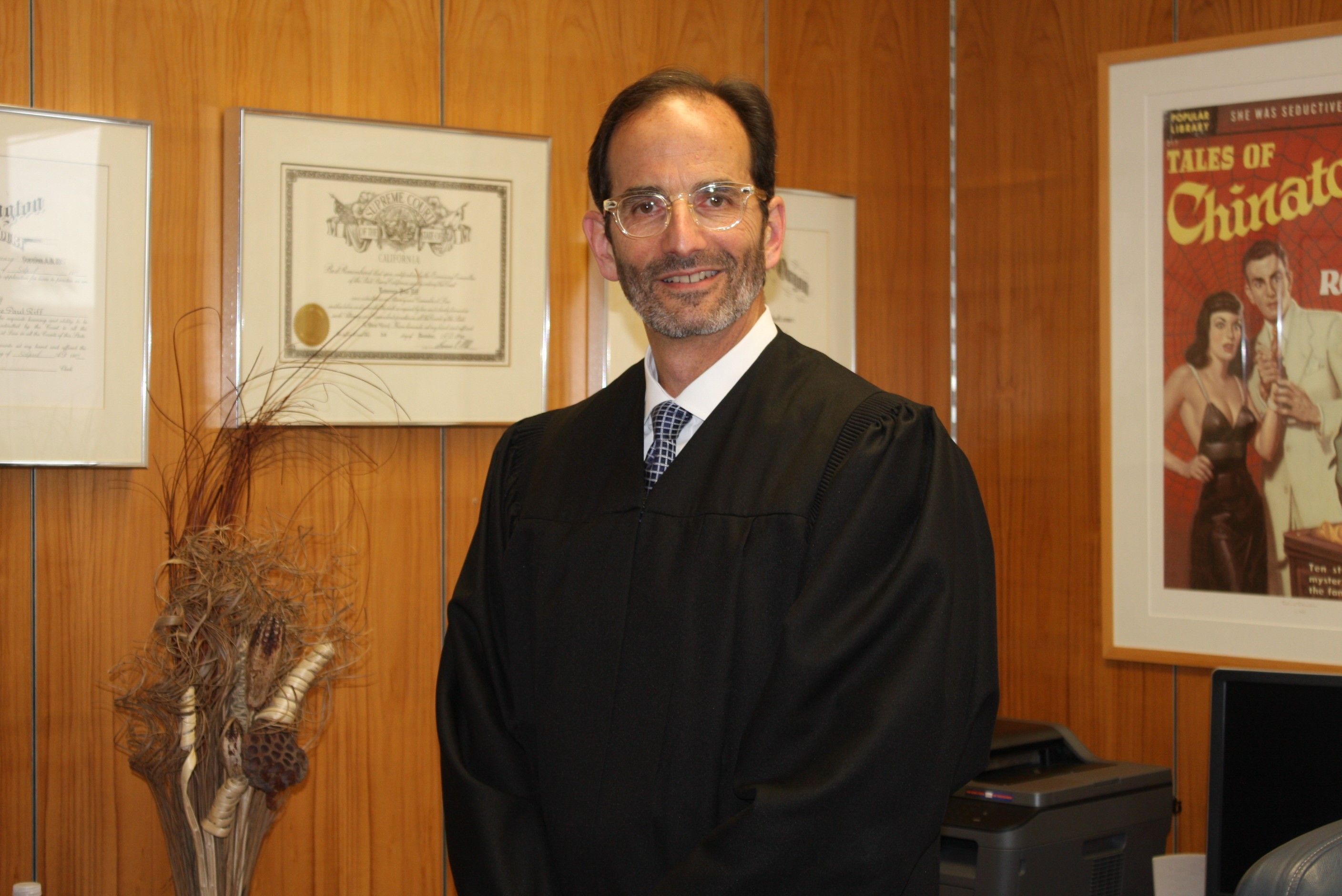
Judge Lawrence Riff has an ambitious aim to tame discovery abuses
Led by the head of the Civil Division of the Los Angeles County Superior Court, a group of more than 30 judges, lawyers and general counsel seek to reform a culture they said has made the discovery process toxic.


By any measure, civil discovery is supposed to be the engine of truth in American litigation. In practice, however, over many years it has become something else entirely: bloated, combative, expensive and often untethered from the merits of the case.
Now, a coalition led by Los Angeles County Superior Court Judge Lawrence P. Riff is attempting something far more ambitious than another round of calls for civility. They are trying to change the culture itself.
This "council"--more than 30 judges, litigators and corporate counsel--has coalesced around a simple premise: The rules are not broken; the culture is.
"Discovery has been, largely, a painful experience," Riff said in a recent interview, reflecting on more than four decades as a practitioner and jurist. That pain, he emphasized, is universal, "painful for the lawyers, painful for clients, painful for the court."
The council's statement of purpose echoes that diagnosis. Discovery, it declares, has become "unduly burdensome, expensive, contentious and inefficient," weighed down by practices that encourage "wastefulness, delay and unproductive conflict."
Riff, who has been a judge for 11 years and led Steptoe & Johnson LLP for many years before that, argues the problem is not the California Code of Civil Procedure or the rules of court, but the culture surrounding discovery itself.
"The problem is more basic to the DNA of the legal culture," he said.
Chief U.S. Magistrate Judge Karen L. Stevenson of the Central District of California said the initiative reflects growing concern that discovery has drifted far from its intended purpose.
"Discovery becomes what it should be," Stevenson said, "which is the right of parties to obtain salient information, critical information in mounting their case in litigation on either side of the case, and not just a cudgel."
Jeff Westerman, a partner at Ahdoot & Wolfson APC in Burbank, was among the first lawyers to respond after reading Daily Journal articles Riff wrote on discovery abuse.
"I emailed him and said, 'This is really good,'" Westerman recalled. "And then we started talking about whether anything could actually be done about it."
Riff and a small group of collaborators, including Judge Mike H. Madokoro, began reaching out to bar groups across Southern California, including the Los Angeles County Bar Association's litigation section, Consumer Attorneys Association of Los Angeles, the Association of Southern California Defense Counsel and the Federal Bar Association.
"The response was overwhelming," Westerman said. "They didn't just express interest, they designated representatives to participate."
Richard L. Stuhlbarg of Bowman and Brooke LLP said he joined after seeing discovery become increasingly disconnected from the actual needs of litigation.
"I've just seen a lot of unnecessary discovery," Stuhlbarg said. "It seemed to have grown, especially in the lemon law cases, to generate fees."
He said many disputes appear driven less by trial preparation than by broad "fishing expeditions."
"People are not really focused on what they need for trials or to evaluate the case for settlement," he said.
The council eventually drew judges from state and federal courts, plaintiffs' and defense lawyers, and in-house counsel. Kelly Weil, a partner at Cotchett, Pitre & McCarthy LLP, said the diversity of perspectives is central to the effort.
"The idea is to bring in people from multiple perspectives," she said, "to bring everyone together in Los Angeles, plant the seed, and hope it starts a discussion that spreads to other counties and other states."
To understand what the council is trying to change, consider the lifecycle of a typical discovery dispute.
It often begins with sprawling requests demanding "any and all documents" related to a case, followed by reflexive objections asserting the requests are vague, overbroad, privileged or invasive.
Westerman said he sees the pattern constantly.
"The most prevalent example is people send out overly broad discovery requests, and the responding party answers everything with objections on the first round," he said. "That's not the way it was intended to work."
Both sides, he added, are guilty of it.
Stevenson said the problem is often rooted less in bad faith than in institutional habits and training. Younger lawyers frequently draft discovery using inherited templates with little strategic oversight.
"You don't want to miss anything," Stevenson said. "So, the tendency is to ask overbroad requests."
That instinct has been amplified by electronically stored information, or ESI, which has dramatically expanded the volume and cost of discovery.
"We increasingly work in an electronic age," Stevenson said. "Everything is ESI."
The result can be enormously expensive searches through corporate communications and records, often far beyond what is necessary to resolve disputes.
"You'd be careful what you asked for," Stevenson recalled thinking during her years in private practice. "You might actually get it. And then you've got another problem on your hands of how to review it, how to sort and sift through it and really find the necessary and critical information."
From there, discovery disputes frequently devolve into ritualized conflict. Meet-and-confer requirements become exchanges of accusatory letters rather than genuine problem-solving efforts. Eventually, the dispute lands in court.
Riff said judges can resolve 75% to 80% of discovery disputes during informal conferences. The obvious question, he said, is why lawyers could not resolve them earlier themselves.
"Not much" happens at those conferences that could not happen before, Riff said, except perhaps real communication.
Weil said she believes that breakdown in communication is central to the problem.
"We're all glued to our computers, pushing out discovery," she said. "There's not a lot of actual dialogue between the parties about what information is needed and how to get it."
What should be straightforward exchanges, she said, can instead become months of unnecessary work.
"That process can take six to 12 months when it could happen in a 30- to 60-minute phone call: 'What do you need, how can I get it to you, where do we disagree?'"
Stevenson said the profession has also lost some of the collegiality that once tempered litigation practice, a trend accelerated during and after the COVID-19 pandemic as remote practice replaced face-to-face interaction.
"You can disagree in litigation without being disagreeable," she said.
Too often, Stevenson added, meet-and-confer efforts deteriorate into inflammatory exchanges.
"A meet-and-confer letter is not something--some nastigram you send across at 11 o'clock at night and then accuse your colleague of bad faith," she said.
One of the council's central conclusions is that dysfunction is not primarily driven by malice.
"I don't think people are intentionally acting nefariously," Riff said.
Westerman largely agreed.
"There are certainly areas where I do think bad motives come into play," he said, pointing to practices like reproducing documents and renumbering them in ways that create confusion. "There's no reason to do that except to create problems."
Stuhlbarg said financial incentives can also contribute to discovery abuse.
"I think that's a primary motivating factor," he said of fee generation. "I also think there are fishing expeditions."
Still, Riff said he believes habit is the dominant problem. Lawyers often replicate practices they inherited without questioning them.
Weil said workflow pressures reinforce those patterns.
"Often, discovery is being drafted quickly by someone with less experience," she said. "It goes out in a rush, and then you're stuck dealing with the consequences."
A recurring theme within the council is the lack of meaningful senior oversight early in the process.
"The way to make discovery work is to make sure someone senior enough to know what's involved--and what's worth fighting about--is involved early in the process," Westerman said.
Weil agreed that discovery should involve decision-makers, not simply junior lawyers working from templates.
"The thought is to always have trial counsel engaged in discovery and to have decision-makers on the calls and in court," she said, "not a layered approach where associates who don't have authority are driving it."
Stevenson emphasized the importance of mentorship and modeling for younger lawyers.
"There appears in this initiative a real groundswell of practitioners across practice areas who are really wanting and eager to see the culture be elevated around these issues," she said. "It will impact what young lawyers see more seasoned, successful, experienced lawyers do as a model for how to be successful and excellent in practice."
The council's reform effort also confronts another reality: Courts are stretched thin.
"There are judicial vacancies and increasing caseloads," Westerman said. "It makes it hard to be hands-on."
Still, he said judicial engagement remains essential.
"Anytime a judge can be hands-on, it is helpful to a case."
Weil said judges are often capable of resolving disputes quickly, but only after months of inefficiency have already passed.
"By the time a discovery dispute gets in front of a judge, months have already passed," she said. "Judges are well equipped to make hard calls--they do that every day--but the inefficiency has already happened."
Stuhlbarg said some discovery orders have become so burdensome they materially affect case outcomes.
"I've had some cases where we've had discovery orders that were very difficult for a corporate defendant to respond to and forced us to settle the case," he said.
From the federal bench, Stevenson said unnecessary discovery motion practice imposes major burdens on litigants and courts alike.
"It really impacts how much motion practice we have," she said, "whether discovery matters can be resolved in both a timely manner and on the merits as opposed to sorting out feuding, parties hurling personal invectives at one another."
The council is now exploring reforms that include a pledge of principles, education programs and outreach to managing partners who can help enforce cultural change within firms. At the center of the effort is a set of 10 principles emphasizing proportionality, accountability and real-time communication.
For Weil, the goal is straightforward.
"Over the lifespan of a case, you can spend hundreds, if not thousands, of hours pushing paper and not really getting to the merits," she said.
The aim, she said, is to streamline the process and refocus litigation on outcomes.
"What evaluation do we need to resolve this early or get it trial-ready? If we can cut those hours down, we can have a more well-oiled machine and get to mediation or trial more efficiently."
Riff has emphasized, "This is not simply a rehash of civility."
California already has civility oaths and continuing legal education requirements, but the council believes those measures have not addressed the deeper dysfunction.
"The issue is not just tone," the council argues. "It is substance--how discovery is conceived, structured and executed."
Stevenson described the initiative as an attempt to restore professionalism through conduct rather than slogans.
"That responsibility falls on all of us," she said, "to take our ethical obligation as members of the bar seriously."
The council's focus on education reflects that approach. Planned initiatives include training sessions on drafting targeted requests, responding appropriately and conducting meaningful meet-and-confer discussions.
"We want to nip the problem in the bud," Riff said, before disputes escalate.
After decades in the system, Riff said he sees an opportunity--and an obligation--to leave the profession better than he found it.
"We owe it to the more junior members of our profession," he said, "that they be taught ... there is a better way."
Whether the council can shift entrenched habits across the profession remains uncertain. But for the first time in years, a broad coalition appears willing to try.
10 Principles for Fixing Civil Discovery
· Talk early -- Lead counsel should communicate at the start of a case and create a practical discovery plan before serving written discovery.
· Stay involved -- Senior lawyers must actively supervise discovery and remain accountable for strategy and conduct.
· Tailor requests -- Discovery requests should be focused, proportional and tied to the needs of the case.
· Produce fairly -- Responding parties should provide information honestly and avoid evasive objections or gamesmanship.
· Keep discovery proportional -- Lawyers should be able to explain why requested information actually matters to the claims or defenses.
· End boilerplate objections -- Every objection should have a good-faith legal basis; generic objections should disappear.
· Meet and confer in real time -- Lawyers should talk directly to solve disputes, not hide behind accusatory emails and letters.
· Improve judicial access -- Courts should provide prompt informal conferences and timely rulings to resolve disputes efficiently.
· Educate clients -- Clients should understand discovery is meant to uncover facts, not create unnecessary burden or delay.
· Train the profession -- Judges, firms and bar groups should promote better training on focused discovery, professionalism and dispute resolution.
David Houston
david_houston@dailyjournal.com
For reprint rights or to order a copy of your photo:
Email
Jeremy_Ellis@dailyjournal.com
for prices.
Direct dial: 213-229-5424
Send a letter to the editor:
Email: letters@dailyjournal.com