


May 14, 2026
How a boys camp in the Sierra helped shape a future lawyer
The R.M. Pyles Boys Camp has spent decades mentoring youths through wilderness leadership and year-round support. One former camper is now thriving at UCLA School of Law and preparing for a future in litigation.


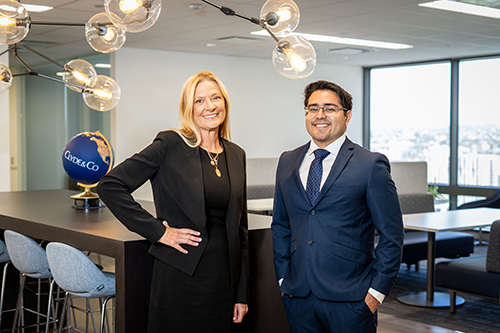
Ivan "Navi" Trigueros Ramirez remembers the day a sheriff's deputy walked into his elementary school in Lost Hills, a tiny farmworker community north of Bakersfield, and gathered the boys known for causing trouble.
The children panicked.
"We're all super scared, like, 'Oh damn, what did we do?'" Trigueros Ramirez recalled with a laugh.
Instead, the sheriff offered something unexpected: a free summer camp in the mountains.
Then a struggling middle-school student, he was drifting away from academics and toward trouble. The deputy's invitation altered the course of his life. Fourteen years later, the son of Mexican immigrants is a UCLA School of Law student preparing to begin a summer internship at global law firm Clyde & Co LLP -- an opportunity he credits in large part to the R.M. Pyles Boys Camp and the mentors who guided him there.
"I think what changed me most," he said, "was having someone tell me, 'I see you. What you're doing matters.'"
The camp, founded in 1949 by oil wildcatter R.M. Pyles, was created to support boys growing up without fathers after World War II. Over the decades, the mission evolved to meet new crises -- gang violence in Los Angeles during the 1980s, then widening poverty and social isolation in communities across Southern California.
Today, the nonprofit serves boys facing steep structural barriers. More than 60% live at or below the federal poverty line, 75% identify as Black, Indigenous or people of color, and nearly half come from single-parent households. Now, the nonprofit is launching a similar program for girls.
The program combines year-round mentorship with a demanding 12-day wilderness leadership experience that strips away phones, social media and many of the distractions of modern life.
"It's really about work ethic, values, commitment to family and being proud of who you are," said Christina Hoffman, a senior counsel at Clyde & Co who has worked with the camp for nearly three decades.
Campers hike miles through the Sierra wilderness carrying heavy packs, sleeping outdoors and relying on one another.
"It's not easy," Hoffman said. "But they come back changed."
Trigueros Ramirez arrived at camp in 2012 carrying burdens heavier than any backpack.
Born in Mexico, he immigrated to the United States at 6 with his parents, who spoke little English and worked physically demanding jobs to support the family. As a child, he excelled academically, earning straight A's. But he struggled emotionally with the absence of his overworked parents from school events and milestones.
"All I saw was, I'm getting all these awards in school and nobody's showing up," he said. "So, at some point I just decided, 'What am I doing all this work for anyway?'"
His grades collapsed. He began failing classes and acting out.
Then came the camp.
What began as excitement over horseback riding and archery gradually became mentorship, structure and belonging.
"The camp actively looks for boys who are at a pivotal point in their lives," Trigueros Ramirez said. "And it steps in to push them in the right direction."
After attending as a camper, he returned as a counselor while attending UC Santa Barbara on a full scholarship. There, during one of his first summers as a counselor, he met Hoffman.
Fresh off a grueling backpacking trip, sweaty and exhausted, he told her he hoped to become a lawyer someday.
Hoffman did not sugarcoat the profession.
"She told me law school is hard and expensive," he recalled. "But she also said, 'If you really want to do it, give me a call.'"
He did.
Over the years, Hoffman became both mentor and guide, helping him navigate a professional world that initially felt foreign.
"She was the first lawyer I'd ever met," Trigueros Ramirez said. "Just learning how to talk to people in that world, how to interview, what's appropriate to say -- that was huge for me."
Hoffman said his intelligence stood out immediately, but so did his humility.
"He's exceptional," she said, adding that he was accepted to several top law schools and received generous offers.
Trigueros Ramirez ultimately chose UCLA law, where he recently completed his second year.
His path there, however, was interrupted by a devastating medical crisis.
During his freshman year at UC Santa Barbara, he suddenly collapsed in his dorm room. He woke up in a hospital unable to speak properly and suffering from memory loss and mobility issues. Doctors never determined exactly what caused the brain injury.
"For a while, nothing would stick," he said. "I'd study and it would go in one ear and out the other."
The experience forced him to reconsider his identity and future.
"The things I relied on to get me there -- my brain, my body, my work ethic -- suddenly felt taken away," he said.
But when he regained consciousness, familiar faces from Pyles Camp were there beside him: former counselors, mentors and camp staff members.
"That support system mattered," he said. "It reminded me that even if everything else changes, if you keep going, you can still build a life."
This summer, Trigueros Ramirez will begin building the next chapter of that life at Clyde & Co, where he was selected for a competitive summer associate position after interviewing through UCLA's on-campus recruitment process.
Hoffman encouraged him to apply and coached him through the process, but she said his accomplishments earned the opportunity.
"He walked in and impressed people on his own," she said.
Trigueros Ramirez hopes eventually to practice litigation, though he says he is still exploring different areas of law.
He also hopes his story highlights the broader impact of Pyles Camp -- not just for him, but for many others.
In a follow-up message after the interview, he pointed to another former camper, Julio Chavez, known at camp as "Matrix," who once worked in the underground garment industry as a child and is now preparing to apply to law school after graduating from UCLA and completing elite pre-law fellowships.
"Our Pyles stories are not unique, and they're not accidents," Trigueros Ramirez wrote. "Whether a Pyles brother chooses to become a plumber, a landscaper or a lawyer, there is someone willing to guide them."
For Hoffman, those transformations are why she has remained involved with the camp for nearly 30 years.
"My hope," she said, "is that more people in the legal community see what programs like this can do."
To get involved in with R.M. Pyles Boys Camp, go to pylescamp.org.
David Houston
david_houston@dailyjournal.com
For reprint rights or to order a copy of your photo:
Email
Jeremy_Ellis@dailyjournal.com
for prices.
Direct dial: 213-229-5424
Send a letter to the editor:
Email: letters@dailyjournal.com