


Torts/Personal Injury
May 18, 2026
Protect access to justice and be munificent
Uber's ballot initiative would gut California's contingency fee system, restrict access to justice for injured victims, shift costs to taxpayers, and demands a major financial and political response from the plaintiffs' bar to defend the system.


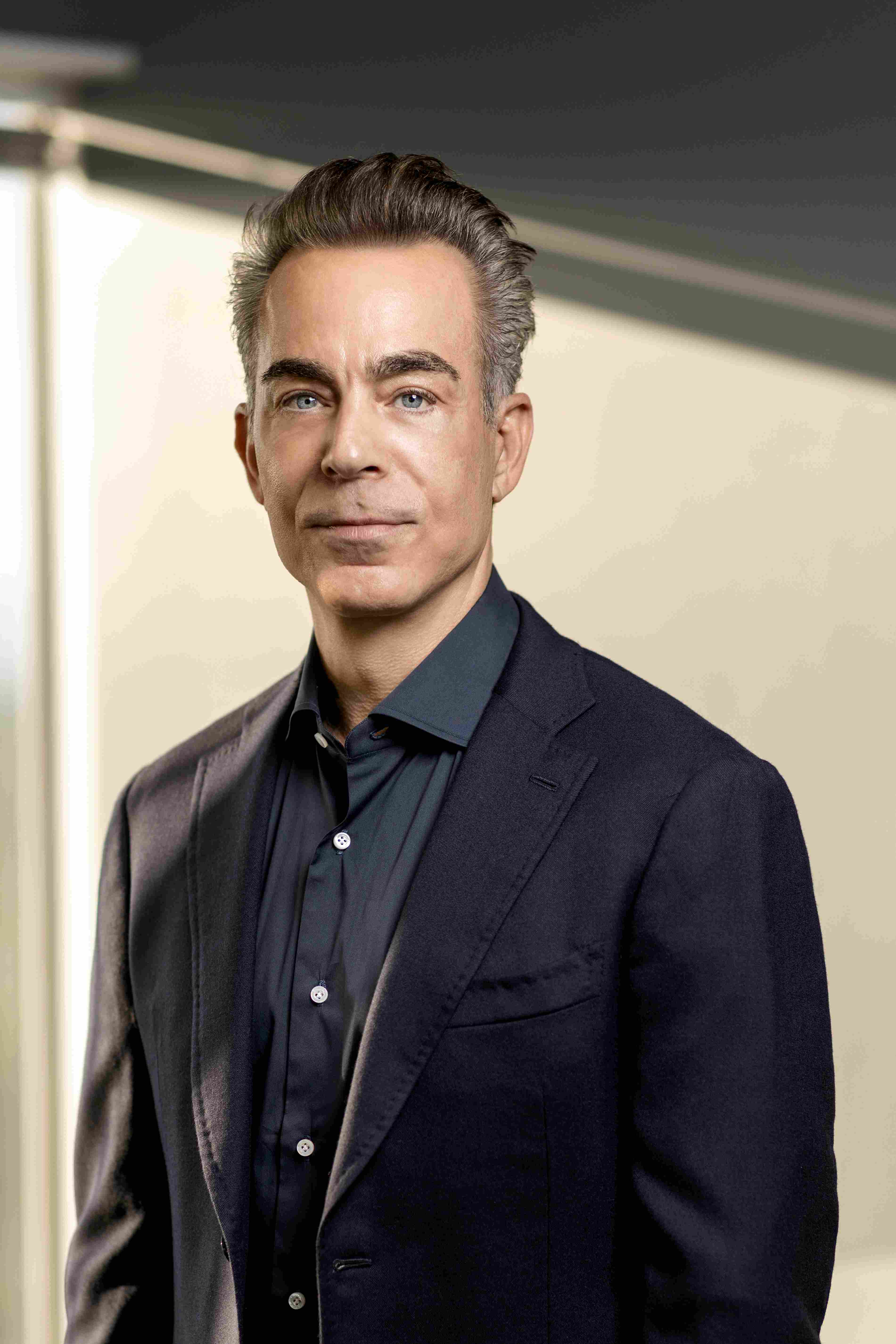
Arash Homampour
Sole Shareholder
The Homampour Law Firm PC
15303 Ventura Blvd.
Sherman Oaks , CA 91403
Phone: (323) 658-8077
Fax: (323) 658-8477
Email: arash@homampour.com
Southwestern Univ SOL; Los Angeles CA
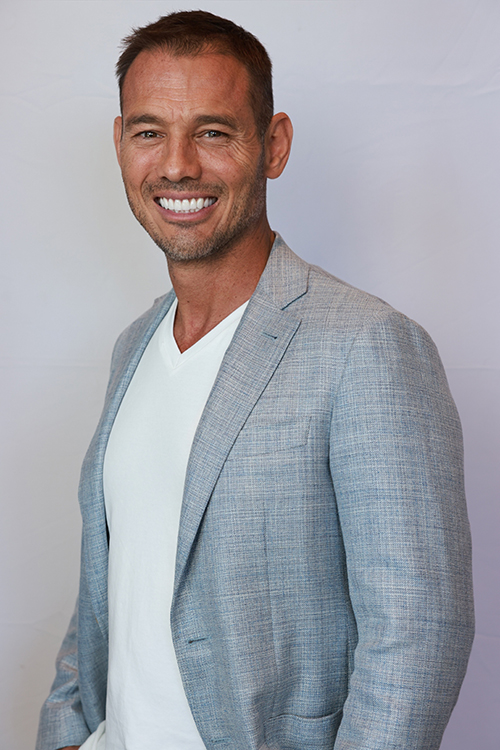
Nicholas Rowley
Nick Rowley is a national trial lawyer, published author, philanthropist, and founder of Trial Lawyers for Justice who represents injury victims and their families across the United States.
The contingency fee
system is a necessary democratic tool in American law. It is the reason why
injury victims and the families of those wrongfully killed can hold
billion-dollar corporations and insurance companies accountable, even when they
lack the money to hire lawyers.
This critical system is
now under attack by Uber Technologies, and every lawyer who believes in holding
wrongdoers accountable and compensating victims should be doing everything
within their power to protect it.
Uber is funding a
proposed California constitutional amendment, Initiative 25-0022A1, which will appear on the November 2026 ballot. The measure would
destroy the contingency fee system for anybody injured or killed while riding
on a bicycle or motorcycle, or while riding in a car or other vehicle. It would
also reach products liability claims arising out of automobile accidents.
If Initiative 25-0022A1
passes, access to medical care for the most vulnerable will likely disappear,
as the new law limits what victims can recover for their medical expenses and
burdening taxpayers with paying for harms caused by Uber and other corporate
defendants.
The big lie
That Uber's initiative is
designed to protect injury victims and ensure they receive more money is one of
the biggest lies ever told in American political history. Sadly, however, we
live in a time when voters believe such lies, when money and propaganda can buy
these false beliefs. The truth is that every piece of Uber's big
beautiful bill restricts and harms the people Uber's drivers injure or
kill. Whether Uber's fraudulent scheme can be effectively communicated to the
voting public depends on the legal community and how much it is willing to
invest in the fight.
The Attorney General's official Title and
Summary for Initiative 25-0022A1 confirms that Uber and
the insurance industry will have an insurmountable litigation advantage if the
law passes: The measure would not restrict fee arrangements for defendants'
attorneys.
The corporations that
caused the harm and the insurance companies that defend them will have no
limits on what they spend to deny, delay, and grind down every claim, while
injury victims will face a constitutional cap on what their lawyers can be paid
for fighting back. One side gets unlimited firepower; the other side's
representation is choked off by constitutional rule.
Those who will be harmed
the most will be those who have suffered the worst injuries-paraplegia,
quadriplegia, amputations, traumatic brain injuries, spinal injuries, chronic
regional pain syndrome, severe disfigurements. They will lose access to justice
because their representation requires the most work and highest contingency
risk of time and litigation costs.
Taxpayers will pay
California's own fiscal
analysis confirms the burden that will be inflicted on taxpayers by restricting
access to the justice system. According to the Legislative Analyst and Director
of Finance, Uber's law will reduce the number of motor vehicle cases filed and
will increase Medi-Cal costs.
Trauma centers, public
hospitals, and county clinics will be overwhelmed when injured people turn to
them for care. Uber and the insurance industry will earn interest on the money
they save by not having to pay for those injuries. Rich corporations will pay
less, California taxpayers will pay more.
This is not a talking
point for lawyers but an objective conclusion and risk assessment by the
nonpartisan office that advises lawmakers and the Governor.
The money trail
Uber's efforts to
insulate itself from accountability did not begin and will not end in
California. In January 2025, the Nevada Supreme Court unanimously rejected an
Uber-backed initiative that would have capped contingency fees in civil cases
at 20%. Chief Justice Douglas Herndon, writing for the court, held that the
petition language was "misleading and confusing." Similar fights are brewing in
other states. These coordinated, well-funded, multi-state strategies are being
organized nationally.
As of the FPPC's most
recent public tally, top contributors had given more than $32 million in
support of Uber's initiative. Uber and its allies spent over $200 million on
Proposition 22 and won. Uber generated $52 billion in revenue and more than $10
billion in net income in 2025. On its fourth-quarter earnings call, Uber's
executives told their investors that reduced insurance costs would boost
revenue growth. For Uber and its investors, the planned schemes of buying
"insulation from accountability laws" are capital investments with billions and
billions in projected returns.
A fair system
Let's be brutally honest
and discuss the elephant in the room. Contingency fee practices, for those who
succeed, can be extraordinarily lucrative. Taking on the greatest risks and
generating large recoveries for deserving clients can result in millions of
dollars per year in income. The higher the risk the greater the reward, but
when the risk goes south those of us who do this work know that millions in
time and costs are often lost. The contingency fee system is a fair system.
If we want to preserve
this system, we must do what we expect of any group that has accumulated
extraordinary wealth. We tell billionaires they should give back. We tell tech
founders and hedge fund managers that their success carries a civic duty. This same
principle applies to lawyers who have achieved wealth through working in the
contingency fee system. If you have done well, then you owe a debt to the
contingency fee system and you must invest in its protection.
Give because it matters
Giving back means more
than signing a check once a year at a gala to get recognition. Generosity
should be a habit, a reflex, a standing commitment. If someone asks and they
are aligned with what you believe, give: whether it's local races, state races,
national races, consumer protection campaigns, access-to-justice organizations,
legal aid, public interest fellowships or scholarships.
Don't overthink it or run
a cost-benefit analysis each time. Don't wait for the perfect cause or the
perfect candidate or for others to step up before you do. Give because the work
matters and because the people doing it should not have to beg for resources
from those whose profession made them wealthy. A candidate who fights for
consumers, for tenants, for injured people, for working families should be able
to count on the lawyers who represent those same people for a living.
When you adopt the
philosophy of munificence, you will end up on every list. Somewhere out there,
a third grader running for class president is drafting a fundraising email with
your name on it. That happens when we make ourselves available, and the alternative
is worse: hoarding what we earn, collecting things that carry no meaning beyond
the price tag and leaving the work of protecting the justice system to someone
else.
How can a lawyer win a
$50 million verdict and then disappear into a lifestyle far removed from the
system that provided that opportunity in the first
place? Society decided that all injured Americans deserve representation and
equal access to justice. Instead of flaunting flashy things and empty civic
resumes, lawyers should use their success to give back to society, to ensure
that the system that gave them a good living is not killed by the likes of
Uber.
A scary world
Imagine a world in which
corporations and insurance companies have the power to avoid accountability, in
which ordinary people cannot afford a lawyer or access the courts. Companies
invest in safety when harming people costs more than preventing harm. Strip
away the threat of accountability and the math flips. Corners will be cut,
warnings will be ignored, recalls will be delayed and
people will die. Costs will shift to families, public health facilities and
taxpayers.
The response
What does giving back
look like in practice? It means funding organizations on the front lines. Consumer Attorneys of California (CAOC) is leading the opposition to Uber's initiative and has been
fighting to preserve access to justice for decades. Consumer Watchdog has been exposing the impact of Uber's measure and sounding the alarm on
its autonomous vehicle liability strategy. These organizations need our
sustained support, not just during ballot season but year-round. A war chest of
$100 million would have stopped Uber in its tracks.
California's legal
community could be the most powerful lobbying force in this country if it
simply took action. It should support political
candidates who defend access to justice at the local, state, and national
levels and oppose those who side with corporations and the insurance industry.
It should support legal aid organizations, public interest groups and policy
reform efforts that keep the system functioning for people who cannot pay by
the hour. California law does not cap contributions to ballot measure
committees; there is no excuse to sit this one out.
Plaintiffs' lawyers: This
fight is yours, whether you want it or not. If you take cases on contingency,
your business model is on the ballot. If Uber wins in California, its playbook
does not stay in California. The next state on the list could be yours. Today
the target is motor vehicle litigation and product liability. Tomorrow it will
be all civil liability, employment and civil rights cases. Everyone whose
practice has been built on the contingency fee system has a stake in this;
every one of us has an obligation to defend it.
Uber's committee reports
raising more than $32 million; Prop 22 showed that it will spend whatever it
takes to win. We cannot rely on a handful of large donors to carry this fight.
The plaintiffs' bar must step up at meaningful levels. If every lawyer who had
good contingency cases wrote a real check rather than a token one, the war
chest would dwarf Uber's.
Whatever number you pick,
pick one that means something to your firm. It's a small price for keeping the
system that built your career, much smaller than what it will cost you when the
system goes away.
There should be no
excuses. If your firm is small, give what you can give and recruit others to
give. Local giving matters, but it does not stop a constitutional amendment. If
you practice in another state, remember that California is the laboratory. If we
lose here, your state is next and you will have done
nothing to prevent it. Even if you don't handle automobile cases, read the
initiative. The model is auto first because that is the easiest to sell to
voters. Once it passes, the same template will be adapted to whatever practice
area is next on the list. None of us are exempt, none of us get to opt out.
This is not a choice
between giving and not giving. It is a choice between giving now, while we can
still win, or giving later to lawyers who will be trying to undo what we let
happen. Pick the first one. Set a number that means something to your firm, write
it into your annual budget and treat it the way you treat your overhead,
because that is exactly what it is.
Conclusion
As successful plaintiff's
lawyers, we know what the contingency system makes possible, because it made
our careers possible. Both of us started with nothing: no mentors, no money, no
cases. One of us had parents who immigrated from Iran with nothing. The other
grew up underprivileged, joining the military in order to
go to college and law school. The contingency fee system is the reason each of
us was able to build a practice, represent people in their worst moments and
ultimately be munificent.
The contingency fee
system levels the field. It allows the 95% of Americans who could never pay a
lawyer by the hour to retain the best trial lawyers, to force the corporations
that harmed them to answer for their injuries. Because of contingency fees, dangerous
products are recalled, warnings are printed, unsafe vehicles come off the roads
and drivers are better trained. Every plaintiff who pursues a claim protects
someone who might otherwise have been hurt.
The contingency fee is
not a private remedy for the injured. It is a public good that keeps our
country safer. The two of us have contributed almost $6 million to this effort,
because we believe in the system. Each of us could easily retire or practice elsewhere,
but we choose to be in this fight, to do all we can-because it's the right
thing to do.
Fund CAOC. Fund Consumer
Watchdog. Fund the candidates who will protect access to justice and oppose the
ones who will not. Fund the ballot measures that keep the courthouse doors
open. Be Munificent.
Uber is not waiting. Uber
is not deliberating. Uber is on the attack. The Red Hot
Chili Peppers had a song for moments like this one. Give it away. Give it away
now. Match the urgency. Match the spending. The lawyers who built their careers
on this system are the only ones who can save it.
Submit your own column for publication to Diana Bosetti
For reprint rights or to order a copy of your photo:
Email
Jeremy_Ellis@dailyjournal.com
for prices.
Direct dial: 213-229-5424
Send a letter to the editor:
Email: letters@dailyjournal.com