


Torts/Personal Injury
Aug. 28, 2026
Why workers' comp liens complicate personal injury settlements
Personal injury cases involving workers' compensation liens create complex settlement dynamics as injured workers, insurers and defendants compete over liability, reimbursement and limited settlement funds.


Lee M. Mendelson
Mediator
ADR Services, Inc.
personal injury, insurance bad faith, employment, commercial, product liability
I have spent much of my legal career looking at insurance-related disputes from different sides of the table. Before becoming a full-time mediator, I was a civil litigator for over 25 years, including more than two decades handling subrogation matters. Today, that experience is particularly valuable when mediating personal injury claims involving large workers' compensation liens because these cases present settlement dynamics unlike most other litigation.
At its most basic level, "subrogation" means to "substitute." When an insurance carrier pays benefits arising from a loss caused by a third party, the carrier may acquire the right to pursue that third party for reimbursement--essentially "stepping into the shoes" of its insured.
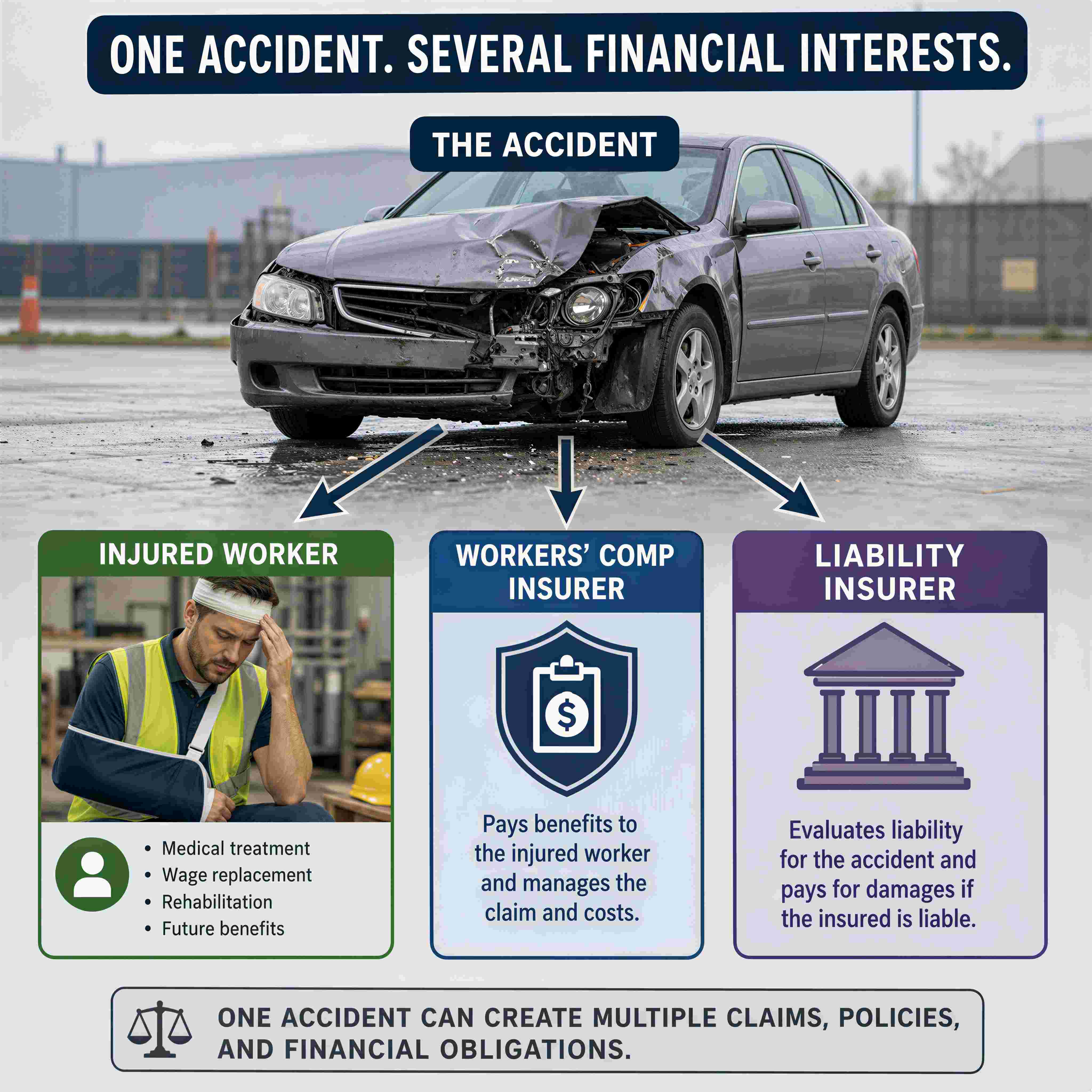
A personal injury mediation with a workers' compensation subrogation component may include an injured worker, the worker's attorney, an employer, a workers' compensation carrier, subrogation counsel, a third-party defendant, defense counsel and a liability carrier. Although the caption may suggest only two sides, I often find myself mediating among three or more distinct sets of interests.
The compensation bargain
Workers' compensation rests on the "compensation bargain": in exchange for access to a no-fault system, employees generally give up the right to sue their employers in tort for workplace injuries. The analysis becomes more complicated when a third party caused the accident.
Consider a truck driver rear-ended while making a delivery. The workers' compensation carrier may pay medical expenses and indemnity benefits. At the same time, the driver may have a personal injury claim against the third-party tortfeasor for uncompensated damages such as pain and suffering, emotional distress and future lost earnings. The workers' compensation carrier may also pursue reimbursement from the third party.
One accident, multiple interests
One of the first questions I focus on is: Who are the actual stakeholders, and what does each need to accomplish? The injured worker wants to maximize the net recovery. The workers' compensation carrier wants reimbursement. The defendant generally wants finality, while the liability carrier may have its own coverage or excess-insurance concerns.
These interests overlap, but they are not identical. The injured worker and workers' compensation carrier may spend much of the litigation as allies and arrive at mediation as competitors for the same settlement dollars. Sometimes the most difficult negotiation is between parties sitting on the same side of the caption.
How much of the lien is reimbursable?
One lesson I learned handling subrogation litigation is that the amount paid is not necessarily the value of the claim against the tortfeasor. If a workers' compensation carrier has paid $300,000, the negotiation may begin with, "We have a $300,000 lien, so we want $300,000." But that is only the beginning of the analysis.
What are the liability issues? Is there comparative negligence? Are all medical expenses causally related? What insurance limits are available? Is the defendant collectible beyond those limits? And, particularly important in California, did the employer contribute to the accident? These questions can substantially change the value of the carrier's recovery. The discussion needs to move from "How much is the lien?" to "What is the realistic value of the recovery?"
Employer negligence changes the conversation
Employer negligence can create a particularly important dynamic. The defendant may contend that the employer contributed to the accident through unsafe equipment, inadequate training, improper supervision or other negligent conduct. That allegation can significantly affect the carrier's recovery and may force the carrier that came seeking reimbursement to defend the employers' conduct. If employer negligence is a meaningful issue, simply negotiating percentages off the lien may miss the real issue driving settlement value.
A negotiation within the negotiation
Assume the defendant has a $1 million liability policy. The injured worker has substantial uncompensated damages, while the workers' compensation carrier has paid several hundred thousand dollars. If the defendant is prepared to tender or substantially exhaust the policy, one negotiation may effectively be over--but another may just be beginning: How will the available money be divided between the injured worker and the workers' compensation carrier?
The carrier will emphasize reimbursement and the concern that the worker should not recover twice for the same loss. The injured worker's attorney may respond that a settlement is impossible unless the worker receives a meaningful portion of the available limits, particularly where the personal injury attorney carried the burden and expense of prosecuting the case.
The mediator may need to help the plaintiff and carrier evaluate these competing interests while simultaneously working with the defense toward a global resolution. This is why mediation requires more than carrying numbers from one room to another. The mediator needs to understand how each piece affects every other piece.
Why I believe these cases belong in mediation
My years representing parties in insurance-related matters taught me the law of subrogation and insurance coverage, but also that these cases are ultimately disputes involving risk, money and competing interests. Trial can resolve them, but it also adds expense, delay and uncertainty. Mediation allows everyone to evaluate those risks at the same time.
When I mediate a personal injury case with a large workers' compensation lien, I do not view my role as simply determining what discount should be applied to the carrier's lien. I want to understand liability, employer negligence, comparative fault, available insurance, the injured worker's uncompensated damages, litigation costs, attorney's fees and what each participant needs to reach an agreement.
The goal is to transform the discussion from "How much are you willing to give up?" to "Is there a resolution that makes more sense than continuing the litigation?" From the mediator's chair, I have found that the answer is usually yes.
Submit your own column for publication to Diana Bosetti
For reprint rights or to order a copy of your photo:
Email
Jeremy_Ellis@dailyjournal.com
for prices.
Direct dial: 213-229-5424
Send a letter to the editor:
Email: letters@dailyjournal.com