


Litigation
Los Angeles
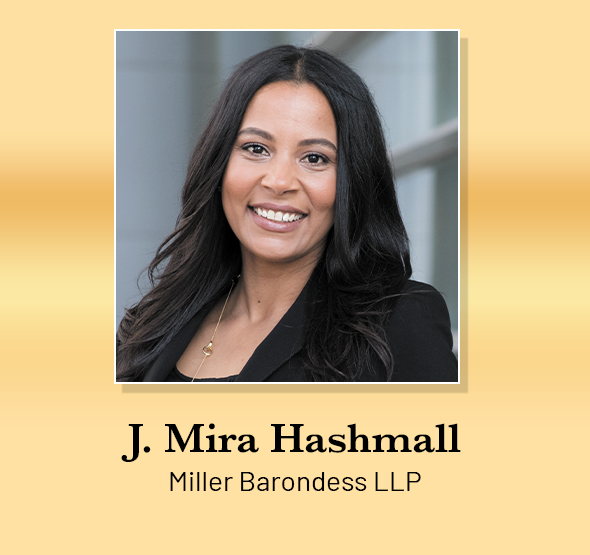
In August 2026, fire investigators from the California Department of Forestry and Fire Protection and the Los Angeles County Fire Department released their findings on the Eaton Fire's origin, confirming that Southern California Edison equipment ignited brush on the hillside above Eaton Canyon Wash, land Edison was responsible for maintaining. J. Mira Hashmall, a partner at Miller Barondess LLP who represents the county of Los Angeles in the litigation, responded: "It is time for Edison to take responsibility for the Eaton Fire and the destruction it caused."
Hashmall leads the county's defense filed after the Jan. 7, 2025 fire spread through Altadena and nearby communities. Edison has filed cross-claims against the county and other public entities, seeking to attribute the fire's spread to decisions on evacuation alerts, emergency coordination, firefighting, vegetation management, water infrastructure and gas systems. Jeremy Gursey v. Southern California Edison Company, et al., 25STCV00731 (L.A. Super. Ct., filed Jan. 13, 2025).
Hashmall argues those claims are barred by the immunities public entities hold under California Government Code section 850. She rejects the premise behind Edison's cross-claims outright. "Edison cannot shift its liability to the residents of Altadena onto the county, nor can Edison establish any violations of duties by the county to support any tort liability," she said. She views the case as a test of whether a private utility may transfer wildfire liability to public entities for choices made during an emergency, with implications for public agencies statewide.
Hashmall also represents the county in Dan Grigsby, et al. v. City of Los Angeles, et al., arising from the January 2025 Palisades Fire. Plaintiffs there pursue claims under inverse condemnation, dangerous condition of public property and public nuisance, alleging that public infrastructure and government action contributed to the damage. Hashmall sees the litigation as reaching well beyond this single case.
"The case is particularly important because it tests the boundaries of public-entity liability for wildfire losses, including when inverse-condemnation principles may apply to damage allegedly associated with public infrastructure and whether governmental entities may be held liable for operational and policy decisions made in preparation for and response to an unprecedented emergency," Hashmall said.
Hashmall credits her partner, Skip Miller, with shaping how she approaches litigation. "One of the key lessons he taught me is that sometimes, you have to take a case to trial. For defendants, this might happen if a settlement demand is unreasonable or if there are important institutional interests at stake," Hashmall said. "For plaintiffs, it can be necessary when the other side refuses to negotiate seriously, leaving no choice but to go before a jury."
Looking ahead, Hashmall said public entities are increasingly facing claims that seek to convert difficult policy, infrastructure and emergency-response decisions into civil liability.
"Courts are being asked to determine where legitimate accountability ends and statutory immunity or governmental discretion begins, often in cases with enormous financial and institutional consequences," she said.
For reprint rights or to order a copy of your photo:
Email
Jeremy_Ellis@dailyjournal.com
for prices.
Direct dial: 213-229-5424
Send a letter to the editor:
Email: letters@dailyjournal.com