


Constitutional Law
Sep. 28, 2026
Campaign finance at 50: What Buckley got started
Fifty years after Buckley v. Valeo, the Supreme Court's campaign-finance jurisprudence continues to distinguish protected independent political spending from direct campaign contributions, a principle reinforced by Citizens United


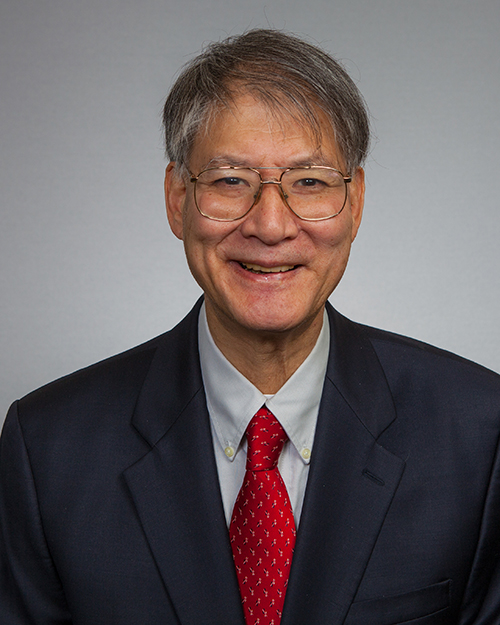
William K.S. Wang
Emeritus Professor
University of California College of Law, San Francisco
Some critics of the current Supreme Court have proposed "reforming" it, including expanding the number of justices. The 5-4 decision, Citizens United v. Federal Election Commission, 558 U.S. 310 (2010), draws particular condemnation, often based on misperceptions.
Some believe that the Court for the first time held that a for-profit, non-press corporation possesses First Amendment rights. Actually, the opinion relied on First National Bank of Boston v. Bellotti, 435 U.S. 765 (1978), which voided a Massachusetts criminal statute that banned business corporations from spending company funds to influence voters in a referendum unless the issue materially affected the corporation's property, business, or assets. Bellotti said: "The court below framed the principal question in this case as whether and to what extent corporations have First Amendment rights. We believe that the court posed the wrong question." Id. at 775-76. The issue was whether the First Amendment shields not the corporation, but its political expression because the latter benefits society, including voters.
Another misconception about Citizens United is that it allowed unlimited campaign contributions. In fact, the Court has never held that the Constitution bars all limits on campaign contributions directly to political candidates.
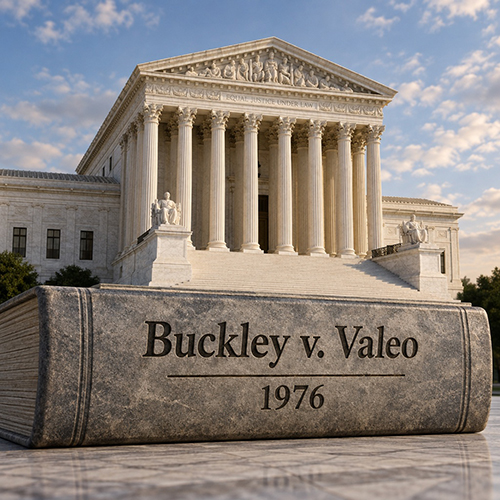
Citizens United held that the First Amendment shields corporations and labor unions from government prohibitions on genuinely independent expenditures for political speech. Nevertheless, protection of independent political spending began not with Citizens United but Buckley v. Valeo, 424 U.S. 1 (1976), the Court's foundational 7-1 campaign-finance decision rendered half a century ago. Public discussion often conflates the two.
The First Amendment may protect three categories of political spending:
Campaign contributions directly to a candidate. The Court has generally held the Constitution permits limits on such donations.
Independent expenditures on political speech made without coordination with the candidate or her campaign. Independent expenditures receive much stronger First Amendment protection.
Coordinated expenditures made in cooperation with the candidate. Such coordination can raise quid pro quo corruption dangers similar to those of direct contributions.
Although Buckley expressly upheld limits on contributions to candidates (including coordinated expenditures), it found that the First Amendment forbids government ceilings on individual or group spending made independently of a candidate's campaign. Only one justice dissented from this view. Another justice did not participate, and the remaining seven, both conservative and liberal, including Justices Brennan and Marshall, endorsed this holding.
Why did Buckley shield independent expenditures?
First, the Court recognized that spending is integral to political speech: publishing through flyers, advertisements, mailings, pamphlets, periodicals, books, videos, films and other media all costs money, so a government ceiling on expenditures directly limits the quantity and reach of political expression. (Analogously, if someone has a right to a lawyer, restricting the amount she can pay burdens that right.)
Second, Buckley reasoned that the danger of corruption is less if an individual or group spends genuinely independently of the candidate's campaign.
Third, the Court rejected the argument that the interest in equalizing the relative ability of individuals and groups to influence elections justifies limits on express advocacy. The Court said that the government's restricting "the speech of some elements of our society in order to enhance the relative voice of others is wholly foreign to the First Amendment." 424 U.S. at 48-49.
A hypothetical illuminates Buckley: To prevent "purchase" of elections, a town ordinance forbids spending more than $X to support or oppose a candidate. During arrests, the sheriff kills some unarmed African Americans. An African American candidate runs for election against the incumbent sheriff.
The day before the election, independently of the campaign, a leader in the African American community organizes a meeting to denounce the sheriff and call for the African American candidate's victory. The community leader spends more than $X of her own money on flyers publicizing the meeting and condemning the sheriff's killings.
The sheriff wins the election and arrests the community leader.
Despite the town's concern about the wealthy's disproportionate influence, the First Amendment must shield at least some independent spending by the community leader. What is the protected dollar amount relating to the election of this level official in this particular community? To avoid the daunting task of setting a protected dollar figure for every office in every political unit in the country, the Court might have decided: allow unlimited independent spending and let the marketplace of ideas enlighten voters.
Citizens United both confirmed Buckley's rejection of restrictions on genuinely independent political spending and, with apparent approval, mentioned Buckley's upholding limits on direct contributions: "The Buckley Court, nevertheless, sustained limits on direct contributions in order to ensure against the reality or appearance of corruption. That case did not extend this rationale to independent expenditures, and the Court does not do so here." Citizens United, 558 U.S. at 357.
What Citizens United changed was the treatment of corporations and unions. Congress had prohibited them from using general treasury funds to make certain federal campaign expenditures and "electioneering communications." Citizens United held that the First Amendment precluded such limits on corporate and union independent spending.
When Donald Trump is a federal candidate, suppose a corporation independently publishes a full-length book susceptible of no reasonable interpretation other than as an appeal to vote against him. Under the statute, the publication may have been a federal crime.
During the Sept. 9, 2009, Citizens United oral reargument, Justice Ruth Bader Ginsburg asked if the government still contended that it could regulate certain corporate-published book-length campaign biographies. Solicitor General Elena Kagan replied that, while the statute technically could cover some full-length books, such a prohibition would present a strong as-applied First Amendment objection.
Justice Kennedy's memoir, Life, Law & Liberty 207 (2025), recalled that the government's attempt to backtrack did not eliminate his concern "that under the statute as written, books like this, published by corporations would be banned."
One approach might be protection for independent political expenditures by certain categories of corporations, such as educational, research, think-tank, religious, issue-advocacy, political-advocacy, and "media." Among the many problems is that, with today's communications technology, the category "media corporation" encompasses virtually any company that produces print, video, or digital matter for distribution through the internet or other means.
After decades of inconsistent Supreme Court decisions on which types of corporations receive First Amendment protection for independent political spending, Citizens United settled the question: all corporations and labor unions. A half century ago, the Court's cornerstone 7-1 Buckley opinion, endorsed by both liberal and conservative justices, shielded independent political expenditures by individuals and groups.
These two cases valued free expression but did not allow unlimited contributions to candidates--a distinction worth remembering when citing Citizens United as evidence of everything wrong with today's Court.
For valuable comments on an earlier draft, Professor Wang thanks Joe Cohn, Rick Hasen, Nadine Strossen, Jim Weinstein, Jeremy Williams, and Ron Yin.
Submit your own column for publication to Diana Bosetti
For reprint rights or to order a copy of your photo:
Email
Jeremy_Ellis@dailyjournal.com
for prices.
Direct dial: 213-229-5424
Send a letter to the editor:
Email: letters@dailyjournal.com