


Cannabis
Oct. 2, 2026
The cannabis laws of the 2026 California legislative session
California's 2026 cannabis legislation tightens rules for packaging, beverages and testing while refining hemp-cannabinoid definitions and enforcement, with most changes taking effect in 2027 or later.


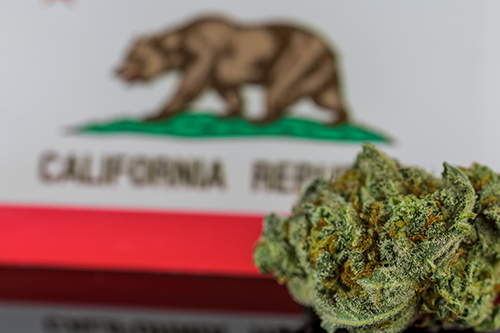
California's 2026 cannabis legislation addresses packaging, testing, hemp cannabinoids and beverages. The principal cannabis measures take effect Jan. 1, 2027, subject to specified later operative dates, under Article IV, Section 8(c) of the California Constitution.
Assembly Bill 2249: Packaging and advertising
Assemblymember Jacqui Irwin's measure, signed Aug. 31, revises packaging and advertising requirements. Stats. 2026, ch. 164. The Assembly concurrence analysis from Aug. 19, 2026, cites a state auditor finding that insufficiently specific packaging standards produced subjective, sometimes inconsistent compliance determinations.
Beginning Jan. 1, 2028, "attractive to children" means designed or likely to appeal to individuals under 21, with specified indicators for packaging, labeling, advertising and marketing. The law prohibits packaging imitating noncannabis products primarily marketed to children and cartoon or overly stylized fruit on edible-product and vape-cartridge labels, while permitting realistic fruit depictions identifying ingredients or production regions. Business and Professions Code Section 26141.
The Department of Cannabis Control must develop compliance-assessment resources. Any automated determinations would be advisory, not final departmental determinations. Business and Professions Code Section 26142.
The Assembly analysis records Youth Forward's support based on childhood-exposure concerns and the California Cannabis Industry Association's objections concerning costs and home storage. Gov. Gavin Newsom described the law as providing "clearer, enforceable standards" in his Aug. 31 signing announcement.
Assembly Bill 2532: Measuring cannabis beverages
Also authored by Irwin, this measure was signed Sept. 30. Stats. 2026, ch. 949. It requires the national Poison Help telephone number on edible-product and cannabis-beverage labels and inserts. Beginning July 1, 2027, multi-serving beverage labels must disclose multiple servings, serving volume to the nearest 10th of a fluid ounce, and measurement instructions. Business and Professions Code Section 26120(c).
Also beginning July 1, 2027, multi-serving containers visibly displaying remaining liquid must have serving lines unless their shape makes accurate lines impossible. Retailers must offer free measuring devices supplied by manufacturers as needed, holding at least one fluid ounce and measuring to the nearest 10th of a fluid ounce. Advertising cannot portray multi-serving beverages as single-serve or encourage consuming multiple servings at once. Business and Professions Code Sections 26130(c)(2)-(3), 26152(i).
The bill retains the 10-milligram THC limit per serving without imposing that limit per container. The Assembly concurrence analysis, Aug. 27, 2026, records support from the California Academy of Child and Adolescent Psychiatry and no opposition arguments to the final version.
Assembly Bill 1965: Laboratory and retail testing
Assemblymember LaShae Sharp-Collins' measure requires retail licensees to provide customers with product certificates of analysis upon the customer's or department's request and allow departmental access to products for off-the-shelf testing. Stats. 2026, ch. 564, Section 1.
The department may conduct laboratory performance testing, including blind proficiency and round-robin testing. For out-of-specification results, sample retesting is permitted following written notice of specified problems compromising the original test, or when the department requires or authorizes retesting. Business and Professions Code Section 26100(j)-(k).
The Senate floor analysis, Aug. 15, 2026, identifies the California Cannabis Operators Association as sponsor. It lists California NORML in support and no opposition received.
Assembly Bill 2250: Hemp-cannabinoid definitions and enforcement
Assemblymember Cecilia Aguiar-Curry's measure amends last year's Assembly Bill 8 framework. Stats. 2026, ch. 593. Beginning Jan. 1, 2028, qualifying cannabinol isolate is excluded from "cannabis concentrate" under Health and Safety Code Section 11006.5(c).
A qualifying CBN isolate must have purity greater than 99% and contain no THC or synthetic cannabinoid. Assembly Revenue and Taxation analysis for the April 20, 2026, hearing. The law also revises cannabinoid-product presumptions and seizure provisions, extends tobacco-business restrictions beyond retail transactions to any sales of covered cannabis products, and specifies supply-chain stages subject to tracking. Stats. 2026, ch. 593, Sections 1, 3, 5-6.
The Assembly concurrence analysis, Aug. 25, 2026, records support from the California Cannabis Operators Association. It reports no opposition on file.
Assembly Bill 2667: Disguised vapes and disposal
Assemblymember Heather Hadwick's measure prohibits marketing and selling vapes that imitate non-vape products to conceal their nature from adults and prohibits interactive video game capabilities. Stats. 2026, ch. 722, Section 8. The Assembly concurrence analysis, Aug. 30, 2026, describes a hazardous-waste pathway for schools handling confiscated devices and records local-government, school and waste-management support, with no opposition on file.
Separately, Assembly Bill 762's disposable-vape restrictions exclude devices containing cannabis or cannabis products. Stats. 2026, ch. 717, Section 3.
Enforcement and a related veto
Assemblymember Catherine Stefani's Assembly Bill 2001 expands criminal-history access for city attorneys and county counsel pursuing specified actions, including illegal cannabis sales or cultivation. Stats. 2026, ch. 378, Section 1. The Assembly concurrence analysis, Aug. 18, 2026, explains that amendments replaced a broader public-nuisance category with specified enforcement actions.
Senate Bill 936 concerns nitrous oxide, not cannabis. It permits court-ordered business-license suspension for up to one year for a knowing violation following a prior conviction under the new provision, excluding tobacco licenses and seller's permits from that suspension provision. Stats. 2026, ch. 317, Section 7.
Newsom vetoed Sen. Caroline Menjivar's Senate Bill 1272. It proposed at least six months before administrative penalties for qualifying undisclosed code violations at owner-occupied properties with four or fewer units, absent immediate health or safety danger. It would have required another six months for good-faith correction efforts but excluded cannabis-law violations. Senate floor analysis, Aug. 24, 2026. His Sept. 20 veto message cited local enforcement discretion, costs and delays.
Proposals that stopped in the Legislature
Assembly Bills 1826, concerning recalls and embargoes; 2537, concerning risk-based enforcement; and 2506, concerning tribal-state cannabis agreements, were held in Senate Appropriations. Senate Appropriations analyses for Aug. 3, 2026; official histories, Aug. 13, 2026. Assembly Bill 2697, concerning locally authorized cannabis drive-throughs, went to the Senate inactive file. Senate floor analysis, June 24, 2026; official history, Aug. 27, 2026.
Submit your own column for publication to Diana Bosetti
For reprint rights or to order a copy of your photo:
Email
Jeremy_Ellis@dailyjournal.com
for prices.
Direct dial: 213-229-5424
Send a letter to the editor:
Email: letters@dailyjournal.com