


Torts/Personal Injury,
Civil Procedure
Oct. 14, 2026
Judge rejects inverse condemnation claims against Edison, limits Palisades Fire suits to Malibu property owners
A judge rejected inverse condemnation and punitive damages claims against Southern California Edison in Palisades Fire litigation,while preserving negligence claims brought by Malibu property owners.


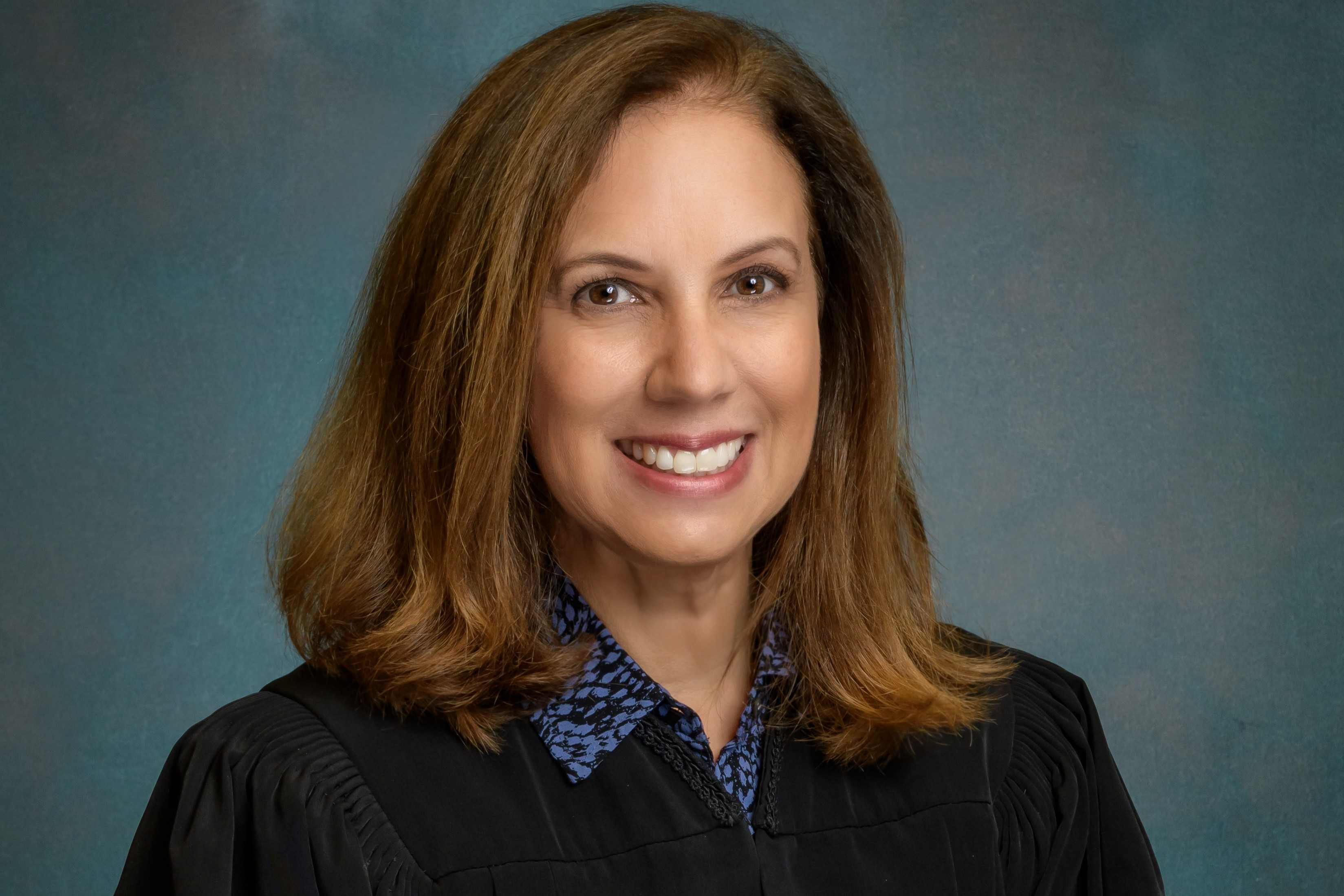
A Los Angeles County Superior Court judge has dismissed inverse condemnation and punitive damages claims against Southern California Edison Co. in the Palisades Fire litigation, finding that the utility's wooden power poles posed no inherent risk simply because they lacked protective fire mesh.
Tuesday's ruling could eliminate some claims against SCE from about 4,000 plaintiffs, while leaving their claims against other defendants unaffected.
Judge Samantha P. Jessner allowed negligence, trespass, nuisance, premises liability and Public Utilities Code claims to proceed, but only for plaintiffs who own property in Malibu. She dismissed all claims against SCE by other plaintiffs without leave to amend. The order was signed Tuesday following a Sept. 23 hearing. Grigsby v. City of Los Angeles, 25STCV00832.
Malibu is the only area near the fire within SCE's service territory, and paragraph 464 of the complaint alleges that the relevant plaintiffs owned property there. But most plaintiffs adopting the claims did not list Malibu addresses, Jessner found. Plaintiffs conceded the geographic limitation in their opposition, and at the hearing SCE's counsel argued that it applied to every count. Jessner agreed.
She also granted SCE's unopposed request for judicial notice of the short-form complaints and a list identifying plaintiffs with Malibu addresses. Those plaintiffs "can easily be identified," she wrote.
Commenting on the ruling on behalf of the plaintiff's liasion counsel, Alexander Robertson IV of Robertson & Associates, LLP noted in an email Wednesday, "There are approximately 22,000 plaintiffs in this case. The number of plaintiffs who did not live in Malibu who checked the boxes on their Short Form Complaints naming SCE as a defendant is unknown," and none have been dismissed yet.
He added, "While Judge Jessner did sustain SCE's demurrer as to the inverse condemnation and Health & Safety Code §13007 claims, she also overruled SCE's demurrer as to our negligence, Nuisance, Trespass and Public Utilities Code §2106 claims."
Jessner's ruling stated, "Plaintiffs concede in their opposition that their Complaint, at paragraph 464, expressly alleges that the relevant Plaintiffs were owners of real property in Malibu. Thus, Plaintiffs' claims appear to be explicitly restricted to Malibu residents. Based upon the Plaintiffs' own representations, the allegations against SCE are limited to Malibu residents."
According to the master complaint, SCE's wooden poles along Pacific Coast Highway caught fire in January 2025 and collapsed into adjacent homes, igniting them. One fallen pole allegedly left power and communications lines hanging across Big Rock Drive, blocking firefighters' only access to the community.
Plaintiffs allege SCE tested protective fire mesh in 2022 and began installing it in high fire risk areas but had not wrapped any Malibu poles before the fire. SCE installed mesh on every replacement pole after the fire, according to the complaint.
The complaint traces the disaster to the Lachman Fire, reported shortly after midnight Jan. 1, 2025, in Topanga State Park. The Los Angeles Fire Department declared it contained by 4:48 a.m., but plaintiffs allege smoldering embers reignited when winds rose Jan. 7, starting the Palisades Fire near the same spot.
SCE's Nicholas Circuit runs overhead lines, transformers and wooden poles from Malibu Lagoon east to the Getty Villa and about four miles inland. Plaintiffs say the burning poles contributed to the destruction of hundreds of Malibu homes.
Plaintiffs characterized SCE's failure to install mesh as a cost-saving "wait until it breaks" maintenance plan. They relied on City of Oroville v. Superior Court, Pacific Bell v. City of San Diego and Simple Avo Paradise Ranch v. Southern California Edison, but Jessner distinguished those decisions because the public improvements themselves caused the damage: a corroded pipe burst, power lines fell and a sewer backed up.
Here, "the poles were located in the path of the fire," and mesh would have been "a discretionary upgrade," not required maintenance, she wrote.
"In this case, there was nothing wrong with or inherently dangerous about SCE's utility poles, and the poles themselves did not cause the fire," Jessner wrote in rejecting the inverse condemnation claim. The damage was not an "inescapable or unavoidable consequence" of the poles as designed and built, she added.
"Plaintiffs' properties were damaged because a wildfire tore through their neighborhoods," she wrote, denying leave to amend the inverse condemnation claim because the theory itself could not support it.
The same allegations, however, were sufficient to preserve the negligence claim. SCE argued that under Brown v. McAllister (1870), Sutliff v. Sweetwater Water Co. and Western Salt Co. v. City of Newport Beach (1969), a property owner owes no duty to protect neighbors from a fire or flood that merely strikes its land.
Jessner disagreed, finding that plaintiffs did not portray SCE as a passive recipient of the fire. Instead, they alleged the poles became "active instrumentalities of harm" by burning, collapsing into homes, sparking spot fires and blocking firefighters.
The judge credited plaintiffs' reliance on Irelan-Yuba Gold Quartz Mining Co. v. Pacific Gas & Electric Co. (1941), which requires utilities to use reasonable care in maintaining their lines, and Mata v. Pacific Gas & Electric Co. (2014), which held that meeting minimum regulatory standards does not by itself establish due care.
Claims for trespass, nuisance and premises liability, which SCE called derivative of negligence, survived for the same reasons.
Jessner also struck punitive damages allegations from the complaint. Relying on the Butte Fire Cases (2018), she wrote that an unsuccessful risk-management policy does not amount to a conscious decision to disregard a known risk. The judge found that terms such as "malice," "despicable conduct" and "conscious disregard" were conclusory labels unsupported by facts.
Plaintiffs argued the Butte Fire Cases decided only a summary adjudication motion based on its evidence. Jessner said its legal principle still applied to their theory that SCE knew of a tested solution, used it elsewhere and deliberately skipped Malibu to save money.
Plaintiffs called the managing-agent issue SCE's "most substantial argument" and acknowledged their complaint alleged it "in somewhat general terms." But Jessner denied leave to amend, finding the flaw lay in the theory itself rather than the general allegations about an officer, director or managing agent.
The Public Utilities Code Section 2106 claim survived because plaintiffs adequately alleged a violation of Section 451, which requires utilities to maintain safe facilities. A claim under Health and Safety Code Section 13007 failed because SCE did not set, kindle or attend the fire.
SCE is among more than a dozen defendants in the litigation, including the city and county of Los Angeles, the state, utilities and telecommunications companies. Tuesday's order addresses only SCE's demurrer to counts 11 through 18 of the revised master complaint and its motion to strike.
Laurinda Keys
laurinda_keys@dailyjournal.com
For reprint rights or to order a copy of your photo:
Email
Jeremy_Ellis@dailyjournal.com
for prices.
Direct dial: 213-229-5424
Send a letter to the editor:
Email: letters@dailyjournal.com