


Oct. 19, 2026
$700M private equity deal could fuel acquisitions by insurance-defense firm
Wood Smith Henning & Berman co-founder Daniel Berman says the Charlesbank investment will allow the firm to pursue acquisitions for the first time, accelerate expansion and invest heavily in AI. Legal industry experts say the transaction reflects growing private equity interest across the profession.


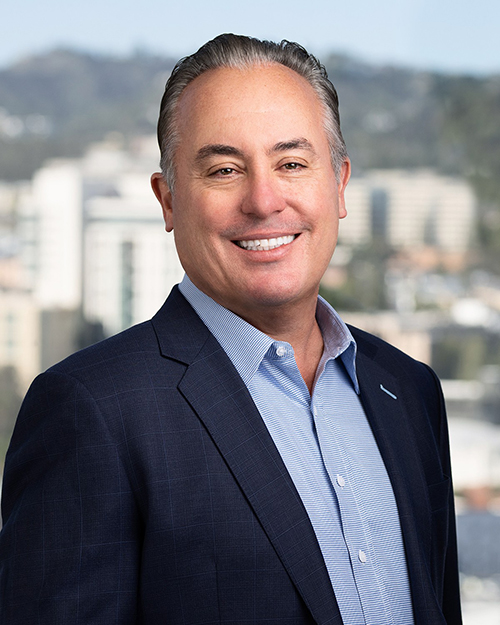
Los Angeles-based Wood Smith Henning & Berman announced Monday that private equity firm Charlesbank Capital Partners has invested in a newly formed management services organization in a transaction reportedly valued at approximately $700 million, potentially the largest deal of its kind in the U.S. legal industry.
The investment will allow the national insurance-defense firm to pursue acquisitions of other law firms for the first time, expand more rapidly into new markets and make substantial investments in artificial intelligence and other technology, co-founder Daniel Berman said in an interview Monday.
"We want this firm to be a legacy firm. We want it to be here long after us, and we want future leadership to be able to step in and assume the leadership of the firm," Berman said. "In order to do that, we looked for a capital partner."
The transaction establishes WSHB Support Services, which will provide nonlegal operational infrastructure and support to the law firm. WSHB will remain independent, with its attorneys retaining authority over legal services and client matters, according to the announcement.
The Financial Times reported the $700 million valuation. Berman declined to confirm the figure, saying neither WSHB nor Charlesbank was commenting on financial terms.
He said, however, that to his knowledge, the transaction is the largest private equity deal involving a U.S. law firm and possibly the largest globally.
"It is a large deal in the space," said Trisha Rich, a partner at Holland & Knight who specializes in legal ethics and law firm transactions. "Certainly the largest deal that's been publicly announced so far and perhaps the largest deal that's occurred so far."
Berman said WSHB, founded in 1997, has grown to nearly 600 attorneys largely through capital supplied by its founders and the firm's own working capital. That approach supported steady organic expansion but limited its ability to make major acquisitions. The Charlesbank investment changes that calculation, he said.
"We want to grow ... to be the best in class for the line of work we do and to be a national firm for our clients and be in every market where they have a need," Berman said.
Rather than continuing to expand by adding one or two attorneys at a time, the firm intends to pursue acquisitions that could accelerate its national growth, he said.
WSHB has never previously acquired another law firm, primarily because of capital constraints, Berman said.
The investment also will support an expansion of the firm's existing technology capabilities.
Although WSHB has invested heavily in AI and other technology for its lawyers, Berman said the firm now intends to extend those capabilities into its administrative operations, including finance, recruiting and other internal workflows.
The objective is to improve efficiency and meet growing client expectations while positioning the firm for continued expansion.
Private equity interest broadens
Rich said the transaction reflects a significant expansion of private equity interest beyond the personal injury firms that initially dominated the market.
"At first it was really personal injury firms that were the early movers in the space, but now we're seeing movement from law firms all over the sector," she said.
Rich's team at Holland & Knight handled 36 management services organization transactions during the first three quarters of 2026, including 16 involving personal injury firms, nine corporate and transactional firms, and four other litigation firms. The remaining transactions involved creditors' rights, family law, real estate, immigration and employment practices.
"There's activity all over the marketplace," she said.
The arrangements allow outside investors to acquire interests in management services organizations, or MSOs, that provide administrative and operational support while lawyers retain ownership and control of their law practices.
California Rule of Professional Conduct 5.4 generally prohibits nonlawyer ownership of law firms, fee sharing with nonlawyers and outside interference with attorneys' independent professional judgment.
MSO structures have existed in the legal industry for nearly four decades, but their increasing use to attract outside equity investment represents a newer development. For law firms, the attraction is access to capital without relying exclusively on traditional financing, such as bank loans. That money can support geographic expansion, lateral hiring, technology investments and artificial intelligence development.
Rich said insurance-defense firms may be particularly understandable to investors because their business models and revenue streams can be easier to evaluate than those of more complex corporate and transactional practices. But she emphasized that investor interest extends across virtually every legal specialty.
Ethics and independence
The growth of these arrangements has attracted legislative attention. California, Colorado and Illinois have enacted measures addressing outside investment structures and lawyers' professional independence.
Rich said those statutes largely reinforce existing professional responsibility requirements rather than fundamentally changing the rules governing compliant MSO arrangements.
Berman said WSHB spent more than a year exploring the transaction and devoted considerable attention to ensuring that the arrangement complied with professional responsibility requirements in every state where the firm operates.
He said numerous attorneys participated in reviewing the structure, particularly its compliance with rules governing fee sharing and attorney independence.
"There's no fee splitting or fee sharing, and Charlesbank will have no involvement in WSHB, the law firm, and how we handle our cases and the judgments that we make in our cases," Berman said.
He said Charlesbank has experience investing through management services organizations in other heavily regulated industries.
The firm also spent considerable time explaining the transaction to its partners, many of whom have worked at WSHB for 15 or 20 years.
Berman said the partners were enthusiastic about the investment and the opportunities it creates.
"We have now really strong capital to go out and pursue the things we need to pursue to continue to grow," he said.
Berman will become CEO of WSHB Support Services, while Stewart Reid will remain firmwide managing partner of the law firm. Both will serve on the MSO's board alongside co-founders Stephen Henning and Kevin Smith.
WSHB currently has more than 550 attorneys across 43 offices in 23 states, representing insurers, corporations and institutional clients.
Charlesbank, headquartered in Boston, reported $24 billion in assets under management as of June 30.
David Houston
david_houston@dailyjournal.com
For reprint rights or to order a copy of your photo:
Email
Jeremy_Ellis@dailyjournal.com
for prices.
Direct dial: 213-229-5424
Send a letter to the editor:
Email: letters@dailyjournal.com