


Oct. 23, 2026
Dato warned lawyers against courtroom fights and stretching facts
Justice William S. Dato, who has worked at every level of California's courts, brings an appellate specialist's approach to judging. The 4th District justice seeks a 12-year term Nov. 3.


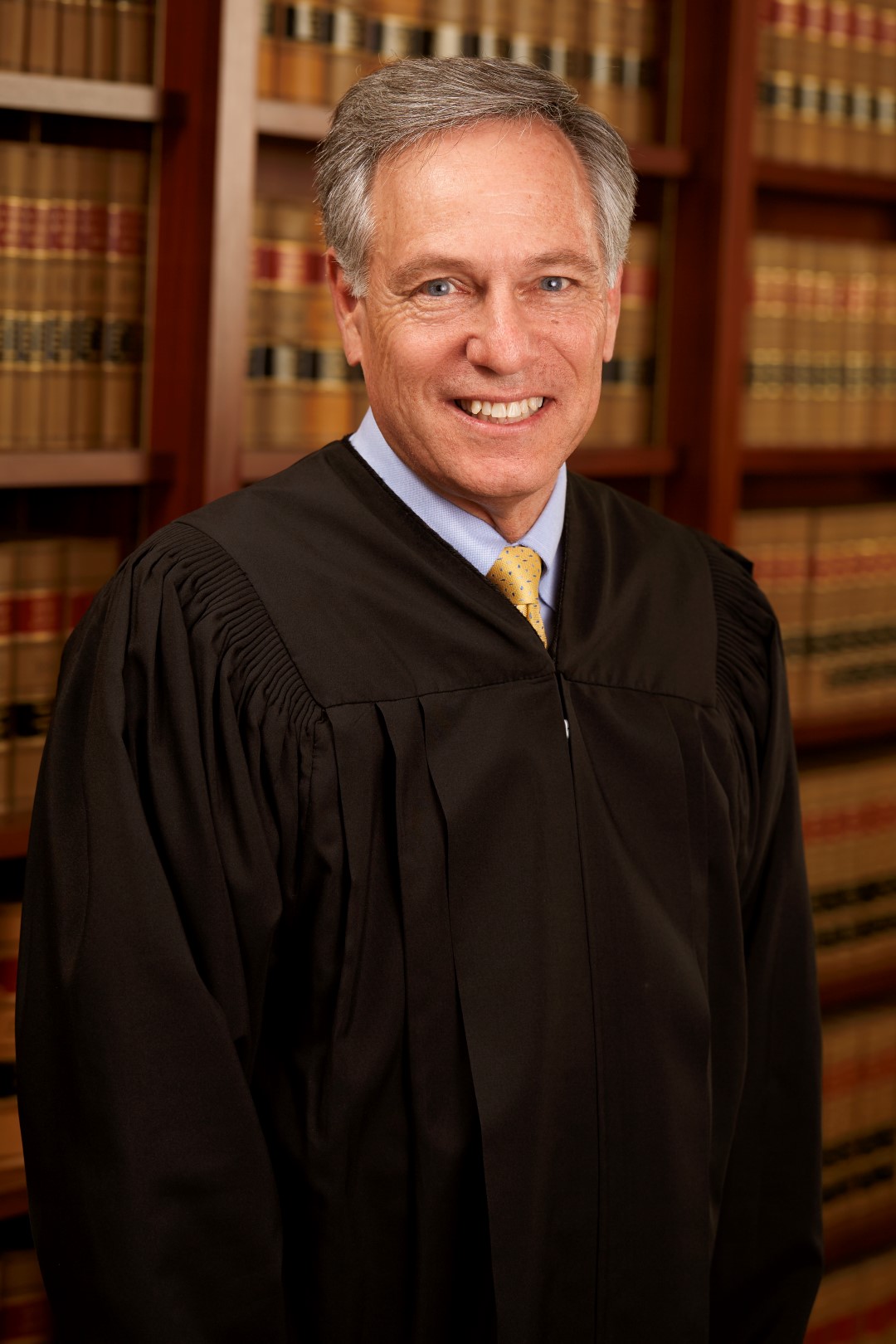
When San Diego Superior Court Judge William S. Dato explained to business trial lawyers how he ran his courtroom, he had some advice: Don't fight over insignificant objections, don't turn discovery disputes into personal battles and don't stretch the facts to tell a better story.
A compelling narrative was no substitute for an accurate one, he told them, according to the Association of Business Trial Lawyers San Diego Report in 2011. A story that strayed from the record could damage a lawyer's credibility.
As an appellate justice, Dato has written opinions showing the same insistence on the record over assumption. On the 4th District Court of Appeal's Division 1 in San Diego since 2017, he seeks retention Nov. 3 for a 12-year term.
He wrote for a unanimous panel vacating an arbitration award that included $9.1 million in damages in FCM Investments LLC v. Grove Pham LLC (2023). The arbitrator, a retired Los Angeles County judge, had found a seller's owner not credible because she testified through an interpreter, calling it "a ploy to appear less sophisticated than she really is."
That finding "rested on unacceptable misconceptions about English proficiency and language acquisition," Dato wrote, noting that more than 40% of foreign-born residents still speak English "less than very well" after more than 20 years in the country. "Broad discretion to evaluate witness credibility ... does not permit credibility assessments rooted in bias."
In People v. Carter (2019), a jury convicted a man of first-degree murder in a failed robbery that left three people dead but found it was not proved he fired a gun. The trial judge found he was the shooter anyway and imposed an extra term for the attempted robbery.
The majority upheld it, but Dato dissented on that point. The jury must have convicted on felony murder, he wrote, and letting the judge decide otherwise "would be to permit the trial judge to change the basis of the defendant's conviction as determined by the jury."
His criminal rulings do not fall consistently on one side. In People v. Cartwright (2024), he wrote that police needed no warrant to review footage from San Diego's streetlight cameras, which identified the vehicle used in a fatal robbery of a downtown flooring store. Unlike long-term cellphone location tracking, the fixed cameras captured only what anyone on a public street could see, he wrote.
Dato has also been willing to stand apart from colleagues. "He's definitely not afraid to dissent," University of San Diego law professor Shaun P. Martin said in 2018.
When a mother heard her daughter's car crash over the phone and sued the city over a dangerous intersection, the majority in Downey v. City of Riverside (2023) said she had to know at the time how the city's conduct contributed.
"Nothing requires that she be aware of each and every separate act of negligence," Dato wrote in partial dissent.
The state Supreme Court unanimously reversed in 2024. "As Justice Dato observed in his partial dissent in the Court of Appeal," Justice Leondra R. Kruger wrote, the court's precedent "strongly suggests" that perceiving the accident and understanding it has injured a close relative is enough.
A 1980 graduate of UCLA School of Law, Dato began his career as a research attorney for California Supreme Court Chief Justice Rose E. Bird and Justice Mathew O. Tobriner, then for 4th District Justice Howard B. Wiener.
Wiener, he said, showed him what it means to be a good judge. "You listen to everyone. You don't make up your mind. You don't make snap judgments about things. You give everybody an opportunity to be heard."
After about a decade with Wiener, interrupted by a period in private practice, Dato returned to Milberg Weiss Bershad Hynes & Lerach, where he became a partner and certified appellate law specialist. Gov. Gray Davis appointed him to the San Diego Superior Court in 2003.
He served on the Commission on Judicial Performance from 2018 to 2025 and since 2025 has served on the executive committee of the Judicial Council's appellate judicial mentor program.
Laurinda Keys
laurinda_keys@dailyjournal.com
For reprint rights or to order a copy of your photo:
Email
Jeremy_Ellis@dailyjournal.com
for prices.
Direct dial: 213-229-5424
Send a letter to the editor:
Email: letters@dailyjournal.com