


Law Practice
Oct. 26, 2026
Who you gonna call? What Ghostbusters gets right about PI lawyers
Like the Ghostbusters, personal injury lawyers may face public skepticism, but their advertising helps injured people find legal representation, seek justice and hold powerful institutions accountable.


Robert S. Glassman
Partner
Panish | Shea | Ravipudi LLP
Phone: (310) 477-1700
Email: rglassman@panish.law
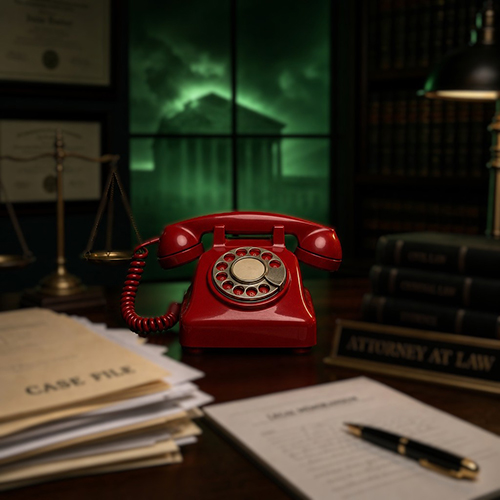
Every Halloween, my family watches Ghostbusters. Even after 40 years since being released in theaters, the movie still hits today. The kids love it, I make the popcorn, and, this year, somewhere along the way I stopped watching as a dad and started watching as a lawyer. Somewhere between the slime and the Stay Puft Marshmallow Man scene, I realized there are many similarities between the Ghostbusters and personal injury lawyers.
Think about it. Three professionals who know something most people don't. A business built on cheesy television ads. A public that rolls its eyes at them until the moment it actually needs their help. And a city official who is certain they are frauds, right up until the city needs them.
With Halloween less than a week away, I offer a few lessons from the firehouse.
The commercial
After getting thrown out of the university, Venkman, Stantz and Spengler launch a business, with Ray mortgaging his parents' house to finance it. . They buy a run-down firehouse and do what any new venture with a service nobody understands must do. They make a commercial. It is low-budget and a little ridiculous. And it works because it tells people with a problem exactly who to call.
Sound familiar? Drive down any Los Angeles freeway and you will see our billboards. Turn on daytime television and you will see our ads. Plenty of people, including some in our own profession, see that and wince. It looks like hustling.
But the Supreme Court recognized nearly 50 years ago, in Bates v. State Bar of Arizona, that lawyer advertising serves a real public purpose: it tells people that legal help exists and how to find it. Most people injured by a negligent driver, a defective product or a careless property owner have never hired a lawyer in their lives. They don't have a cousin at a big firm. They have a phone number they remember from a bus bench. That billboard may be the only thing standing between an injured family and an insurance adjuster's lowball offer.
The Ghostbusters didn't advertise because they were frauds. They advertised because nobody knew they were needed until the ghosts showed up.
The skeptic with a clipboard
Every good ghost story needs a villain who isn't a ghost. In Ghostbusters, it is Walter Peck, the Environmental Protection Agency official who decides the whole operation is a scam. He never bothers to understand what the Ghostbusters actually do. He just knows he doesn't like them. So he shuts down their containment system, and every ghost they have ever captured pours back into Manhattan.
Personal injury lawyers have our share of Walter Pecks. They show up in campaigns about "frivolous lawsuits" and "jackpot justice," often funded by the industries that would prefer to pay less when they hurt people. Their pitch is simple: these lawyers are the problem, so shut them down.
What that pitch leaves out is what the civil justice system holds in containment. Lawsuits are why cars have better airbags, why playgrounds don't have concrete under the monkey bars, and why companies think twice before cutting a corner that could cost someone their life. Shut down the system that holds wrongdoers accountable, and the dangers it was keeping in check don't disappear. They come back out.
When the ghosts show up
The turning point comes when the city is in chaos and the mayor has to decide whom to trust: the bureaucrat who said the Ghostbusters were con men, or the people who actually know how to handle the problem. He picks the Ghostbusters. New York cheers.
I see a version of that scene in my office every week. People who once told jokes about ambulance chasers sit across from me after the worst day of their lives. A parent whose child was hurt at school. A worker crushed by equipment that should never have left the factory. A family whose loved one was killed by a driver who was never supposed to be behind the wheel. They called the insurance company first, and the insurance company was polite, sympathetic and unwilling to pay. Then they remembered the billboard.
None of these people thought they would ever need a personal injury lawyer. Nobody does. That is the point. Like the Ghostbusters, we are the people you hope never to need and are very glad to find when you do.
And like the Ghostbusters, we take on that fight at our own risk. Ray mortgaged his parents' house to help finance the business. Contingency-fee lawyers front the cost of the experts, the depositions and years of litigation, and get paid only if we win. That is how someone with no money can take on a corporation with unlimited resources and a legal department on the 40th floor.
The real lesson from the firehouse
I am not suggesting we start wearing proton packs to court. What I am suggesting is that we stop apologizing for what we do.
The commercials, the billboards and the bus benches are not a sign that something is wrong with our profession. They are how ordinary people find someone willing to stand up for them against institutions that would rather they didn't. The skeptics will always be with us, clipboards in hand. But when something strange happens in your neighborhood, the people who laughed at the ads are usually the first ones dialing the number.
This Halloween, when my kids are out trick-or-treating dressed as their favorite heroes, I'll be thinking about the four guys in jumpsuits who answered the call when nobody else would. I'm proud to be in the same line of work.
Submit your own column for publication to Diana Bosetti
For reprint rights or to order a copy of your photo:
Email
Jeremy_Ellis@dailyjournal.com
for prices.
Direct dial: 213-229-5424
Send a letter to the editor:
Email: letters@dailyjournal.com