


Oct. 26, 2026
Do's warning in impaired-driving murder case shapes later ruling
Justice Truc Do's concurrence in an impaired-driving murder case influenced a later appellate ruling. The former homicide prosecutor and judge seeks a 12-year term on the 4th District Court of Appeal.


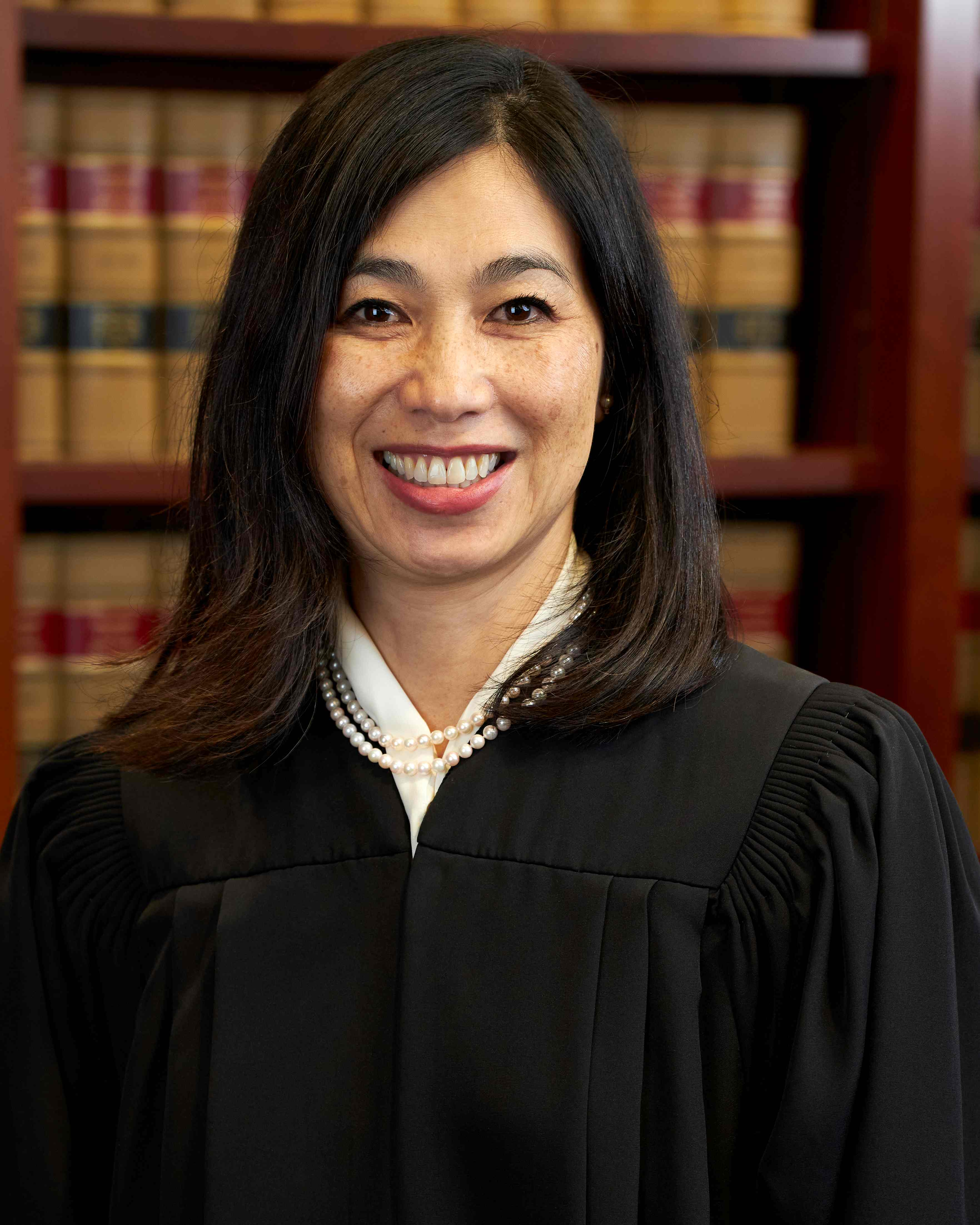
Justice Truc T. Do agreed that a woman who led police on a 100-mph freeway chase while on oxycodone could not be tried for murder of a trucker killed half a mile behind her, 30 minutes after her car crashed. But she warned that the panel majority's reasoning could be misread to bar murder charges whenever an impaired driver passes out.
One foreseeable consequence of driving under the influence, she wrote in a concurrence in People v. Superior Court (Chagolla) (2024), "is precisely that the driver will black out, lose control of the car, and then kill another motorist."
The problem arose the next year. Jose Nevarez, driving drunk, rear-ended a minivan at 90 to 100 mph, leaving his disabled SUV blocking an HOV lane. Within two minutes, a motorcyclist struck it and died. Nevarez argued he could not be charged with murder because he had stopped driving. Another 4th District panel rejected his argument in Nevarez v. Superior Court (2025), quoting Do's concurrence at length.
Do, who joined the 4th District Court of Appeal in January 2021, seeks a 12-year term on the Nov. 3 ballot.
Her opinions show a willingness to challenge established interpretations of the law, whether the outcome favors defendants, plaintiffs or prosecutors.
In People v. Heard (2022), Do held that excluding juvenile offenders serving the functional equivalent of life without parole from a resentencing law violated equal protection. Frank Heard was 15 when he participated in a drive-by shooting that wounded two people and 16 when he shot a man dead. He received 23 years plus 80 years to life.
Because the law covered only explicit life-without-parole terms, including those for special-circumstance murder, Do wrote, it had "the incongruous effect of extending sentencing leniency exclusively to the category of offenders generally regarded as the least deserving of it."
Her reasoning shaped People v. Bagsby (2024), involving a 15-year-old who opened fire on people playing basketball, killing an 11-year-old boy. Sentenced to 107 years to life, James Bagsby obtained relief under Heard. Affirming, Do wrote that prosecutors' objections "reflect policy concerns that are the domain of the Legislature." The state Supreme Court is reviewing whether a 50-years-to-life sentence also qualifies.
Born in Vietnam, Do arrived in the United States as a war refugee at 3 and grew up in San Diego.
"My immigrant experience makes me more in tune with someone who comes into the courtroom already intimidated by the legal system and having to access it in a different language," she told the San Diego County Bar Association's blog in 2021.
After Stanford Law School, she spent a decade as a Los Angeles County deputy district attorney. She later practiced at Munger, Tolles & Olson and Jones Day. Gov. Jerry Brown appointed her to the San Diego County Superior Court in 2018, and Gov. Gavin Newsom elevated her in 2021.
Her insistence on examining legal rules closely also surfaced in an assault case involving an unloaded shotgun.
Stephen Lattin shouted racial slurs at a family, threatened to kill them and pointed the weapon at them. In People v. Lattin (2024), Do rejected a categorical rule that an unloaded gun cannot be used to commit assault with a firearm, noting the shotgun could be loaded in seconds. She asked the authors of a CALCRIM to reconsider a use note on the rule.
In two civil cases, the wording of different statutes produced opposite results.
Tina Parsonage obtained a Wal-Mart job despite a background check disclosure that listed six possible reporting agencies instead of one. In Parsonage v. Wal-Mart Associates (2026), Do held that the statute required only a violation, not proof that the applicant had been harmed.
Wal-Mart called the defects "technical violations." Do responded, "they are violations nonetheless."
Later, in Mata v. Digital Recognition Network (2026), she rejected a claim by a man whose license plates appeared among more than 9 billion images in a company's database. Unlike the disclosure law, that statute required someone to be "harmed by a violation." His data had never been breached or misused.
Laurinda Keys
laurinda_keys@dailyjournal.com
For reprint rights or to order a copy of your photo:
Email
Jeremy_Ellis@dailyjournal.com
for prices.
Direct dial: 213-229-5424
Send a letter to the editor:
Email: letters@dailyjournal.com