


Alternative Dispute Resolution
Oct. 30, 2026
An insider's view: From settlement judge to private mediator
Moving from court settlement conferences to private mediation may seem like a natural and seamless progression in an ADR career, but differences in how the two processes are managed call for practical adjustments.



Zaven V. Sinanian
Judge (ret.), Neutral
Signature Resolution
Chicago-Kent College of Law, 1987
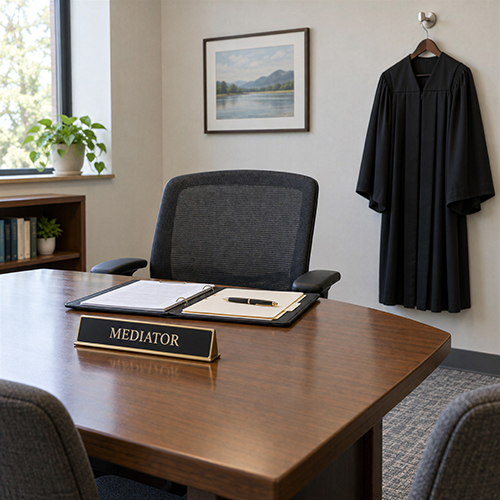
After more than a decade of service in the Los Angeles Superior Court's Mandatory Settlement Conference (MSC) program, including five years as the program's managing judge, I assumed that becoming a private mediator would be a natural and seamless continuation of my ADR career. After all, I had presided over several thousand settlement conferences. I understood and championed the growing and welcome reality that mediation was no longer an outlier; it was the norm in almost every case. The vast majority of civil cases resolve through mediation rather than trial.
But I didn't expect to see palpable differences in how MSCs and private mediations are managed. Many of those departures--such as dispensing with the Rules of Court--made complete sense to me. However, some other procedures that differed from settlement conferences didn't make much sense to me.
With more than three years of private mediation experience under my belt, I'd like to share some observations and suggest practical solutions for any challenges they may present. To be clear: both MSCs and private mediations have strengths and weaknesses. The vast majority of cases settle under both systems, and only a small number of cases fail to settle regardless of the process used.
Mediation timing
The first important question in every mediation is "When is the right time to mediate this case?" Whether required by the court or conducted privately, mediation brings together parties with diametrically opposed interests who, with the mediator's assistance, seek an acceptable and more efficient path to resolve their dispute. The parties may be early in the litigation or may have already conducted extensive discovery and engaged in protracted litigation; they often believe that, because adversarial litigation takes a heavy toll, it is time to mediate the dispute. Mediation avoids the uncertainty and cost of trial, and a negotiated settlement gives both sides finality.
But the time is not always right for mediating a dispute. Parties may be too entrenched in their positions and unable to see any other perspective. They may want their proverbial "day in court" rather than diverting their case to a confidential process. Unless there is room for movement, such a mediation is likely to fail. Attorneys are in the best position to understand their clients' inclinations; they should be proactive in engaging clients in the process and setting the tone for a cooperative, collaborative and less adversarial contest.
When I presided over settlement conferences as a judge, I could sense early on whether the timing was right. If a trial court judge referred a case to me after reviewing it and probing counsel with substantive questions, settlement was highly likely because the parties were already focused on resolving their disputes. If a case was referred without proper vetting, the chances of success were considerably lower. Those parties were compelled to participate in a process over which they had little control; they often failed to recognize the value of meeting with a sitting judge who was well positioned to assess the risks of litigation.
Similarly, when parties participate in private mediation primarily at their attorneys' urging, they often lack a clear understanding of the process. Without the opportunity to address differences, progress can be difficult. Unless a client fully recognizes the potential risks and costs of proceeding to trial, as well as the benefits of settlement, they may hold tight to entrenched positions and resist compromise. In private mediations, attorneys typically determine the timing; if they misjudge it, the mediation will likely fail or devolve into an informal discovery conference.
In both types of cases, the mediator may need to find creative ways to engage parties who are resistant to mediation. The importance of having choices and control over outcomes must be emphasized at the outset of mediation. When a party needs to feel understood and dignified before engaging in productive mediation, the mediator might, with counsel's permission, ask open-ended, accessible questions early in the process. This information can help identify the individual's underlying needs and interests and clarify why avoiding trial would serve their best interests. This will enable the mediator to guide the discussion toward a mutually acceptable resolution.
Mediation briefs
When I served as a settlement judge, my reading workload was much lighter. The parties submitted five-page settlement conference statements, which I could quickly read and digest. As a settlement judge, I handled a wide range of legal topics because civil departments across Los Angeles County submitted cases to the MSC judges. With two mediations per day, I had limited time to review cases beyond the five-page brief or to conduct pre-mediation calls with counsel.
As a private mediator, I now devote substantially more time to reviewing mediation briefs and exhibits. These briefs are considerably more detailed than the statements I reviewed as a settlement judge, and I spend much more time reading and outlining them in preparation for mediation. I ensure that I have adequate time to carefully review the materials submitted by counsel who have selected me to mediate their cases and, when necessary, to speak with them before the mediation.
That private mediation briefs are more detailed is a good thing. The more the mediator knows about the facts and the parties' respective positions, the better prepared the mediator will be to help resolve matters. An effective mediation brief provides critical information about the claims, including key exhibits, witness statements and damage models. It may also highlight problems or inconsistencies in one or both sides' positions.
Measured and comprehensive briefs that discuss liability and damage models can also assist the opposing party in evaluating the strengths and weaknesses of its case. However, this is possible only if the opposing party receives the brief. Sharing the brief can prevent surprises and, even more importantly, it can help move the parties toward compromise and settlement.
Too often, however, parties in private mediation withhold briefs from their opponents for inexplicable reasons; they ask mediators to keep them confidential at the outset of mediation. This is certainly their prerogative, but withholding critical information seldom helps the mediation process. In fact, it limits a mediator's ability to make a meaningful contribution by discussing the actual risks of proceeding to trial.
Although mediators are generally permitted to share factual information and, at times, legal arguments during mediation, the scope of information they may share remains unclear. Providing briefs enables the parties to advocate for their positions before the mediation begins, provides important information to the opposing party and saves time during the initial phase, often the first four hours--time that would otherwise be spent discussing facts or making legal arguments.
Because only a small percentage of cases proceed to trial, mediation often represents the final stage for most disputes. Accordingly, it is prudent for the parties to present their strongest arguments to their opposing parties and the mediators in advance of the mediation.
In court-mandated settlement conferences, parties must exchange settlement statements and cannot keep them confidential; a four-hour negotiation cannot proceed effectively without disclosing relevant information. Parties in private mediation may not fully understand the risks of failing to reach a settlement if they haven't been given critical information prior to mediation that may have better prepared them from the outset to work through their differences. For this reason, the same principle that governs the exchange of briefs in mandatory settlement conferences should apply to private mediations.
Consider the implications of not sharing those briefs. If critical information is first presented during the actual mediation, the receiving party will not have had sufficient time to fully consider it. A mediator who cannot disclose important information to the opposing party has their hands tied; they can neither facilitate effectively nor meaningfully evaluate settlement options.
This doesn't mean that everything should be shared. A supplemental confidential brief can be provided to the mediator to segregate confidential information from material intended for disclosure. Any sensitive matters can be shared with the mediator in confidence while other information is provided to opposing counsel.
The bottom line is that the more disclosure--and the earlier it occurs--the more efficient and effective the mediation will be. It serves no purpose to ambush an opponent with information that could have been given serious consideration before the mediation. Late disclosure not only slows the process but also can destroy goodwill between the parties and undermine the goal of reaching consensus.
For these reasons, sharing briefs with opposing counsel should be standard practice in private mediations. Alas, mediators cannot order parties to exchange briefs, but they can strongly recommend it.
Mediation length
The length of a mediation--whether a four-hour accelerated session or a slower, full-day session--is important in helping the parties understand why resolution is almost always preferable to adjudication. When I conducted 10 MSCs per week, I had to work efficiently to conclude the first mediation within the allotted four hours, knowing that a second mediation would begin that afternoon. The parties also knew these time constraints before arriving at the settlement conference. The attorneys and I therefore had to work quickly to reach a resolution.
The private mediation process unfolds unhurriedly, which is a good thing. A session might last an entire day and even extend beyond eight hours. I have adjusted to this reality by letting the organic flow of mediation take its course, without pressure to end early. I have learned to be more patient with the longer process and not rush the parties into concluding their negotiations before they are ready.
At the same time, as I mentioned earlier, I see benefits in sharing information before mediation, which can streamline the lengthier process. Counsel will be less likely to withhold relevant information and more inclined to air their positions on why the defense should pay more or the plaintiff should take less. They recognize that the sooner they know their opponent's cards, the sooner the process becomes more productive.
With a free hand to discuss the parties' factual and legal positions, the mediator can suggest ways to move the process along, even if the negotiation runs to the allotted time. I understand and appreciate that injecting a sense of urgency might help move things forward, but it is not intended to undermine the essence of a longer private mediation process, which may be necessary when the parties are far apart at the outset of mediation or lack the necessary information to compromise.
Mediator's proposals
Another major difference between the MSC process and mediation is the frequent use of mediators' proposals. When I presided over settlement conferences, the parties were more deferential to a judge guiding them toward a resolution within a tighter four-hour window and seldom resorted to mediators' proposals.
In today's mediation landscape, for reasons tactical or organic, the parties often reach an impasse and invite the mediator to propose a resolution. I am a strong proponent of arms-length, organic negotiations, but I understand why attorneys want to "game" the system to protect or benefit their clients.
Given the frequency with which mediators' proposals are requested, I have refined my approach to improve the likelihood of success. I now devote considerable time throughout the mediation process, rather than waiting until the final hours, to introduce ideas about where the parties are likely to reach agreement if a "reasonable" proposal is offered, while remaining mindful of their final negotiation positions. I am committed to encouraging the parties to negotiate toward a mediator's proposal that both sides can accept, rather than abandoning the mediation process. In the vast majority of cases in which I employ these methods, I find that they help counsel understand where I may be heading and motivate them to secure their clients' support.
Conclusion
Over my many years managing court-ordered MSCs, I learned the value of partnering with litigants to help them resolve disputes without the risk and expense of trial. I saw firsthand that negotiations succeed when parties openly share information and work amicably to resolve their disputes. I've seen many of those same benefits in private mediations. Parties bring their cases to mediation to avoid the mounting costs and uncertainties of an unfavorable judicial ruling or jury verdict and to achieve finality.
I tell parties at the start of each mediation that this is not where they will hit a home run or strike out. However, the result we achieve avoids delays, risks, costs, business disruptions and the stress of litigation. Compare that with a trial and subsequent appellate process, which could easily last two to four years with no guarantee of a satisfactory outcome.
Many of the lessons I learned as an MSC judge could substantially benefit parties in private mediation. Private mediations should be more straightforward than MSC proceedings, with parties who have voluntarily chosen--not been mandated--to mediate their disputes. But private mediations become challenging, primarily because information is not always exchanged openly. The exchange of briefs should obviate this challenge.
When mediation is scheduled at an appropriate time and the parties are willing to exchange relevant information, they provide the mediator with the tools needed to help them overcome their differences and reach a negotiated, non-adversarial resolution.
Submit your own column for publication to Diana Bosetti
For reprint rights or to order a copy of your photo:
Email
Jeremy_Ellis@dailyjournal.com
for prices.
Direct dial: 213-229-5424
Send a letter to the editor:
Email: letters@dailyjournal.com