


Military Law
Nov. 11, 2026
Faith, honor, country: Saluting Muslim American patriots this Veterans Day
Muslim Americans have served in every major U.S. conflict since the Revolutionary War, overcoming religious and cultural challenges while making significant contributions to the nation's military and national security.


4th Appellate District, Division 3
Eileen C. Moore
Associate Justice
California Courts of Appeal
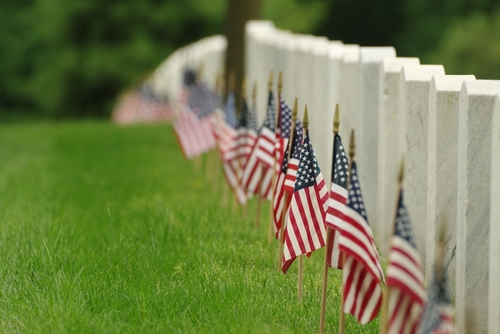
From this nation's founding, Muslim Americans have answered its call to military service. Members of the faith fought for the thirteen colonies, took up arms during the Civil War, and deployed in every major conflict since--including 15,000 in World War II, and individuals honored on the Vietnam Wall. Measuring this historical footprint is challenging because the military doesn't mandate religious tracking.
Identification policies have changed heavily since the early 1950s when dog tags only permitted Protestant, Catholic or Jewish designations. Today, troops can select from dozens of specific religious codes, including "IS" for Islam. However, registration is optional and the exact number of Muslims who have served is unknown.
This article explores some of the unique challenges, achievements and sacrifices of Muslim Americans who served in the U.S. military.
Who are Muslims?
Muslims are individuals who follow and practice the religion called Islam. The word "Muslim" is an Arabic term translating literally to "one who submits to the will of God" (Allah). Globally, there are over two billion Muslims, making Islam the world's second-largest religion after Christianity, as well as the fastest-growing religion.
Representing a global faith of any ethnicity, America's 4.5 million Muslims are a diverse mix: roughly 30% Asian, 30% White, 20% Black and 11% Hispanic. Just over 40% of Muslims in America were born in the U.S., while the rest emigrated.
Requirements for observant Muslims
For observant Muslims, foods are divided into halal (permitted) and haram (prohibited). Meats must be slaughtered according to specific rituals. Most fruits, vegetables, grains, nuts and dairy products are halal. Haram foods include pork and alcohol.
Hygiene is an essential part of Islam. Muslims must perform ritual washing before each of the five daily prayers.
For men, having a beard and leaving it to grow is strongly encouraged, and sometimes mandatory. Many Islamic scholars view the hijab as mandatory for women because the Quran commands modesty.
Ramadan is the ninth and holiest month of the Islamic calendar. It is a deeply spiritual time for Muslims. Observant Muslims are required to fast, abstaining from all food and drink daily from dawn to sunset.
Religious accommodations in the military
The military accommodates Islamic religious practices but observing them can be challenging. Despite fewer than 20 Islamic chaplains, known as Imams, personnel can maintain daily prayers, observe Ramadan fasting, and access halal or vegetarian MREs (Meal, Ready-to-Eat). While women may request permission to wear muted, snug-fitting hijabs, and men may request beards or kufis (head caps), the waiver process is legally rigorous. Service members must provide sworn statements proving their beliefs are sincerely religious, rather than cultural or for personal convenience; fraudulent requests risk prosecution under the Uniform Code of Military Justice (UCMJ).
These accommodations face strict scrutiny. Following Secretary of Defense Pete Hegseth's September 2025 "No more beardos" directive at his meeting with 800 military generals at Quantico, the Pentagon has cracked down on facial hair. All personnel with grooming waivers must now resubmit their requests under highly stringent new requirements.
Muslims were assets for the military in the Middle East
Recognizing the value of their language skills and cultural knowledge amid the ongoing US presence in the Middle East, the Army adopted the "09 Lima" program in 2003. "09 Lima" is the MOS (Military Occupational Specialty) with the number 09L for the program, which specializes in translation and interpretation, and heavily recruits native speakers of Arabic, Pashto and Farsi, among other languages. Those trained in the program served as cultural and linguistic assets during operations in Iraq and Afghanistan. As uniformed soldiers, they accompanied troops on patrols, assisted with checkpoint operations, supported local contract negotiations and translated media.
One service member who was part of "09 Lima" and viewed himself as a bridge builder, told a researcher that his commanders appreciated how he interacted and established rapport with the locals. He commented about how the Russians and British who came to Afghanistan before the Americans were seen as foreign devils against Islam, but the Americans were viewed differently when the "09 Limas" told the tribal leaders that America has mosques and Islamic institutions.
The other military branches have different programs. Some funnel native speakers of languages directly into intelligence or interpreter positions.
Some Muslims in the military were treated differently after 9/11
Prior to Sept. 11, 2001, Muslim service members generally experienced a military environment where ethnic and religious discrimination was minimal. In the wake of 9/11, however, many found themselves caught between two worlds as heightened geopolitical tensions triggered harmful stereotypes, causing some non-Muslim peers to view them as fundamentally separate from the American mainstream.
In the wake of 9/11, some Muslim recruits faced intense bias during basic training. One drill sergeant mocked a recruit for attending Islamic services and later assigned him to play the terrorist in a training exercise. Another recruit was routinely called "al-Qaeda" by his instructor.
Other Muslim service members heard jokes and stereotyped comments. One said he started receiving emails telling him that Muslims need to stop this nonsense. He said he felt as if non-Muslim service members thought all Muslims knew each other and had Osama bin Laden on speed dial.
Monsoor Shams served as a U.S. Marine when the 9/11 attacks occurred. Born in Pakistan, he had come to the U.S. when he was six years old.
He told TRT World: "Like most Americans, I was outraged. I was upset. America is my home. When your country gets attacked, it's painful." But after 9/11, he began to realize that some Marines did not like his presence around them.
Pentagon leadership quickly reinforced protections, explicitly warning commands that harassing or profiling Muslim service members violates the UCMJ. To safeguard these rights, the Department of Defense issued a "Religious Liberty Protection Kit" and clarified via Instruction 1300.7 that sincerely held religious beliefs cannot be used to penalize, discriminate against, or deny promotions to troops.
Profiles in service and sacrifice
Captain Humayun Saqib Mauzzam Khan
Captain Humayun Saqib Mauzzam Khan was born in the United Arab Emirates. He came to the U.S. as a child and joined the U.S. Army Reserve Officers Training Corps (ROTC) while in high school. Khan was one of more than a dozen Muslims in the armed forces who gave their lives in the post-9/11 era. He served in the Army in both Iraq and Afghanistan. He was killed by a suicide car bomb in Iraq in 2004 after ordering his platoon to "hit the dirt" when he sensed trouble. Khan then walked forward, signaling the vehicle to stop while putting distance between the vehicle and his troops. He is buried in Arlington Cemetery. He was posthumously awarded both the Bronze Star and the Purple Heart.
Khan's parents were at the 2016 Democratic Convention. His mother wore a blue headscarf. His father spoke about what it means to be an American. During his speech, Khan's father reached into his pocket to grab a small copy of the Constitution.
Staff Sergeant Ayman Abdelrahman Taha
Staff Sergeant Ayman Abdelrahman Taha was born in Khartoum, Sudan and he came to the U.S. when he was five years old. While serving as a Green Beret engineer in explosive ordnance in Iraq, Taha and his unit located a hidden cache of insurgent munitions in a rural area. As he was trying to secure the munitions so they could not be used as improvised explosive devices (IEDs) by the enemy, a portion unexpectedly detonated. His body shielded other members of the Special Forces from being injured.
Taha was posthumously awarded the Bronze Star, the Purple Heart, the Meritorious Service Medal, the Army Commendation Medal, the Combat Infantryman Badge, the Special Forces Tab and the Parachutist Badge. His grave is close to Khan's in Arlington National Cemetery.
General Cindy M. Saladin-Muhammad
General Cindy M. Saladin-Muhammad became the first Muslim General Officer to serve in the U.S. military on July 3, 2024. General Saladin-Muhammad is an African American who was born in the U.S.
The General began her military career as a private in 1984 and then graduated from Officer Candidate School in 1993 when she served as an Environmental Sciences and Engineering officer. She achieved multiple scientific degrees as well as a doctorate in business. She now manages the largest medical command in the Army Reserve, overseeing thousands of field hospitals, medical personnel and deployment readiness operations.
Private Omer Otmen
Private Omer Otmen was born in Syria under Ottoman rule. He came to the U.S. as a young man and registered for the draft. During World War I, he was sent to France. His unit faced frozen mud, barbed wire and highly experienced German troops. Yet Otmen's platoon charged ahead and completely overwhelmed a German garrison, forcing 70 German soldiers to surrender. The commanding general of the 90th Infantry Division officially cited Otmen by name in the division's general orders for his tactical bravery.
Corporal Abdallah Igram
Corporal Abdallah Igram was a second-generation member of a Lebanese community in Iowa. He fought in the South Pacific during World War II. But he is best remembered for his post-war efforts to help Muslims who served. Igram was dismayed that his Islamic religion was not recognized as an official religion by the U.S. military, meaning Muslim American soldiers who were killed in action or Muslim veterans who died later had to be buried as atheists, rather than within the customs of the Islamic faith.
In 1953, Igram wrote a letter to President Dwight D. Eisenhower. The Saudi Aramco World Historical Archives reported that Igram asked the President: "Why don't the military services recognize the religion of American Muslims just as they recognize that of Protestants, Catholics and Jews? Why is there no symbol for the Islamic faith on a Muslim serviceman's identification tags so that he might be given fitting burial rites if he's killed in action?"
According to a 2019 article by Craig Considine, "Islam in America," after receiving Igram's letter, Eisenhower directed the Department of Defense to update its official guidelines. "I" for Islam was added as an alternative designation for dog tags, but the date of the addition is not noted. The article adds that in 1957, Eisenhower attended the dedication ceremony of the Islamic Center in Washington, D.C., making him the first U.S. president to give a speech at a mosque.
Captain Zahid Quraishi
The Honorable Zahid Quraishi was confirmed to the U.S. District Court for the District of New Jersey in 2021. He was the first Muslim Article III judge in history. His father emigrated from Pakistan in 1970, and Judge Quraishi was born in 1975. After graduation from law school, his first official day at his new firm was Sept. 11, 2001. He left his law practice and joined the Army. Captain Quraishi served two tours in Iraq, earning a Bronze Star and a Combat Action Badge for his service.
Lieutenant Colonel Shareda Hosein
Lt. Col. Shareda Hosein, of Indian descent, came to the U.S. from Trinidad and Tobago with her family in 1972. While in her senior year in high school in 1979, she signed a recruitment contract with the Army. She began her military career as a private. In 1986, she attended Officer Candidate School at Fort Benning, Georgia and worked her way up through the officer ranks. She served in the Middle East during both the Gulf War and the war in Iraq.
In the new century, Hosein became a cultural engagement officer. She explained to the troops such matters as the difference between al-Qaeda's understanding of Islam and that of almost every other Muslim. While in Kuwait, another woman soldier who had converted to Islam needed help with the ritual cleansing before daily prayers. Hosein remembers that in helping others with her religion, she felt a calling.
Hosein decided she wanted to become the first woman Muslim chaplain in the military. She enrolled in Hartford Seminary's Islamic Chaplaincy program to study for a master's degree in divinity. She submitted her application to the military to become a full-time chaplain. Hosein recalled a conversation she had with the Army's chief of chaplains: "He pretty much said, 'Hey, we'd love to have you. We need you, but you can't lead prayers with men and women. So, you can't come on board.'" Hosein explained that almost all Muslims understand that according to Sharia (the code of conduct for practicing Muslims), males must lead prayers when both men and women are in attendance. Thus, the Army decided that since she is female, she could not serve as a Muslim chaplain.
Conclusion
The journey of Muslim Americans in the military reflects a complex reality. They balance the daily spiritual requirements of their faith with the rigorous demands of military service. Despite facing heavy scrutiny and structural differences in the post-9/11 landscape, Muslim service members have consistently proven to be invaluable strategic assets. From crucial language capabilities in the Middle East to profound acts of battlefield sacrifice, their contributions are undeniable. By securing broader religious accommodations from the Pentagon, they have not only defended the nation's borders but have also strengthened our nation's foundational commitment to religious pluralism. Their legacy proves that a fierce love for the U.S. and a devotion to Islam are not contradictory but are instead twin pillars of their identity as American heroes.
Submit your own column for publication to Diana Bosetti
For reprint rights or to order a copy of your photo:
Email
Jeremy_Ellis@dailyjournal.com
for prices.
Direct dial: 213-229-5424
Send a letter to the editor:
Email: letters@dailyjournal.com