


Ethics/Professional Responsibility
Nov. 17, 2026
When campus counsel manages the story instead of the evidence: Ethics and malpractice exposure, part 3
University lawyers represent the institution, not administrators trying to survive a scandal. Putting brand secrecy first can deepen the university's liability and expose counsel to malpractice claims.


When serious misconduct allegations hit a university, its lawyers have two jobs that can pull against each other: protecting the institution's legal position and helping it get through the news cycle. Too often, they treat the second as the first.
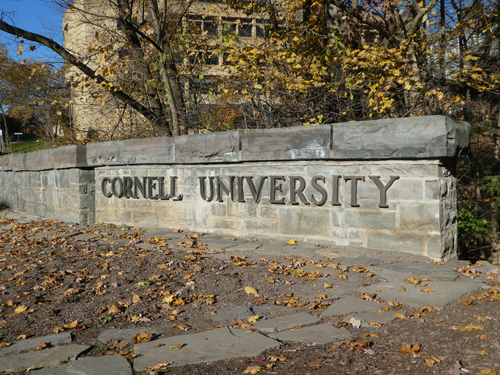
In the state-court civil litigation arising from the "Cornell Seven" matter, pending in New York Supreme Court, New York County, the complaint does not merely target the accused students; it levels direct claims against the university itself, alleging that Cornell failed to protect the plaintiff and failed to adequately discipline the accused. Whatever the merits of those claims, the case shows how an institution's exposure grows. The public record does not show how Cornell's lawyers advised the university, and this article assumes no misstep on their part. But campus lawyers who handle credible felony reports as a communications problem and keep them inside internal offices, invite findings of bad faith, spoliation claims and punitive damages.
What California lawyers learned from USC
For California attorneys, the dynamics in Ithaca will look familiar. They echo the crises that engulfed the University of Southern California over the past decade: the George Tyndall scandal, in which complaints about a campus gynecologist went unaddressed for years, and the 2021 reports of drugging and sexual assault at the Sigma Nu fraternity house, which USC later admitted it had been troublingly slow to share with the campus. In each, the first instinct was to manage the problem internally rather than seek outside fact-finding.
Putting the brand ahead of a fair process hurts everyone. The complainant doesn't get an independent inquiry, the accused don't get clear procedures and the university takes on the civil liability.
Then comes the crackdown
When containment fails, administrations often overcorrect.
The response is predictable. Leadership suspends Greek life across the board, revokes charters, cancels social events and appoints an outside review panel. Cornell, for example, has suspended all parties and social events in Interfraternity Council chapter houses for the rest of the academic year. These measures look decisive to donors and trustees. But punishing every chapter does nothing to find out what happened in one, and it leaves the governance failure in place.
At the same time, universities expand campus policing to show they are serious about safety. Instead of hiring more Title IX and student-conduct specialists, they recruit from municipal and federal law enforcement. But that is a poor fit. Street policing is built around arrests and interrogation; campus discipline runs on administrative process and due process. USC shows the shift. According to 2021 reporting based on USC's financial statements, the university had spent more than $550 million on its Department of Public Safety since 2002, building one of the largest campus police departments in the nation, and critics documented its hiring of several former LAPD officers with troubled disciplinary histories. Add perimeter fencing, ID checkpoints, more cameras and license-plate readers, and a campus starts to feel walled off from its neighbors. (USC's own ID checkpoints, imposed during the 2024 campus protests, ended during daytime hours in August 2025.) California law reinforces the ambiguity. USC's armed officers are not police officers; they exercise peace-officer powers of arrest under Penal Code section 830.7(b) through a memorandum of understanding with the LAPD, while remaining university employees. Penal Code section 830.75 permits a sheriff or police chief to deputize private-university officers as reserve peace officers, but only through the public agency and a memorandum of understanding.
So the cycle continues: handle things quietly until a scandal breaks, then crack down.
Rule 1.13: The client is the institution
The ethics rules on this point are clear. Under ABA Model Rule 1.13(a), a lawyer retained by an organization represents the organization acting through its duly authorized constituents, and California's rule likewise treats the organization itself as the client. New York's Rule 1.13(a), which governs here, makes the same point from the other direction: when the organization's interests may differ from those of the officers or employees the lawyer is dealing with, the lawyer must explain that the lawyer represents the organization, not them. Counsel does not represent the university's communications department, administrators trying to survive a news cycle, or a fraternity with well-connected alumni.
Lawyers who lock serious allegations inside internal offices and limit coordination with law enforcement may buy "quiet," but "quiet" is not compliance. Under Rule 1.13(b), when counsel knows that an officer or employee is acting, or refusing to act, in a way that violates a legal obligation to the organization or a law reasonably imputable to it, and that is likely to cause the organization substantial injury, the lawyer must proceed as reasonably necessary in the organization's best interest, which can include taking the matter up the ladder to the board of trustees. The precise triggers and duties vary among New York, California and the Model Rules. Burying possible crimes in administrative channels creates liability instead of containing it. It exposes the board to oversight claims and leaves counsel open to malpractice claims when the strategy fails.
Rule 3.4: Where defense ends and spoliation begins
ABA Model Rule 3.4(a) forbids a lawyer to unlawfully obstruct another party's access to evidence or to unlawfully alter, destroy or conceal material having potential evidentiary value, or to counsel or assist another to do so. New York's Rule 3.4, which governs here, is worded differently but reaches the same conduct. It bars a lawyer from suppressing evidence that the lawyer or the client has a legal obligation to reveal or produce and from concealing or knowingly failing to disclose what the law requires the lawyer to reveal. The official commentary warns that destroying or concealing material to impair its availability in a "pending or reasonably foreseeable proceeding" may itself be a crime, and it makes clear that the rule reaches evidentiary material generally, "including computerized information." California's Rule 3.4 contains comparable bars. There, the conduct can also be criminal: Penal Code section 135 makes it a misdemeanor to willfully destroy, erase or conceal any record, digital image, video recording or other thing, knowing it is about to be produced in evidence in a trial, inquiry or investigation authorized by law, with intent to prevent its production. Courts have applied the statute even where no proceeding is yet pending. People v. Fields, 105 Cal. App. 3d 341 (1980).
In a campus investigation today, the key evidence is usually on students' phones. Once counsel learns of a credible felony report, the duty to issue litigation holds and preserve data is immediate.
Sitting on known fraternity group chats or walling them off inside internal Title IX repositories risks crossing the line from aggressive defense into concealment and spoliation. And in New York, the forum for this case, intent is not required. Under Pegasus Aviation I, Inc. v. Varig Logistica S.A., 26 N.Y.3d 543 (2015), a party that destroys evidence it was obligated to preserve can be sanctioned even if it acted only negligently. Willful destruction makes the lost evidence's relevance presumed, and negligent destruction can still support an adverse inference once relevance is shown. Insurance will not soften the blow on the punitive side: New York public policy prohibits indemnification for punitive damages. Zurich Ins. Co. v. Shearson Lehman Hutton, Inc., 84 N.Y.2d 309 (1994); Home Ins. Co. v. American Home Prods. Corp., 75 N.Y.2d 196 (1990). Jane Doe's complaint seeks punitive damages.
The takeaway
Advising an institutional client to prioritize brand secrecy over prompt referral to law enforcement and mandatory evidence preservation falls below the legal standard of care. It breaches the lawyer's fiduciary duties of loyalty and competence, and the lawyer ends up helping build the case against the client.
The Cornell litigation should worry every lawyer who advises a university. Buying a few quiet news cycles is a PR job. Counsel's job is to preserve the evidence and make sure the institution follows the law.
Submit your own column for publication to Diana Bosetti
For reprint rights or to order a copy of your photo:
Email
Jeremy_Ellis@dailyjournal.com
for prices.
Direct dial: 213-229-5424
Send a letter to the editor:
Email: letters@dailyjournal.com