




Government
Nov. 26, 2025
Critics warn CARE Court is costly and 'coercive' as expansion looms
Disability advocates claim racial disparities and soaring per-participant costs while supporters say the system fills gaps in mental health care.


Read the Daily Journal's full series on California's CARE Court reforms
Part 1: Is CARE Court reaching California's 'Million Dollar Murrays'?
Part 2: In small counties, CARE Court gains early momentum
Two years after California launched its sweeping CARE Court system, critics say the program remains deeply flawed, costly and ineffective -- and that its shortcomings are becoming more visible as more data emerges.
"All of this money is just going towards this court process," said Samuel Jain, a senior policy attorney with Disability Rights California. "It is not paying for any type of mental health services. It's not paying for housing."
Jain said the "hundreds of millions of dollars" the state has spent so far -- and continues to budget annually -- have largely funded court operations rather than treatment.
"It is just paying for a court process," he said.
Disability Rights California has been monitoring implementation through county data, state reports and the group's role in the California Health and Human Services Agency's CARE Act Working Group. Disability Rights argues that the program raises constitutional concerns, including equal protection.
Jain said the organization is particularly concerned about racial disparities -- which he said have turned out even worse than expected. "We're seeing significant racial disparities in the data," he said. "Black and Indigenous people are over twice as likely to be subject to a CARE Court petition."
Disability Rights California joined the Western Center on Law and Poverty and the Public Interest Law Project in filing an unsuccessful challenge to CARE Court with the California Supreme Court. The groups argued the program would deprive people of autonomy and divert needed funds from existing services. The court declined to hear the case. Disability Rights California v. Newsom, S278330 (Cal. Sup. Ct., filed Jan. 26, 2023).
Joy Dockter, a senior attorney with the Western Center, declined to comment on the record for this story. But she said she stood by arguments she made in a July article stating that the "Western Center remains concerned about this proposal and its impact on the rights of some of our most vulnerable neighbors."
In "The Promise & Perils of CARE Court," Dockter wrote that supporters of CARE Court were correct in identifying the need for "earlier intervention and much-needed support and accountability" in mental health services. But she warned, "Disability rights advocates, however, have concerns about the coercive nature of CARE Court, and the restrictions it places on the rights of the disabled."
She wrote the piece in opposition to SB 27, a major expansion of CARE Court that Gov. Gavin Newsom signed in October. Beginning in January, courts will accept CARE petitions on behalf of people suffering from bipolar disorder rather than just psychotic disorders. SB 27 also includes provisions for diverting some defendants from criminal court into CARE Act proceedings.
"Senate Bill 27 substantially widens the diagnoses that justify the state's involvement in involuntary treatment, and expedites the process to make it easier to push someone into care ... The changes in SB 27 will expose the more than one in 26 Californians who have a serious mental illness to being referred to CARE Court," she wrote.
Jain said SB 27 could result in an eightfold expansion of who is eligible for CARE Court. "It's a really significant expansion of who could be brought into the program," he said.
According to a Senate analysis, Fresno and San Joaquin counties opposed SB 27. They were joined by several organizations representing mental health professionals. "The County Behavioral Health Directors Association, ... which opposes this bill, anticipates these costs will be between $78 million and $121 million annually ... largely depending on the number of CARE respondents with bipolar I disorder with psychotic features" and the number of additional incompetent to stand trial referrals, the analysis stated.
Jain also pointed out an earlier Assembly Judiciary Committee analysis suggesting ballooning court costs. Citing the nonpartisan Legislative Analyst's Office, it stated, "The cost of CARE Court during FY 2023-24 was $713,000 per participant."
"Regardless of its effectiveness in directing individuals to services ... the CARE model ends up being a very expensive way to coordinate (but not directly provide) important services," the analysis said.
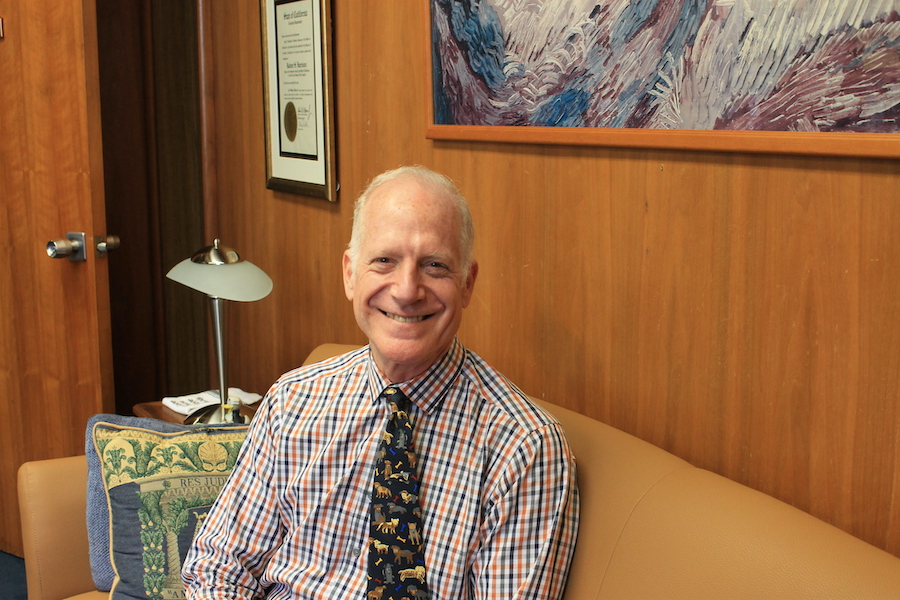
But Los Angeles County Superior Court Judge Robert S. Harrison said CARE Courts fill a gap for people who do not realize they need help -- or who "have been traumatized by the mental health system."
"Honestly, there are a lot of mental health services out there that anyone could voluntarily sign up with, but they don't," said Harrison, who oversees a mental health court and has filled in for the county's CARE Court judges. He added, "I understand critics say there should be more mental health services, and that they should all be voluntary. I agree."
Tustin attorney Dan Jacobson, who has worked for accounting and insurance bodies with the state, wrote a recent opinion column in The Daily Journal about how CARE Court responds to gaps in mental health services dating back to the Lanterman-Petris-Short Act of 1967. He dismissed arguments that the program is coercive.
"I believe that they're completely incorrect," Jacobson said. "Coercion isn't a word that applies to CARE Court proceedings. It does apply in some ways to [Lanterman-Petris-Short Act] conservatorships ... but it doesn't apply to the CARE Court legislation and the CARE courts as they exist."
Harrison said he has not seen the program's potentially more coercive aspects come into play. One key shortfall, he said, is the lower-than-expected number of petitions filed by police and other first responder agencies. Instead, the county CARE team has been out on the streets, trying to persuade people to agree to services.
Recently, Harrison said, he filled in for absent CARE Court judges and got to see the program firsthand.
"The people coming to court were thrilled with the services they were getting," he said. "They were very happy."
Malcolm Maclachlan
malcolm_maclachlan@dailyjournal.com
For reprint rights or to order a copy of your photo:
Email
Jeremy_Ellis@dailyjournal.com
for prices.
Direct dial: 213-229-5424
Send a letter to the editor:
Email: letters@dailyjournal.com