


Dec. 18, 2025
Ruling limits automaker use of dealer arbitration clauses
An appeals court reversed an arbitration order, holding BMW could not enforce a dealership arbitration clause against a consumer's Song-Beverly warranty claims, vacating the arbitration award and judgment, and remanding the case for further trial court proceedings.


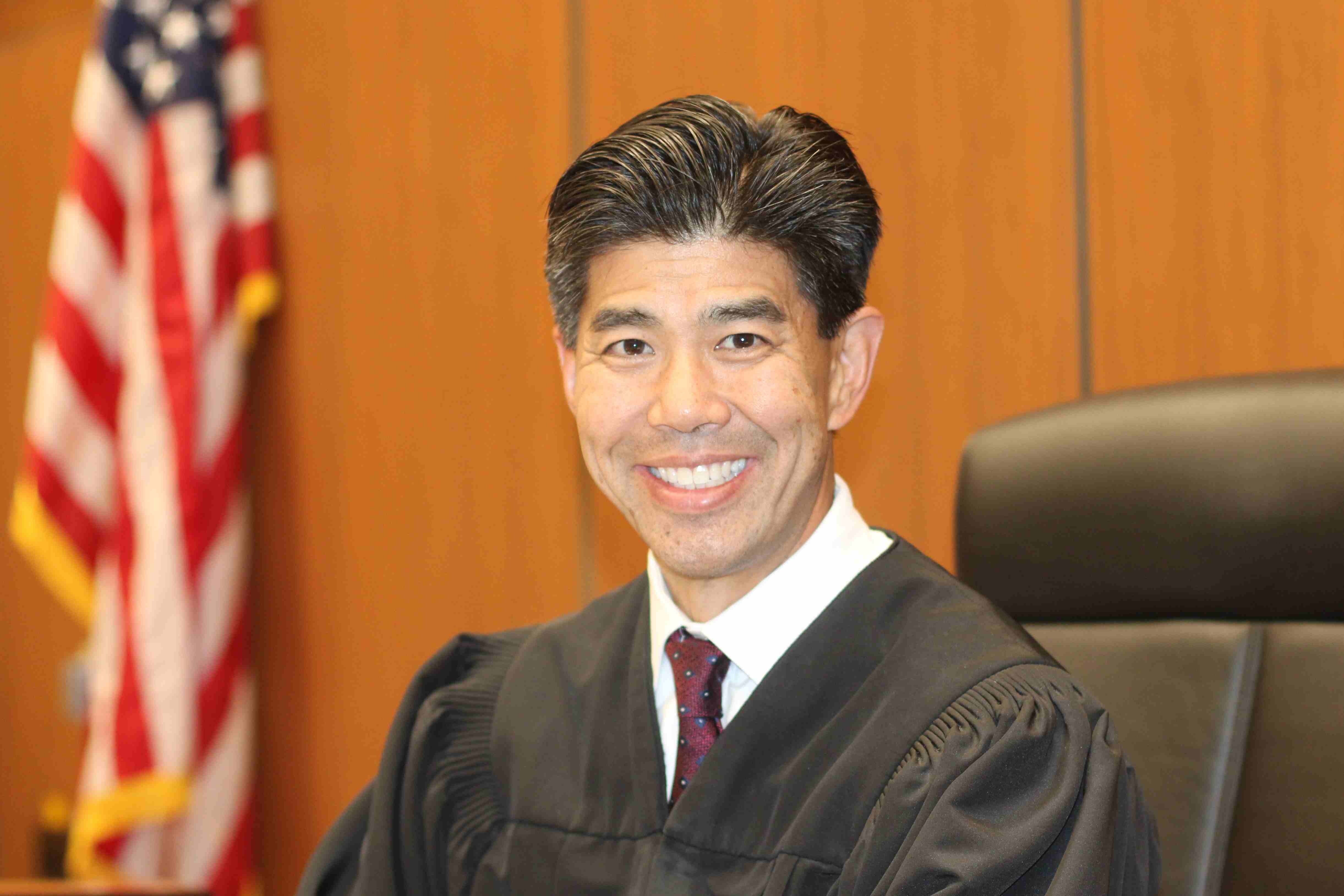
A California appellate court has reversed an LA judge's order compelling arbitration of a consumer warranty dispute against BMW of North America, holding that the automaker could not enforce an arbitration clause in a dealership sales contract to which the manufacturer was not a party.
Applying de novo review, the 2nd District Court of Appeal, Div. 3 panel concluded that as a nonsignatory, BMW failed to establish any legal basis to compel arbitration.
Because Superior Court Judge Randolph Hammock's order compelling arbitration was erroneous, the subsequent arbitration award and judgment confirming that award also had to be reversed.
The appellant was awarded his costs on appeal. Representing him are: Radomir R. Kirnos and Jeffery K. Mukai of Knight Law Group LLP with Jennifer D. Bennett of Gupta Wessler LLP. Bhatt v. BMW of North America, LLC (Cal. App. 2nd Dist. Dec. 12, 2025) (unpublished). They did not respond by press time to email and phone requests for comment.
Michael J. Hurvitz and Ian G. Schuler of Melson, Mullins, Riley & Scarborough represent BMW. Neither was able to comment because of travel and trial.
The case concerns plaintiff Nishith Bhatt, who purchased a used BMW in 2015 from BMW/Mini of Monrovia. The retail installment sales contract between Bhatt and the dealership contained an arbitration clause and expressly disclaimed dealer warranties while acknowledging that the manufacturer might provide its own warranties, including the implied warranty of merchantability.
In 2019, Bhatt sued BMW of North America, alleging violations of the Song-Beverly Act based on breaches of express warranties and the implied warranty of merchantability.
BMW moved to compel arbitration, relying on the arbitration clause in the dealership contract.
Hammock concluded in 2020 that BMW could enforce the arbitration clause as a third-party beneficiary, despite not being a signatory to the dealership contract. After the arbitrator ruled in BMW's favor in March 2023, Hammock confirmed the award and entered judgment.
The court did not reach BMW's alternative argument that arbitration was required under the doctrine of equitable estoppel.
On appeal, BMW abandoned its third-party beneficiary theory, acknowledging that California courts have since rejected that basis for compelling arbitration by vehicle manufacturers. Montemayor v. Ford Motor Co. (2023). Instead, BMW relied exclusively on equitable estoppel, arguing that Bhatt's warranty claims were "intimately founded in and intertwined with" the sales contract containing the arbitration clause.
The appellate panel, however, found that argument foreclosed by the California Supreme Court's recent decision in Ford Motor Warranty Cases 17 Cal. 5th 1122 (2025).
Citing that decision, the panel emphasized that Song-Beverly warranty claims against manufacturers arise from statutory obligations, not from dealer sales contracts. "Such claims do not depend on or invoke any of the terms of the sales agreements with the dealers," Justice Mark K. Hanasono wrote, nor do they seek to enforce or obtain benefits from those contracts.
Acting Div. 3 Presiding Justice Anne H. Egerton and Justice Rashida A. Adams concurred.
The panel noted that the Song-Beverly Act independently imposes warranty obligations on manufacturers, including the implied warranty of merchantability unless properly disclaimed, as well as statutory duties relating to express warranties. Because those obligations are imposed by statute rather than by contract, the panel concluded that equitable estoppel did not apply.
The sales contract's warranty disclaimer further supported that conclusion, the justices said. By disclaiming dealer warranties while expressly distinguishing manufacturer warranties that "may" be provided separately, the agreement demonstrated the parties' intent to separate the dealership transaction from any manufacturer warranty obligations. That distinction undermined BMW's attempt to link Bhatt's statutory claims to the arbitration clause in the sales contract, Hanasono wrote.
BMW also argued that Bhatt's express warranty claim was based on a certified pre-owned vehicle warranty that was allegedly incorporated into the sales contract through a Buyer's Guide stating that its terms were part of any contract to buy the vehicle. The court rejected that contention, noting that neither the Buyer's Guide nor the certified pre-owned warranty appeared in the appellate record.
"If evidence supporting respondent's claim is not in the record, then it is not in the record," Hanasono wrote, declining to rely on factual assertions made only in BMW's briefing. Without the documents, he wrote, the panel could not determine whether the requirements for incorporation by reference were satisfied.
Laurinda Keys
laurinda_keys@dailyjournal.com
For reprint rights or to order a copy of your photo:
Email
Jeremy_Ellis@dailyjournal.com
for prices.
Direct dial: 213-229-5424
Send a letter to the editor:
Email: letters@dailyjournal.com