


Ethics/Professional Responsibility,
Alternative Dispute Resolution
Dec. 19, 2025
ABA closes loophole: Lawyer-mediators prohibited from misrepresenting facts to secure settlements


Shahab Shawn Shaffie
Partner
Parker Shaffie LLP
Phone: (213) 622-4441
Email: shaffie@parkershaffiellp.com

The American Bar Association (ABA) has issued a critical
new ruling that decisively shuts a perceived ethical loophole for
lawyer-mediators. In a significant mandate, which may eventually have
widespread effects in the dispute resolution sphere across the country, the ABA
has confirmed that a lawyer acting as a third-party neutral is strictly
prohibited from making misrepresentations to secure a settlement.
This ruling forces lawyer-mediators to directly confront
the tension between their core professional duty of honesty and the practical
goal of achieving an agreement.
This decisive guidance comes from the ABA's Standing
Committee on Ethics and Professional Responsibility, which issued Formal
Opinion 518 on Oct. 15, 2025, entitled "A Lawyer's Duties to Avoid
Misleading Communications When Acting as a Third-Party Neutral Mediator."
While ABA Opinion 518 is not binding on California lawyers,
the close relationship between the ABA's Rule 8.4(c) and California Rule of
Professional Conduct 8.4(c) suggests that California may in the future issue an
opinion reflecting the ABA's conclusion, establishing that lawyer-mediators in
the state are prohibited from engaging in misrepresentation.
The ethical conflict: honesty prevails over settlement
The central question addressed by Opinion 518 is whether a
mediator, who might increase the chances of settlement by making false
statements, is ethically permitted to do so if they are a lawyer.
Rule 4.1 (The Client Rule): The ABA Model Rule, which runs
akin to California Rule of Professional Conduct 4.1, already forbids a lawyer,
while representing a client, from making a false statement of material fact or
law to a third person. However, some argued this rule did not apply to a
lawyer-mediator because the mediator is not representing a client. This created
the "loophole."
Rule 8.4(c) (The Professional Conduct Rule): This broader rule, which also
runs akin to California Rule of Professional Conduct 8.4(c), prohibits a lawyer
from engaging in conduct involving dishonesty, fraud, deceit or
misrepresentation. The new ABA opinion hinges entirely on this rule and may set
an ethics opinion trend which other states, including California, may decide to
follow.
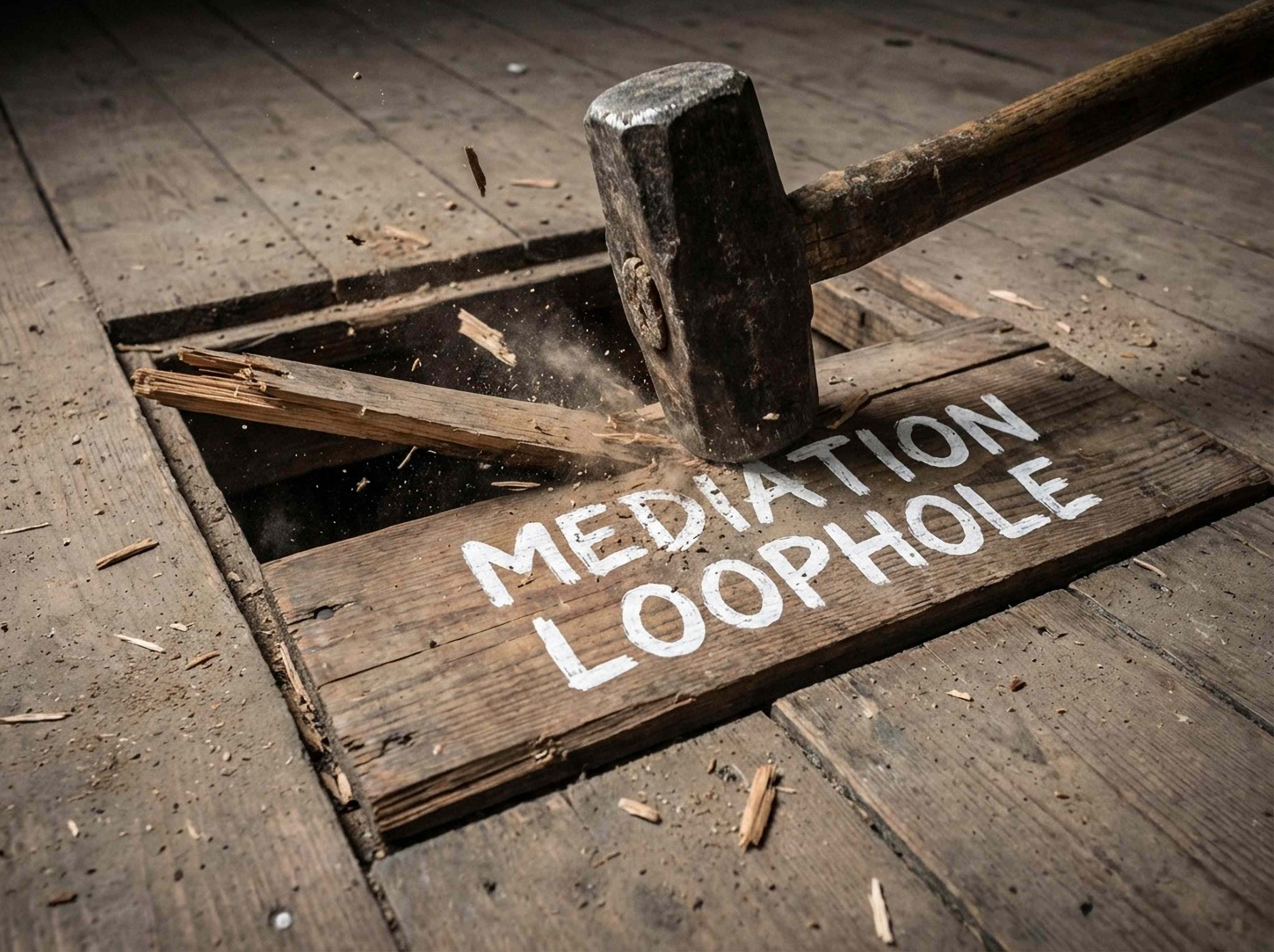
ABA's ruling acts as an ethical hammer
Opinion 518 establishes that Rule 8.4(c) applies not only
when a lawyer represents a client but also to the lawyer's professional conduct
outside of the practice of law, including when they act as a third-party
neutral mediator.
The opinion confirms that the goal of a mediator -- to
achieve a settlement -- is subordinate to the absolute ethical duty imposed by
Rule 8.4(c). Even if dishonesty would increase the probability of a settlement,
it is professional misconduct for a lawyer-mediator.
Practical implications: Negotiation tactics now banned
The opinion draws a clear line, directly prohibiting
controversial negotiation tactics often employed in the mediation room. For
instance, a lawyer-mediator should not make misrepresentations, particularly
those about the finality of an offer or the underlying case strength. The
opinion specifically prohibits statements known to be false, such as: "This is
the best offer the opposing party will make."
The opinion goes on to say that a lawyer-mediator must be
precise and avoid any inappropriate gloss when describing one party's position
to the other. While they may accurately convey statements from one party that
may contain falsehoods, the mediator may not lend credence to those statements
if they know them to be false. They must avoid misleading statements about the
strength or weakness of a party's case.
Conclusion
Opinion 518 from the ABA represents a decisive ethical
correction that standardizes integrity across the mediation sphere for lawyers.
By affirming that the broad professional misconduct rule, Model Rule 8.4(c),
applies to a lawyer even when they are not representing a client, the ABA has
eliminated the perceived ambiguity that might have otherwise shielded
lawyer-mediators who employed, what some may call "deceit" to force a
settlement.
The practical impact is clear: While the ultimate aim of mediation is resolution, the
lawyer-mediator's fundamental duty of honesty and fairness is paramount. This ruling underscores a critical message: For lawyers,
professional integrity is not a selective duty confined to the attorney-client
relationship.
As the Opinion is a significant statement, other states, including
California, will likely confront the same issue, putting pressure on them to
affirm this important ethical standard and ensure trust remains central to the
dispute resolution process.
Submit your own column for publication to Diana Bosetti
For reprint rights or to order a copy of your photo:
Email
Jeremy_Ellis@dailyjournal.com
for prices.
Direct dial: 213-229-5424
Send a letter to the editor:
Email: letters@dailyjournal.com