


Cannabis
Dec. 19, 2025
Cannabis rescheduling by executive action: Medical research and the limits of presidential power
President Trump's executive order is not legalization, but a procedural step that underscores just how far federal cannabis policy remains from meaningful reform.



On Dec. 18, President Donald Trump signed an executive
order entitled "Increasing Medical Marijuana and Cannabidiol Research;" the
legal provisions are quoted below.
"(a) The Attorney General shall take all necessary steps
to complete the rulemaking process related to rescheduling marijuana to
Schedule III of the Controlled Substances Act in the most expeditious manner in
accordance with Federal law, including 21 U.S.C. Section 811.
(b) The Assistant to the President and Deputy Chief of
Staff for Legislative, Political, and Public Affairs shall work with the
Congress to update the statutory definition of final hemp-derived cannabinoid
products to allow Americans to benefit from access to appropriate full-spectrum
CBD products while preserving the Congress's intent to restrict the sale of
products that pose serious health risks. This will include consultation with
appropriate executive departments and agencies and authorities to develop a
regulatory framework for hemp-derived cannabinoid products, including
development of guidance on an upper limit on milligrams of THC per serving with
considerations on per container limits and CBD to THC ratio requirements. The
Secretary of Health and Human Services, the Commissioner of Food and Drugs, the
Administrator of the Centers for Medicare and Medicaid Services, and the
Director of the National Institutes of Health shall develop research methods
and models utilizing real-world evidence to improve access to hemp-derived
cannabinoid products in accordance with Federal law and to inform standards of
care."
The order does not legalize cannabis, does not authorize
recreational use and does not dismantle existing federal or state criminal drug
laws. Rather, it invokes a procedural pathway Congress established more than 50
years ago in the CSA. The executive order further directs coordinated federal
engagement with Congress on the regulation of hemp-derived cannabinoid
products.
This order does not release the thousands of individuals
currently serving time for cannabis-related crimes. That can only be
accomplished by complete descheduling -- similar to treatment of alcohol, which is not on the CSA
schedule.
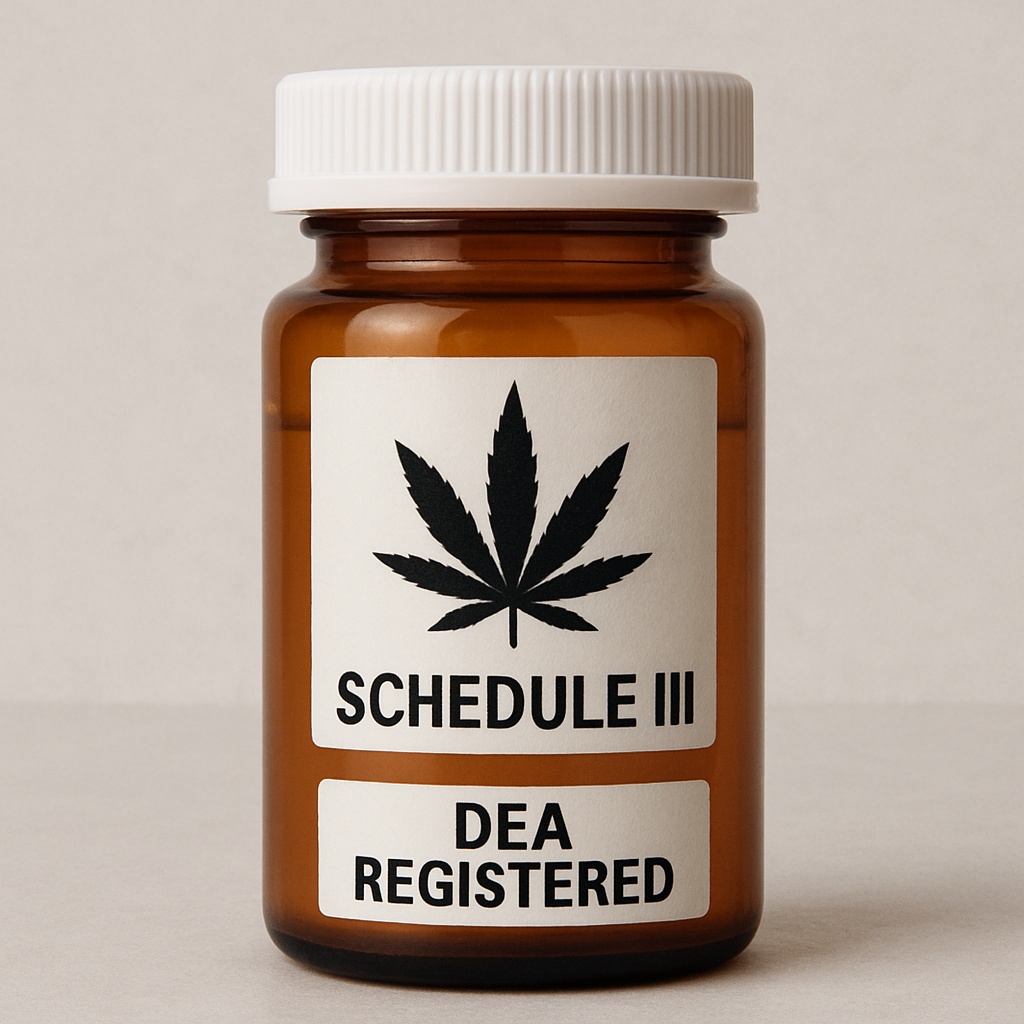
The directive takes cannabis out of Schedule I, which
includes heroine, MDMA, DMT and LSD, and reschedules it to Schedule III which
includes ketamine, Tylenol with codeine and other commonly administered
prescription drugs. Surprisingly, fentanyl, which Trump just declared a "weapon
of mass destruction," and is the leading cause of death among Americans age 18-44 is on Schedule II.
Congress already delegated scheduling authority in the Controlled
Substances Act
When Congress enacted the Controlled Substances Act in
1970, it expressly delegated authority to add, remove or transfer substances
among schedules to the executive branch, subject to defined standards and
procedural safeguards. Congress did not reserve scheduling decisions to itself,
thus leaving the door open to legal revisions by executive order as we saw
yesterday.
Under 21 U.S.C. Section 811(a), the attorney general may
initiate proceedings to reschedule a substance after considering the statutory
factors set forth in Section 811(c), including scientific evidence of
pharmacological effect, current medical use, abuse potential and public health
risk.
This authority is granted to the Drug Enforcement
Administration (DEA), but Congress imposed a critical limitation on that
delegation: the scientific and medical evaluation conducted by the Department
of Health and Human Services, which is binding on the DEA. 21 U.S.C. Section
811(b). See Alliance for Cannabis Therapeutics v. DEA, 15 F.3d 1131
(D.C. Cir. 1994); Touby v. United States, 500 U.S. 160 (1991).
Rescheduling, therefore, occurs through notice and comment
rulemaking under the Administrative Procedure Act, not through new legislation.
Section (b) of the executive order invites congressional action to rework the
implications for hemp derived cannabinoids, which is especially important due
to the recent restrictions on hemp.
What the executive order does and does not do
The executive order signed yesterday operates squarely within
the statutory framework created by the CSA, but it does not complete the
rescheduling process. Instead, it orders the attorney general to complete
Schedule III rulemaking as soon as possible and HHS to complete and formalize
its scientific and medical evaluation of cannabis. It does not legalize
cannabis, authorize recreational use, release incarcerated individuals or alter
state criminal statutes. Rescheduling, even if completed, is not legalization;
only descheduling can accomplish this crucial step
forward.
Medical research, the endocannabinoid system and whole
plant complexity
The emphasis on cannabis research carries particular
significance given the role of the endocannabinoid system in human physiology.
Cannabis interacts with this system through multiple pathways. Most doctors do
not know anything about the endocannabinoid system, even though it regulates
pain modulation, immune response, inflammation, appetite, mood and neurological
signaling, because it is not taught in medical school.
Trump made it clear, with his team of medical
professionals behind him yesterday, that this order is to enhance research and
access for infirm individuals, especially the elderly and veterans. No doubt,
this increased focus on medical research and overall health and wellbeing is
long overdue. Although the executive order specifically references full
spectrum CBD, this is a misnomer: There is no such thing. Whole plant medicine
from cannabis requires the full spectrum of phytochemicals found therein, which
include cannabinoids (such as THC and CBD) as well as the numerous
phytochemicals such as terpenes, flavonoids and phytosterols. The executive
order mentions THC to CBD ratios, indicating the true author of the executive
order understood this important scientific reality.
Unfortunately, both Trump and Dr. Oz indicated during
their live statements that yesterday's action relates only to "CBDs," which signals
a fundamental misunderstanding of the plant and its components. Hopefully, the
research called for yesterday will deliver greater education and understanding to
lawmakers.
Assistance for some patients in need
The implications of expanded cannabis and cannabidiol
research are particularly important for veterans and those on federal health
programs, including Medicare and Medicaid--populations that disproportionately
experience chronic pain, post-traumatic stress disorder and complex
comorbidities. Federal law has long constrained the ability of clinicians
within the Veterans Health Administration to rely on cannabinoid-based, notwithstanding
widespread state-level medical use.
Similarly, coverage and reimbursement decisions under
Medicare and Medicaid depend on clinical evidence, standards of care and
real-world data developed through lawful research pathways. Subsection (b) of
the executive order expressly acknowledges this reality by directing
coordination among HHS, FDA, CMS and NIH to develop research methods and models
that can inform standards of care and access determinations within federally
administered healthcare programs. By strengthening the scientific foundation rather
than expanding access by fiat, the order positions cannabinoid research to
inform evidence-based treatment protocols and coverage policies for veterans
and vulnerable populations, while remaining tethered to existing statutory
limits and congressional oversight.
According to Trump's live announcement yesterday, the order
does not legalize cannabis and does not authorize recreational use.
Rescheduling is not the same as descheduling, as
cannabis industry advocates have pointed out. There are still thousands of
individuals behind bars. This executive order does not release those people and
does not affect state law justice impacted individuals.
DEA registration after rescheduling
Schedule III now subjects cannabis operators to the DEA's
registration framework because businesses who manufacture, distribute, dispense
or research Schedule III substances, which now includes cannabis, must obtain
DEA registration. See 21 U.S.C. Sections 822-823; 21 C.F.R. Part 1301 and DEA
Forms 224 and 225. DEA Registration does not confer federal approval of
products or authorize interstate commerce.
Practitioners, medical programs and state continuity
The CSA permits Schedule III substances to be dispensed by
practitioners authorized under state law. 21 U.S.C. Sections 802(21), 829. This
framework provides a statutory basis for the continued operation under state
medical cannabis programs.
FDA, HHS and cannabinoid regulation
Rescheduling also intersects with the Food and Drug
Administration (FDA) to the extent products fall within the Food, Drug, and
Cosmetic Act (FDCA), 21 U.S.C. Section 301 et seq. It is important to note that
even FDA facility registration does not constitute FDA approval of any cannabis
(or hemp) products.
Notably, the administration's public emphasis on
cannabidiol (CBD) intersects with a long-standing FDA regulatory position that
substantially constrains widespread CBD use. CBD is the active ingredient in
Epidiolex, the only botanically derived cannabinoid drug approved by the Food
and Drug Administration. The FDA has also determined that substantial clinical
investigations of both THC and CBD were authorized and publicly disclosed,
including through GW Pharmaceuticals' clinical trials involving Sativex, notwithstanding
that Sativex was never approved in the United States. The FDA relies on those
determinations to conclude that cannabinoids such as CBD entered the drug
development pipeline under investigational new drug authorizations, thereby
triggering the statutory "drug exclusion" provisions of the Food, Drug, and
Cosmetic Act. See 21 U.S.C. Sections 321(ff)(3)(B), 331(ll). As a result, the FDA
has treated cannabidiol not as a lawful dietary ingredient, but as a drug
subject to premarket approval requirements, independent of dose, formulation or
derivation from hemp.
Congress separately defined "hemp" and hemp-derived
cannabinoids in the Agriculture Improvement Act of 2018, codified at 7 U.S.C.
Section 1639o, while expressly preserving the FDA's authority under the Food,
Drug, and Cosmetic Act. 7 U.S.C. Section 1639r. That statutory structure
explains why subsection (b) of the executive order contemplates congressional
action rather than unilateral agency resolution to address access to full-spectrum
hemp-derived cannabinoid products.
Recent federal enforcement activity addressing additives
and intoxicating cannabinoids has therefore proceeded primarily through the FDA,
with policy oversight from the Department of Health and Human Services. Those
actions reflect concern over synthesized or highly concentrated cannabinoids
marketed outside approved pharmaceutical pathways and underscore the limits of
existing statutory tools in regulating a rapidly evolving cannabinoid
marketplace.
280E liability may be reduced
Many have said that the effect of rescheduling will be
financial because IRS Code 280E applies only to Schedule I and Schedule II
narcotic activities. Earlier this year, the "No Deductions for Marijuana
Businesses Act" was introduced as Senate Bill 471 and House of Representatives
Bill 1447, which would continue the prohibition on regular business expenses
imposed by 280E on legal cannabis companies, even after rescheduling.
Hemp and cannabis must be addressed together
Yesterday's action signals the inevitable: unified treatment
of cannabis and hemp laws and regulations. To quote Gavin Newsom: as goes California, so too goes the nation. The recent passage
of Assembly Bill 8 in California delivers parity in how cannabis and hemp
operators are treated under the law-- and confirms exactly that. By this time
next year, we will be living in a far different regulatory world for both
cannabis and hemp.
Submit your own column for publication to Diana Bosetti
For reprint rights or to order a copy of your photo:
Email
Jeremy_Ellis@dailyjournal.com
for prices.
Direct dial: 213-229-5424
Send a letter to the editor:
Email: letters@dailyjournal.com